


Do you need a water filtration system in an older Philadelphia home?
If your home was built before 1950, and a huge share of Philadelphia row home stock was, there's a real chance the pipe carrying water from the street into your basement is made of lead. That single fact is why so many homeowners in older sections of the city start asking about filtration the moment they learn how old their service line actually is, usually right after a home inspection or a renovation opens up a basement wall.
Water filtration isn't a one-size-fits-all decision, and treating it that way wastes money in both directions. Some homes genuinely need it because of what's sitting in the walls or under the yard, materials that were completely normal to install decades ago and are now a documented health concern.
Others are fine with the water the city already delivers and would be spending money solving a problem they don't actually have. The honest answer depends on your home's construction date, your specific service line, and what's actually running through your pipes between the street and your kitchen tap.
In this article, you will learn about:
- Why older Philadelphia homes carry a real, specific water quality risk
- What the city's own water testing does and doesn't cover
- How to figure out whether your home needs filtration
- Which type of system actually fits the problem you have
Keep reading to find out whether your home falls into the category that genuinely benefits from filtration, or the category that's already fine.
The specific risk in older Philadelphia homes
Philadelphia's drinking water leaves the treatment plant clean and lead-free. The problem, when there is one, starts after the water leaves the city's mains and enters the private plumbing that belongs to the homeowner, not the utility. That distinction matters more in Philadelphia than in most American cities, because of just how much of the housing stock predates modern plumbing standards and how little of that older infrastructure has ever been documented or replaced.
Understanding where the risk actually sits, rather than assuming it's the same everywhere in the city, is the first step toward deciding whether filtration makes sense for your specific address. A home two blocks away, on the exact same water main, can carry a completely different risk profile depending on what's buried between the curb and the basement wall.
Lead service lines in pre-1950 homes
According to Philadelphia's own lead guide, an estimated 20,000 homes in the city may still have a water service line made of lead, the pipe that runs from the water main in the street to the water meter inside the home. Homes built before 1950 are the most likely to have one, since lead pipe was the standard, code-compliant material for residential service lines for decades before it was phased out in favor of copper and, later, plastic.
Lead doesn't come from the treatment plant or from the water main itself. It comes from the service line dissolving slightly into the water as it sits and moves through the pipe, which means the risk is entirely tied to whether your specific home's connection was ever replaced, not to the general quality of city water.
Because homeowners are typically responsible for the portion of the service line running from the curb to the house, that replacement history often depends on things like whether a previous owner did a major renovation, whether the street was dug up for main work, or whether anyone ever thought to ask.
A rowhome in Fox Chase, Mayfair, or Elkins Park and a newer build in Bucks County can be on the exact same water main and have completely different lead exposure, purely based on what pipe connects each one to the street.
- Homes built before 1950 carry the highest likelihood of a lead service line
- The lead risk lives in private plumbing, not in the city's treated water itself
- Two neighboring homes can have very different risk levels depending on service line history
- Homeowners are generally responsible for the portion of the line from the curb to the house
Old solder, brass fixtures, and internal plumbing
Lead service lines aren't the only path into an older home's water, and homeowners often focus so heavily on the service line that they miss the second, closer source. Homes built before 1987 commonly used lead-based solder to join copper pipes at every joint throughout the house, and older brass fixtures, faucets, and valves manufactured before that same era can contain a small percentage of lead in the metal itself. This means even a home with a confirmed copper or plastic service line, one with no lead pipe risk at all from the street, can still have small amounts of lead entering the water from fixtures and solder joints closer to the tap.
This distinction matters because it changes where the fix needs to happen. A lead service line requires either full replacement or filtration at the point of use, since the risk exists at every fixture in the home equally.
Lead solder or brass fixtures, by contrast, are a localized issue, meaning a homeowner can sometimes address it fixture by fixture rather than committing to a whole-home solution.
Replacing an older brass faucet or toilet shutoff valve at the kitchen sink specifically, where drinking and cooking water is drawn, is sometimes a simple, low-cost way to reduce this exposure without touching the rest of the home's plumbing.
- Home built before 1950: check for a lead service line first
- Home built or replumbed 1950 to 1987: lead solder at pipe joints is the more likely concern
- Home built after 1987: internal lead risk drops significantly, though older fixtures can still be a factor
- Any age: worn galvanized pipe can introduce rust and sediment regardless of lead status
Aging galvanized pipe and general corrosion
Beyond lead specifically, older Philadelphia homes often still run on original galvanized steel piping for at least part of their internal plumbing, and that material corrodes from the inside out over decades of continuous water contact.
That corrosion doesn't just affect taste and appearance, though rust-tinted water is usually the first sign a homeowner actually notices. It gradually narrows the interior diameter of the pipe as mineral and rust deposits build up on the walls, which is why homes with original galvanized supply lines often see a slow, years-long decline in water pressure that gets blamed on the water heater or the city main before anyone checks the pipe itself.
This is a genuinely separate issue from lead, with a different cause and a different fix, and it shows up in homes of every era once the galvanized pipe reaches a certain age rather than being tied to a specific decade the way lead risk is. It's especially common in the same pre-1950 housing stock where lead risk is also highest, since both problems trace back to the same original plumbing installation going untouched for 70 or more years.
Homes in Willow Grove and Huntingdon Valley with original 1940s and 1950s construction show this pattern often, particularly in homes where only the water heater has ever been replaced and the supply lines themselves are untouched.
What the city's water testing does and doesn't tell you
Philadelphia treats its water carefully and tests it constantly, but there's a specific gap in what that testing can actually confirm about the water coming out of your particular tap. Knowing where that gap sits helps explain why filtration is a personal decision that depends on your address, rather than a citywide question with one answer for everyone.
PWD's treatment and testing process
The Philadelphia Water Department treats water drawn from the Delaware and Schuylkill Rivers at three separate plants and adds a corrosion inhibitor, zinc orthophosphate, specifically to reduce the amount of lead that leaches from home plumbing materials into tap water as it sits in older pipes overnight or over a weekend.
According to the Philadelphia Water Department, the department tests treated water for around 100 regulated contaminants before it ever leaves the plant, covering everything from bacteria to industrial chemicals.
That treatment process is genuinely effective at what it's designed to do, which is why Philadelphia has avoided the kind of citywide lead crisis seen in some other older American cities with similarly aged infrastructure.
Under its corrosion control permit, the department maintains treated water pH between 6.8 and 7.8 specifically to limit lead dissolving from old plumbing materials, since more acidic water pulls lead out of pipe walls far more aggressively than water held at a neutral pH. Corrosion control reduces how much lead leaches out of an old pipe, but it does not, and cannot, eliminate the lead pipe itself.
That's exactly where the limits of city-level testing come in, and why the EPA's own regulatory framework treats lead differently from almost every other water contaminant it monitors, using an action level of 15 parts per billion rather than a single fixed safety threshold.
- PWD tests treated water at the plant for roughly 100 regulated contaminants
- Corrosion control treatment reduces, but doesn't eliminate, lead leaching from old pipes
- The EPA's lead action level sits at 15 parts per billion, based on the 90th percentile of sampled taps
- PWD samples homes with known lead service lines on a required testing cycle
Why plant-level testing can't cover every home
City water testing happens at the treatment plants and at a rotating sample of homes with documented lead service lines, not at every single tap in Philadelphia, which means the results published in the city's annual water quality report describe the system as a whole rather than any individual house.
That means a home that hasn't been flagged, tested, or confirmed as lead-free could still have a lead service line the city simply doesn't have on record yet, especially in older neighborhoods where service line records are incomplete or predate reliable recordkeeping entirely.
If you don't know your home's service line material, or you've never had your own tap water tested directly, the city's plant-level results genuinely don't tell you what's happening at your specific fixture. A neighbor's clean test result says nothing about your own service line, since lead risk is determined pipe by pipe, not block by block.
This gap is exactly why homeowner-level testing and filtration decisions are a separate question from whether the city's treated water is safe in general.
Getting your own water tested first
Before spending money on a filtration system, it's worth confirming what's actually in your water rather than guessing based on your home's age alone. The Philadelphia Water Department offers free lead and copper testing for residential customers who have concerns, and that result gives you something concrete to act on instead of a rough estimate built purely from the year your rowhome was built.
If you're already scheduling drain cleaning or other plumbing work, asking your technician to check the service line material at the same visit saves a separate trip and gives you a professional visual confirmation to pair with any test result.
Testing first also helps you avoid buying the wrong solution entirely, which is a common and expensive mistake. A filter designed to reduce chlorine taste does nothing meaningful for lead, and a filter certified specifically for lead reduction won't necessarily address hardness or sediment at all. Knowing exactly what's in your water, confirmed by an actual test rather than an assumption, determines which type of filtration, if any, actually solves the problem you have.
Deciding whether filtration makes sense for your home
Not every older home needs a filtration system, and not every filtration system solves the same problem, so treating this as a single yes-or-no question misses the point. This is where the decision gets specific to your address rather than general advice about old Philadelphia homes as one uniform category.

Signs that point toward filtration
Certain signals make filtration a reasonable next step rather than an unnecessary expense, and most homeowners who eventually install a system had at least one of these show up first.
A confirmed or suspected lead service line, visible rust or discoloration in tap water, a persistent metallic taste, or a home built before 1987 that's never had its solder joints replaced are all reasons to take a closer look rather than assume everything is fine.
- A confirmed or unconfirmed lead service line based on your home's construction date
- Discolored, rust-tinted, or metallic-tasting tap water
- Reduced water pressure that could point to internal corrosion buildup
- A home that's never had a water test despite being old enough to warrant one
When your water is probably fine as-is
On the other side, homes built after the late 1980s with documented copper or plastic supply lines, no history of discoloration, and no taste complaints usually don't need filtration for health reasons at all. Philadelphia's water is considered moderately hard to hard depending on which treatment plant serves your neighborhood, and while that can affect soap performance or leave mineral spots on fixtures over time, it's a comfort and maintenance issue rather than a safety one, similar to the sediment buildup that shows up over time in an older water heater regardless of where in the city that heater is located.
Filtration in that case is a preference, not a necessity, and it's entirely reasonable to skip it or choose a simple pitcher filter for taste alone rather than investing in a whole-house system built for a problem that isn't actually present. That same logic applies to boiler systems in older homes, where hardness affects long-term efficiency but isn't itself a safety concern the way a lead service line is.
Getting a straight answer for your specific home
The fastest way to settle the question is a combination of knowing your home's construction date, physically checking your service line material where it enters the basement, and getting a water test if there's any uncertainty left after that visual check.
A plumber who's worked in your specific Northeast neighborhood or elsewhere in the city can often tell you quickly whether homes on your block commonly have lead service lines, since replacement work tends to happen street by street when a water main is dug up, rather than home by home based on individual requests.
That local knowledge, combined with an actual test result from your own tap, is a far more reliable answer than assuming every old rowhome in the city carries the same risk profile just because they were built in the same era.
Choosing the right type of system
Once you know what's actually in your water, confirmed rather than assumed, the type of filtration system that makes sense becomes a much easier decision. Different systems solve genuinely different problems, and buying the wrong one means spending real money without fixing anything at all.
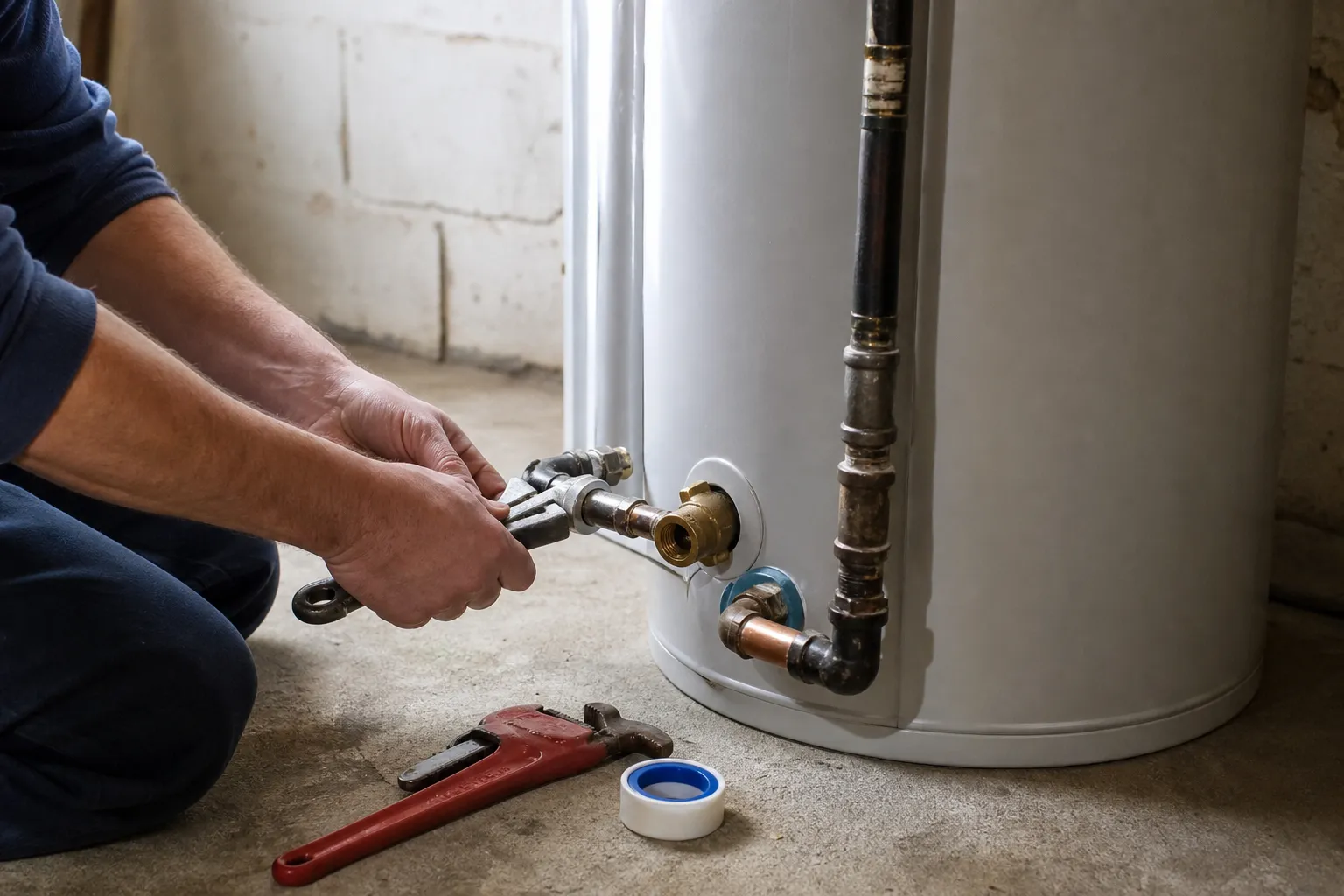
Point-of-use filters for lead and taste
For lead concerns specifically, the EPA recommends looking for point-of-use filters certified to NSF/ANSI Standards 42 and 53, which cover particulate reduction and lead reduction respectively, since not every filter on a store shelf is actually tested against either standard. These filters attach directly to a faucet, sit in a pitcher, or install under the sink, and they're a lower-cost option focused specifically on drinking and cooking water rather than treating every tap in the house equally.
- Faucet-mounted filters install directly at the tap and are the lowest upfront cost
- Pitcher filters require no installation but need frequent cartridge changes to stay effective
- Under-sink systems offer higher capacity with a slightly more involved install
Whole-house filtration for broader concerns
A whole-house system treats water as it enters the home at the main line, covering every fixture rather than just the kitchen tap where a point-of-use filter sits. This makes more sense for homes dealing with hardness across every faucet, sediment from aging galvanized pipe throughout the house, or a household that wants comprehensive coverage in the shower and laundry as well as the kitchen, rather than filtering water only at the one point people drink from.
It's a bigger investment upfront than a single point-of-use filter, but it addresses the water supply at the source, much like a sewer line repair addresses a problem at its origin instead of patching symptoms downstream.
Matching the system to the confirmed problem
The right choice always comes back to what testing actually confirmed, not to which system happens to be marketed the most aggressively. A home with a documented lead service line benefits most from an NSF/ANSI 53-certified filter installed right at the kitchen tap, since that's specifically where drinking and cooking water is drawn from.
A home dealing with hardness and mineral buildup instead is a genuinely different problem, one better solved with a whole-house softener or filtration setup rather than a lead-focused filter that does nothing for scale. A home with no confirmed issue at all may not need a dedicated system beyond routine maintenance and periodic testing to confirm nothing has changed.
- Confirmed or likely lead service line: point-of-use filter certified to NSF/ANSI 53
- Rust, sediment, or corroded galvanized pipe: whole-house sediment filtration
- Hardness and mineral buildup without lead concerns: whole-house softening system
- No confirmed issue, just general peace of mind: a basic pitcher or faucet filter for taste
Conclusion
Older Philadelphia homes carry a real, specific water quality risk that newer construction largely doesn't, and that risk lives in the private plumbing connecting your home to the street rather than in the water the city treats and delivers. Knowing your home's construction date, checking your service line material, and getting an actual test are the fastest way to move from guessing based on your neighborhood's reputation to actually knowing what's in your own water.
Filtration is genuinely worth it for some homes and an unnecessary expense for others, and the only way to tell the difference is to look at your specific address rather than assume every old rowhome in the city faces the same risk just because the neighborhood is old.
Reach out to Guaranteed Plumbing and we'll help you check your service line material, walk through what a water test found, and recommend the right system for what your home actually needs, not for what a generic filtration ad is trying to sell you.