


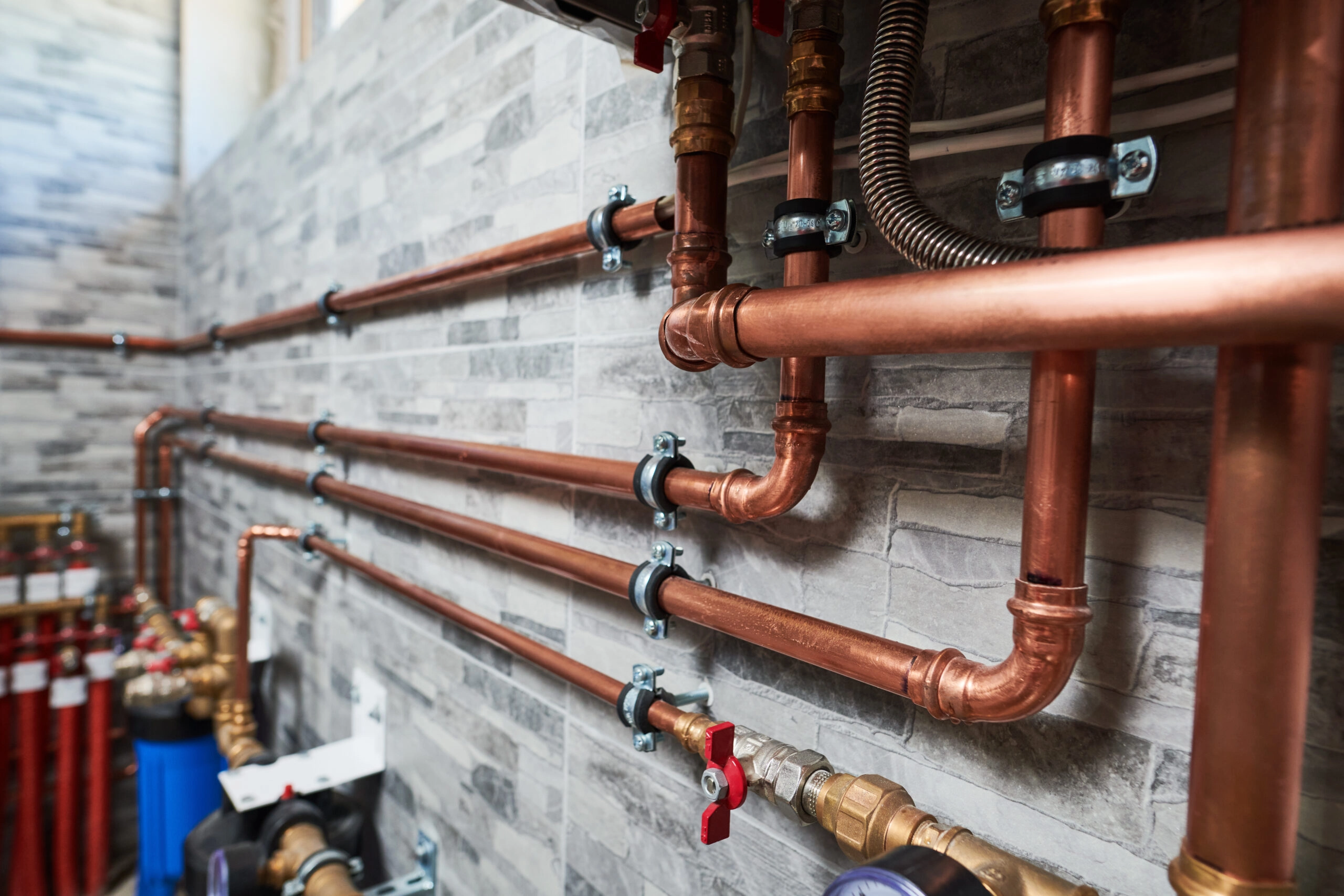
Furnace replacement cost in Philadelphia [2027 guide]
If your furnace just died in January, "how much is this going to cost me" is the only question that matters right now. Furnace replacement cost in Philadelphia depends on your home's size, the furnace's efficiency rating, and how much work your ductwork or venting needs, and those three factors can move a quote by thousands of dollars in either direction.
Philadelphia's housing stock makes this question harder to answer with a single number than it would be in a newer suburb. Row homes, twins, and converted duplexes each pull heat differently, and a furnace sized for a 1,200 square foot rowhome does not belong in a 2,400 square foot twin in Mount Airy. Add in a heating season that regularly forces gas utilities into their highest demand days of the year, and the cost of getting a furnace replacement wrong, in either size or timing, gets expensive fast.
This guide breaks the cost down the way an actual quote would: what drives the base price, what pushes it higher, what financing typically looks like, and how a Philadelphia row home differs from a twin or a suburban single-family install. You will walk away knowing what questions to ask before you sign anything.
In this article, you will learn about:
- What actually drives furnace replacement cost in Philadelphia
- The row home and older housing factors that change your quote
- Financing, rebates, and how to compare bids without getting burned
- When replacement beats repair, and what a professional install includes
Keep reading to know exactly what you're paying for before a technician ever steps into your basement.
What drives furnace replacement cost in Philadelphia
Every furnace quote is really three numbers stacked together: the unit itself, the labor to remove the old system and install the new one, and whatever additional work your home needs to make the new furnace actually work correctly. Homeowners who only compare the first number end up surprised by the total.
The furnace unit's price is set mostly by its efficiency rating and its heating capacity. A furnace's annual fuel utilization efficiency, or AFUE, tells you what percentage of the fuel it burns actually becomes heat in your home rather than escaping up the flue.
The U.S. Department of Energy finalized a rule raising the minimum AFUE for new non-weatherized gas furnaces to 95 percent starting in December 2028, up from the current 80 percent floor, which means every furnace sold after that date will already need to hit a high-efficiency threshold that used to be optional upgrade territory. That rule alone is projected to save consumers a combined $24.8 billion in energy costs over 30 years, which tells you how much a furnace's efficiency rating actually matters over its working life, not just at purchase.
Heating capacity, measured in BTUs, is sized to your home's square footage, insulation, window count, and ceiling height, not just floor space alone. An undersized furnace runs constantly and still leaves cold spots. An oversized one short-cycles, burns more fuel than it should, and wears out faster than a properly matched unit.
- Furnace type and fuel source. Gas furnaces dominate in Philadelphia because natural gas is widely available and burns cheaper than oil or propane per unit of heat, but oil furnaces are still common in older homes that were never converted.
- Efficiency tier. A standard-efficiency unit costs less upfront than a high-efficiency condensing furnace, but the condensing unit uses less fuel every winter it runs.
- Labor complexity. A straightforward swap where the new furnace matches the old one's footprint and venting costs far less in labor than a job that requires rerouting ductwork or upgrading the flue.
- Permits and inspection. Philadelphia requires permits for furnace replacement, and permit cost and inspection timing vary depending on whether the job is a like-for-like swap or involves venting changes.
Two homes on the same block can get different quotes for the same brand of furnace, and it is almost never because one contractor is overcharging. It is because one home needs new ductwork and the other does not.
Furnace size and BTU calculations
A furnace sized correctly for your home is the single biggest factor in whether the unit performs the way its efficiency rating promises. Technicians calculate this with a heat loss and heat gain assessment, sometimes called a Manual J calculation, that accounts for square footage, insulation quality, window count and type, ceiling height, and your home's exposure to wind and sun.
Skipping this step is one of the most common ways a furnace replacement goes wrong. A contractor who quotes based on "what size was in there before" without checking whether the old unit was ever sized correctly can hand you the exact same problem you started with, just in a newer box.
- The technician measures total square footage and ceiling height to establish baseline heating load.
- Insulation levels in the attic, walls, and basement get factored in, since poor insulation increases the BTU output needed to maintain temperature.
- Window count, type, and orientation adjust the number, since older single-pane windows lose heat faster than newer double-pane units.
- The final BTU figure gets matched against manufacturer specifications to select the correct furnace model.
Homes with recent insulation upgrades or window replacements sometimes need a smaller furnace than the one being replaced, which can actually lower your equipment cost even as labor and permit costs stay the same.
Efficiency ratings and long-term cost
AFUE ratings on furnaces sold today generally fall between 80 and 98.5 percent, and that spread represents real money over a Philadelphia winter. A furnace sitting at the low end of that range wastes a meaningfully larger share of every therm of gas it burns compared to a high-efficiency condensing model.
The tradeoff is upfront cost versus operating cost. A higher AFUE unit costs more to purchase and install, largely because condensing furnaces require additional venting (PVC pipe instead of metal flue in many cases) and a condensate drain to handle the moisture that condensing technology produces as a byproduct.
- Standard-efficiency furnaces (roughly 80 to 85 percent AFUE) cost less upfront and use simpler venting, which suits homes where the existing flue and space constraints make condensing venting difficult or expensive to add.
- High-efficiency furnaces (90 percent AFUE and above) cost more initially but burn noticeably less fuel over a full heating season, which matters most in a market with as many heating degree days as ours.
- The break-even point between the two, where fuel savings offset the higher purchase price, typically lands somewhere in the middle years of the furnace's expected service life rather than immediately.
Whichever tier you choose, the Middle Atlantic region, which covers New Jersey, New York, and Pennsylvania together, regularly logs well over 4,000 heating degree days across a normal November-to-March stretch, a figure the U.S. Energy Information Administration tracks specifically because it drives residential gas demand. That is a long, sustained heating season, and it is exactly the kind of climate where the efficiency tier you choose has real financial consequences year after year.
Labor, permits, and installation complexity
The unit itself is often the smallest surprise on a furnace quote. Labor and site conditions are where costs diverge most between homes. A same-footprint swap in a basement with easy access and existing ductwork that fits the new unit is the cheapest, fastest scenario a technician can quote.
Complexity rises fast once any of those conditions change. Moving a furnace to a new location, rerouting ductwork that was never sized correctly for the home, upgrading electrical to meet current code, or converting from a metal flue to PVC venting for a high-efficiency unit all add labor hours and materials that a base quote does not include.
- Tight basement or crawlspace access that requires extra time to maneuver equipment in and out.
- Ductwork that needs modification because the new furnace's airflow requirements differ from the old one.
- Electrical panel work if the new furnace or its blower motor needs a dedicated circuit the home does not currently have.
- Flue or venting changes required specifically because of an efficiency tier upgrade.
Philadelphia permitting adds another layer that homeowners sometimes forget to budget time for, not just money. A licensed contractor pulls the permit and schedules the required inspection as part of the job, and that inspection window can affect how quickly you get final sign-off on the work, even after the furnace itself is running and heating the house.
Why Philadelphia's older housing changes the equation
A rowhome in Fishtown, a twin in Mount Airy, and a single-family home in the Northeast Philadelphia suburbs are not the same furnace replacement job, even when the square footage is similar. Philadelphia's housing stock spans more than a century of construction standards, and that history shows up directly in furnace quotes.
Older homes were frequently built with heating systems that predate modern ductwork standards entirely, meaning some row homes still run on a converted boiler feeding steam or hot water radiators rather than forced-air furnaces. Homes that do have ductwork often have runs that were added or modified decades after the original construction, sometimes undersized for the home's actual heat load.
Basement and mechanical space constraints are their own category of Philadelphia-specific challenge. Many row homes have basements with low ceiling heights, narrow stairwells, and tight floor plans that were never designed with furnace replacement in mind, which affects both the equipment size a contractor can realistically install and the labor time needed to get it there.
Row home and twin-specific cost factors
Row homes and twins share party walls, which changes venting requirements in ways a detached suburban home does not have to consider. High-efficiency furnace venting that exits through a side wall needs clearance from property lines and neighboring structures, and in a dense rowhome block, that clearance can be tighter to achieve than code requires, pushing a job toward roof venting instead, which costs more in both materials and labor.
- Shared wall venting restrictions that limit where PVC intake and exhaust pipes for a high-efficiency furnace can terminate.
- Narrow basement access, sometimes through bulkhead doors or interior stairs too tight for standard equipment carts.
- Original ductwork sized for a smaller, older furnace, which may need modification to handle a modern unit's airflow.
- Knob-and-tube or older electrical, in homes that have not been rewired, which can require an electrician alongside the HVAC install.
None of this makes a row home replacement impossible or even unusually expensive by default. It does mean the initial in-home assessment matters more here than it would in a newer, more standardized suburban build, and a contractor who quotes a row home without walking the actual basement and duct runs is quoting blind.
The same logic runs the other direction once you leave the city proper. Twins and single-family homes in suburbs like Abington, Glenside, and Huntingdon Valley tend to have more generous basement and mechanical room clearance than a rowhome block, which usually simplifies the labor side of a quote even when the home itself is larger.
Neighborhoods like Fox Chase, Mayfair, and Rhawnhurst sit closer to the city's older housing stock and inherit more of the rowhome and twin-era venting and access challenges described above, while Elkins Park and Willow Grove fall somewhere in between, with a mix of older twins and newer single-family construction depending on the specific block.
Ductwork condition in older homes
Ductwork that was installed decades ago, or extended piecemeal as additions were built onto a home over the years, is one of the most common hidden costs in a Philadelphia furnace replacement. Leaky, undersized, or poorly routed ducts can force a new, correctly sized furnace to work harder than its rating suggests, undercutting the efficiency gains you paid for.
A thorough pre-installation assessment checks duct condition alongside the furnace sizing calculation, not as an afterthought. Sealing leaky joints, insulating runs through unheated spaces like basements or crawlspaces, and resizing any sections that were never adequate for the home's heat load are all things that can surface once a technician is actually looking at the whole system rather than just swapping the box in the basement.
- Existing ducts get inspected for leaks, disconnections, and crushed or kinked sections that restrict airflow.
- Duct sizing gets checked against the new furnace's output to confirm the system can actually deliver the air it is producing.
- Insulation on ducts running through unconditioned spaces gets evaluated, since heat lost in transit is heat you paid for and never got to use.
- Any needed sealing, resizing, or insulation work gets priced as part of the full installation, not billed as a surprise mid-project.
Homeowners sometimes push back on duct work as an unnecessary upsell, and it is a fair thing to question. Ask for photos of the specific duct problem a contractor flags, not just a verbal description, before agreeing to the added cost.
Mechanical space and access challenges
Beyond ductwork, the physical space a furnace sits in shapes both the installation timeline and, sometimes, the equipment choice itself. Basements converted into living space, finished mechanical closets, or utility rooms shared with a water heater and laundry hookups all narrow the options a technician has to work with.
Older mechanical rooms were often built around a furnace footprint that no longer matches what current models ship in, since manufacturers have changed cabinet dimensions and clearance requirements over the decades. A technician doing a walkthrough before quoting the job checks doorway widths, ceiling clearance, and the path equipment has to travel from the street or driveway to the mechanical space, not just the space itself.
- Doorway and stairwell width, since a furnace cabinet that will not fit through a standard interior door adds disassembly and reassembly time.
- Clearance requirements around the unit itself, which manufacturers specify for both safety and service access.
- Proximity to existing gas lines and electrical, since a furnace relocated even a few feet can require extending both.
A contractor who walks the actual mechanical space before quoting, rather than pricing from a phone description, catches these access issues before they become an on-the-day surprise.
Financing, rebates, and comparing quotes
A furnace failure rarely arrives on a convenient financial timeline, and most Philadelphia homeowners are not paying the full replacement cost out of pocket in one lump sum. Financing options, utility rebates, and federal tax incentives all factor into what a furnace replacement actually costs you after the first year, especially with natural gas remaining the dominant heating fuel across the region.
Winter heating bills swing year to year based on weather and fuel prices, and the U.S. Energy Information Administration has tracked winters where average natural gas heating expenditures jumped 13 percent over the prior year. The fuel cost side of that equation moves independently of anything a homeowner controls, so a furnace's own efficiency becomes the one variable you actually get to manage.
Financing terms vary by lender and by the contractor's available programs, so it is worth asking about financing specifically rather than assuming it is not available. Multi-month or multi-year payment plans are common in the HVAC industry precisely because replacement costs land as a single large expense rather than a predictable monthly bill.
Utility rebate programs shift year to year and sometimes month to month, so any specific dollar figure quoted here would likely be outdated by the time you read it. What stays consistent is the strategy: check with your gas utility directly for current furnace efficiency rebates before finalizing a purchase, since a rebate can sometimes shift the calculation toward a higher-efficiency unit that looked out of budget at first glance.
What a fair quote actually includes
A furnace quote that only lists the unit price and a flat labor number is an incomplete quote, and comparing two quotes with different scopes of work is comparing apples to oranges even when the dollar figures look close.
- Removal and disposal of the old furnace, including any hazardous material handling if the old unit contained materials that require special disposal.
- The new furnace unit itself, specified by model number, efficiency rating, and BTU output, not just "a furnace."
- All labor for installation, including electrical, gas line, and venting work specific to the new unit.
- Permit fees and the scheduled inspection required by the city.
- A written warranty covering both the manufacturer's parts warranty and the contractor's labor warranty, which are two separate things and should both be spelled out.
A quote missing any of these line items is not necessarily a bad quote, but it is an incomplete one, and it is worth asking the contractor to fill in the gap before you compare it against a competing bid.
Questions worth asking before you sign
The lowest number on paper is not always the best deal once you understand what it does and does not cover. A homeowner comparing three quotes should be looking for consistency in scope, not just chasing the smallest total.
- Is the furnace sized based on an actual heat loss calculation for this specific home, or estimated from the old unit's size?
- Does the quote include duct inspection and any needed sealing or modification, or is that priced separately if it comes up later?
- What does the labor warranty cover, and for how long, separate from the manufacturer's parts warranty?
- Is the permit and inspection included in the price, or billed as an add-on?
A contractor who answers these questions clearly and in writing, before any work starts, is giving you the information you need to actually compare bids rather than just comparing bottom-line numbers that may not represent the same job.
Reading a quote's fine print
Beyond the line items themselves, the fine print on a furnace quote often carries terms that matter more than the total once winter actually tests the system. Payment schedules, cancellation terms, and what happens if the job uncovers a problem mid-installation are all worth reading closely before signing.
Change-order language deserves particular attention. A quote should spell out what happens if, once the old furnace is out and the walls are open, the technician finds something the initial walkthrough missed, like deteriorated gas piping or electrical that does not meet current code. Reputable contractors document this process rather than leaving it as a verbal understanding.
Deposit and payment timing also varies by contractor. Some require a deposit to order equipment, with the balance due on completion; others finance the full amount through a lender and collect nothing upfront. Neither structure is inherently better, but the terms should be clear and in writing before a truck shows up at your home.
Repair or replace: making the right call
Not every heating problem means a full furnace replacement, and a furnace that is still within a reasonable portion of its expected service life is often worth repairing rather than replacing outright. The decision usually comes down to the furnace's age, the cost of the specific repair needed, and how often it has already broken down.
A furnace nearing the end of its typical service life that needs a major component replacement, like a heat exchanger, is usually a signal that heating repair has run its course and replacement makes more financial sense. A newer furnace with a minor issue, like an igniter or a blower motor, is almost always worth repairing.
Signs it's time to replace rather than repair
Certain warning signs point toward replacement being the smarter long-term decision even when a repair could technically get the furnace running again for now.
- Rising repair frequency, where the same furnace has needed multiple service calls across a single heating season.
- Visible cracks in the heat exchanger, which is a safety issue, not just a performance one, since it can allow carbon monoxide into the home's air supply.
- A steady climb in monthly heating bills that is not explained by colder weather or higher gas prices, suggesting declining efficiency.
- Uneven heating between rooms or floors that has gotten worse over time despite thermostat adjustments.
Any one of these on its own does not automatically mean replacement is the right call, but two or more together are a strong signal that the furnace is working harder than it should be to do its job, and that the cost of keeping it alive is starting to outweigh the cost of starting fresh.
What a professional installation actually looks like
Once the decision is made, the installation itself follows a fairly consistent sequence regardless of which contractor does the work, and knowing that sequence helps you understand what should be happening at each stage of the job.
- The old furnace is disconnected from gas, electrical, and ductwork, then removed from the home.
- The mechanical space is prepared, including any needed cleanup or modification to fit the new unit's footprint.
- The new furnace is set in place and connected to gas, electrical, and the existing or modified ductwork.
- Venting is installed or connected according to the unit's efficiency tier, whether that is a metal flue or PVC intake and exhaust.
- The system is tested for proper ignition, airflow, and safety shutoffs before the technician walks the homeowner through basic operation.
- The permit inspection is scheduled and completed to close out the job with the city.
A same-day or next-day installation is realistic for a straightforward swap. Jobs involving duct modifications, electrical upgrades, or venting changes typically take longer, and a contractor who promises same-day completion on a job that clearly needs more than a basic swap is a reason to ask more questions, not fewer.
Life expectancy and what shortens it
A well-installed furnace, properly sized and maintained, typically delivers 15 to 20 years of service, though that range shifts based on usage patterns, maintenance history, and how hard the unit works each winter. A furnace that is undersized for its home, or one that was never balanced against the ductwork it feeds, tends to wear out faster than its rated lifespan suggests.
Annual maintenance is the single biggest factor a homeowner actually controls after installation. A furnace that gets its filter changed regularly and its burners and heat exchanger inspected once a year runs more efficiently and fails less often than one that only gets attention when something breaks.
- Consistent filter changes, since a clogged filter forces the blower motor to work harder and can shorten its service life.
- Annual inspection of burners, heat exchanger, and safety controls before the start of each heating season.
- Prompt attention to minor issues, like unusual noises or short cycling, before they become major component failures.
None of this guarantees a furnace reaches the top end of its expected lifespan, but neglecting it reliably shortens it, and that shortened lifespan is really just a delayed version of the replacement cost this guide is walking through.
Conclusion
Furnace replacement cost in Philadelphia is never really one number. It is the sum of the unit's efficiency tier, your home's specific ductwork and venting situation, and the labor complexity that comes with a housing stock built across more than a hundred years of different construction standards. A row home in Kensington and a twin in Chestnut Hill can land on very different quotes for what looks like the same job on paper, and now you know why.
The way to protect yourself through that process is not to chase the lowest number, but to make sure every quote you compare covers the same scope of work: a proper sizing calculation, an honest look at your ductwork, clear permit and warranty terms, and a contractor who explains the reasoning behind the price rather than just handing you a total. That is the difference between a furnace that performs the way its efficiency rating promises and one that leaves you back in the same position in a few years.
If you are staring down a furnace that is struggling to keep up, or one that just failed outright, Guaranteed Plumbing & Heating has been diagnosing and replacing heating systems in Philadelphia homes since 1990, from century-old row homes to suburban singles. Guaranteed Plumbing & Heating can walk your specific home, explain what it actually needs, and give you a quote you can trust before winter makes the decision for you.