


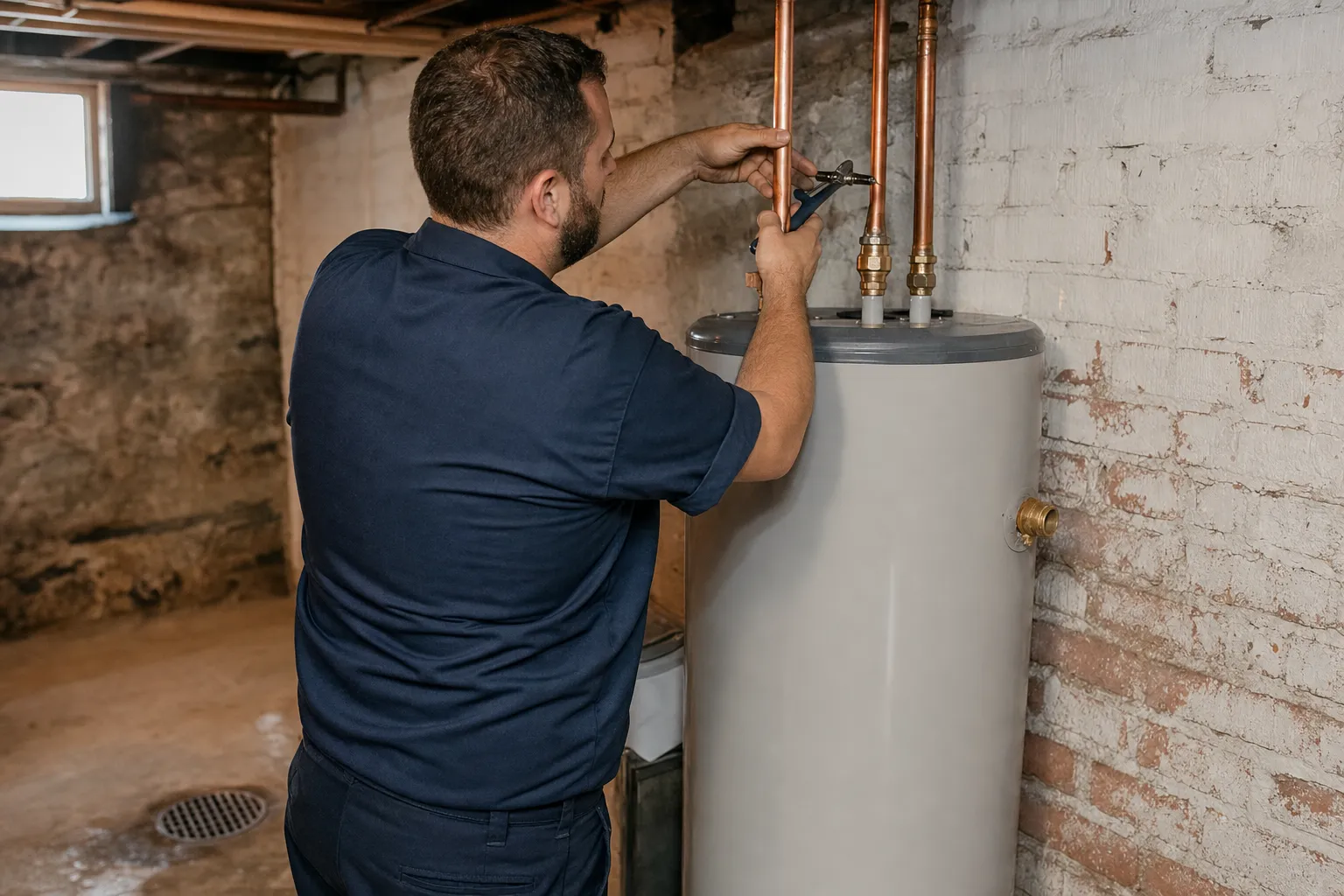
How much does a water heater replacement cost in Philadelphia?
Water heater replacement cost in Philadelphia isn't a single number, even though most homeowners want it to be. The real answer depends on the type of unit you're replacing, the fuel source it runs on, and what's already in place in your basement or utility closet.
That uncertainty is exactly why a cold shower on a Tuesday morning turns into a stressful research project. Philadelphia's older housing stock, tight utility closets, and mix of gas and electric setups all shape the final number in ways a generic national average glosses over.
This guide breaks down what actually drives water heater replacement cost here, how tank and tankless systems compare, and the signs that tell you it's time to replace rather than repair. You'll also see what a fair quote should include and how to plan the project without overpaying. Keep reading to find out how to spot a water heater installation quote that's fair versus one that's padded.
What drives water heater replacement cost in Philadelphia
Water heater pricing shifts based on a handful of concrete factors, not guesswork. Getting familiar with them before a plumber shows up means you can actually evaluate a quote instead of just trusting it.
Philadelphia rowhomes and older twins often have utility closets and basements that weren't designed with today's larger tanks or tankless units in mind. That single detail changes labor time more than almost anything else on the list.
- Unit type: tank or tankless
- Fuel source: gas, electric, or oil conversion
- Tank size and household hot water demand
- Venting requirements and code compliance
- Removal and disposal of the old unit
Labor complexity is where a lot of the variation actually lives. A straight swap of an old gas tank for a new one of the same size is a different job than converting from electric to gas, or installing a tankless unit where a tank used to sit.
- Permit requirements for gas line or venting changes
- Whether existing plumbing connections need updating
- Access constraints in basements, closets, or crawl spaces
Every one of these either adds or removes cost from the final bill, which is why a neighbor's quote from last year isn't a reliable benchmark for your own project. The unit itself is only part of what you're paying for.
Why fuel type changes the equation
Gas water heaters generally cost more upfront than electric models but tend to have lower operating costs over time in most Philadelphia utility rate structures. Switching fuel types, such as going from electric to gas, usually means running a new gas line and adding proper venting, which adds both labor and material cost that a straight swap wouldn't need.
Electric water heaters skip the venting requirement entirely, which simplifies installation in homes without existing gas service. That simplicity is part of why electric units remain common in rowhomes that were never plumbed for gas water heating.
Oil-to-gas conversions come up occasionally in older Philadelphia homes still running oil-fired systems. That conversion involves more than swapping the water heater itself, since it touches the home's broader fuel infrastructure.
How Philadelphia's older homes affect labor
Rowhomes and older twins frequently have tight basement stairwells, low ceiling clearance, or utility closets sized for units that are smaller than what's commonly sold today. Getting a new tank into place sometimes takes real maneuvering that a newer, more open home wouldn't require.
Venting in older homes can also be a sticking point. Homes with shared chimneys or flues built decades ago sometimes need updated venting to safely accommodate a new unit, especially when upgrading to a higher-efficiency model.
What a fair estimate actually breaks down
A trustworthy quote separates the cost of the unit itself from labor, permits, and any code-required upgrades, rather than folding everything into one number you can't evaluate. That transparency matters more than the total figure alone.
- Unit cost by brand, size, and efficiency rating
- Labor for removal, installation, and testing
- Permit fees where required
- Any code-related upgrades (venting, expansion tanks, shutoff valves)
Ask specifically whether removal and disposal of the old unit is included, since that's a detail that sometimes gets left off a quote and added back in later as a surprise line item.
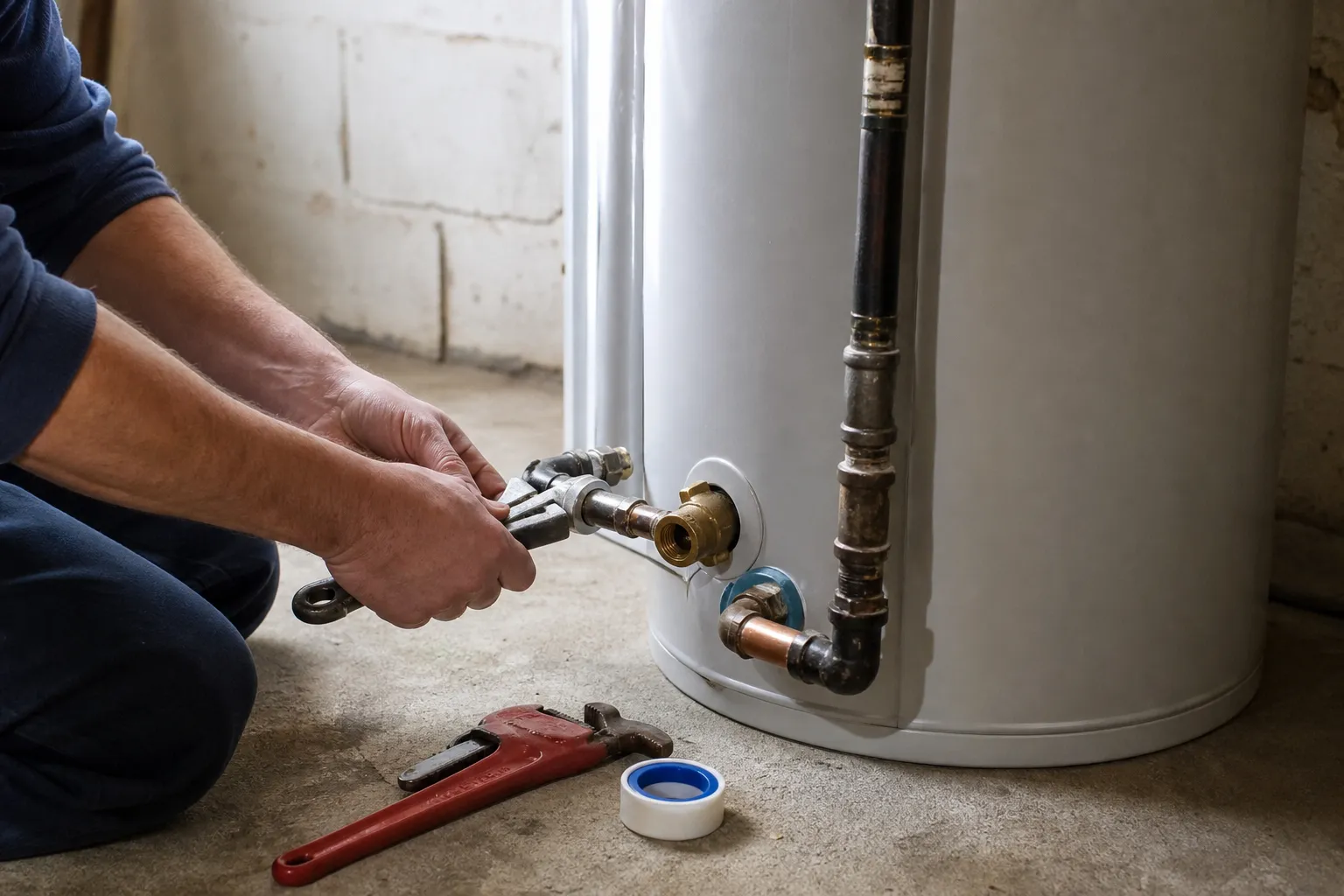
Tank vs. tankless: how the choice changes the math
The decision between a traditional tank and a tankless system affects upfront cost, installation complexity, and long-term operating expense in ways that are worth understanding before you commit to either.
Tank water heaters remain the more familiar and generally less expensive option upfront. They store and continuously heat a set volume of water, which is straightforward for installers and widely compatible with existing plumbing and venting already in place.
- Lower upfront unit and installation cost in most cases
- Simple swap when replacing a unit of the same type and size
- Familiar technology most Philadelphia plumbers install routinely
- Standby heat loss since the tank heats water even when idle
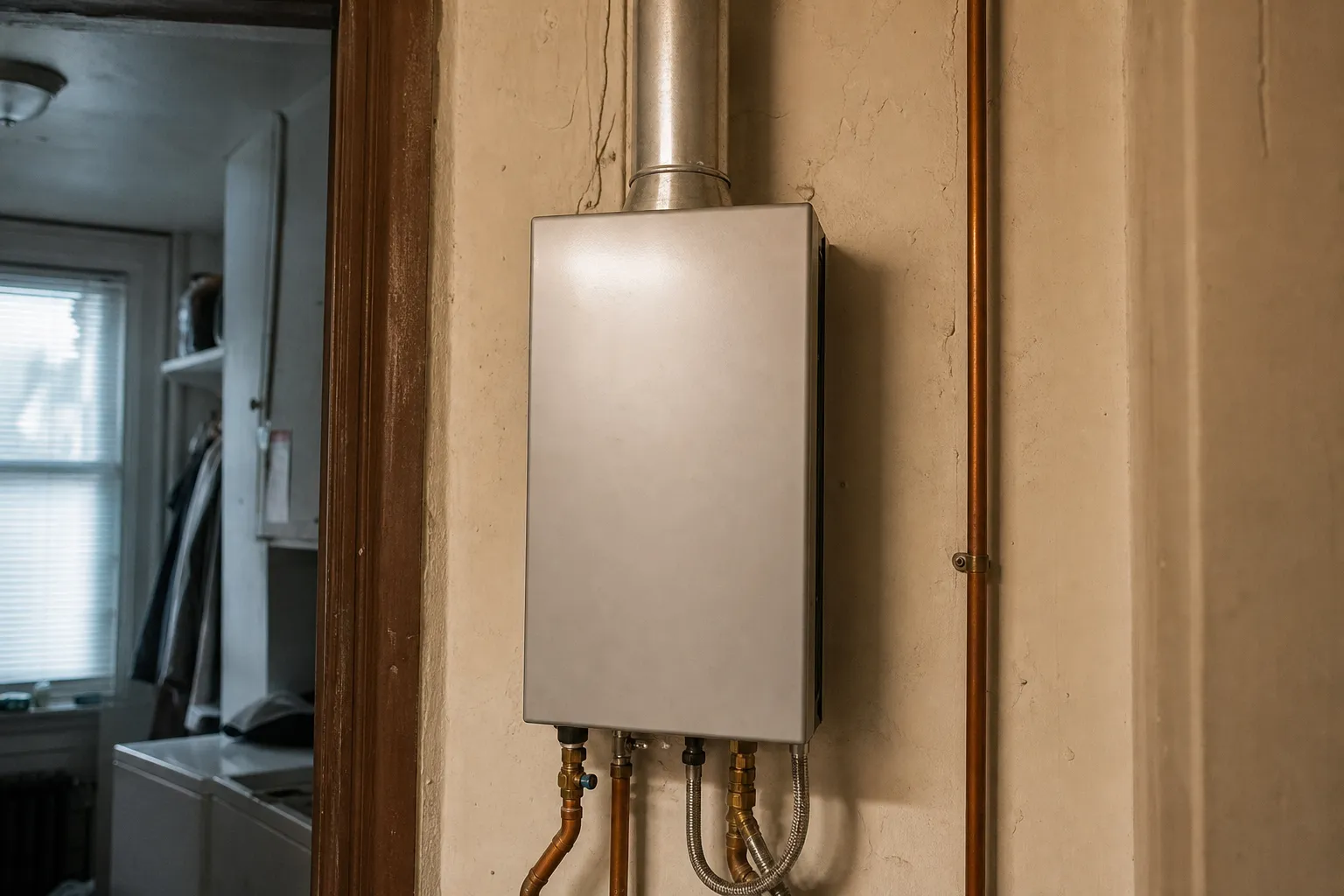
Tankless systems heat water on demand instead of storing it, which eliminates standby heat loss but usually costs more upfront, especially when the installation requires new venting or an upgraded gas line to support the unit's higher flow rate. See our tankless water heater installation page for the full breakdown of what a conversion actually involves.
- Tankless units have a smaller physical footprint, which helps in tight utility closets
- They typically last longer than tank units when properly maintained
- Installation often requires larger gas lines or dedicated electrical circuits
When a tank still makes sense
A straight tank-to-tank swap is usually the most cost-effective path when the existing setup already supports it: the venting is adequate, the gas line is sized correctly, and the household's hot water demand doesn't call for a tankless system's higher output.
Homes with simpler hot water needs, such as smaller households or units without simultaneous high-demand fixtures, often don't see enough benefit from tankless to justify the higher installation cost.
When tankless is worth the higher upfront cost
Larger households, homes with multiple bathrooms running simultaneously, or homeowners planning to stay long enough to recoup the higher install cost through lower operating expenses tend to be the best fit for tankless systems.
Tight utility closets in rowhomes sometimes favor tankless for a different reason entirely: the compact wall-mounted unit frees up floor space that a bulky tank would otherwise occupy.
The long-term cost comparison
The California Energy Commission notes that the expected lifetime of a water heater has a direct impact on the cost-effectiveness of choosing a more expensive, higher-efficiency system, since a longer service life spreads the upfront cost over more years of use. Tankless units commonly outlast tank units by several years, which factors directly into whether the higher install cost pays off over time.
Water heating is not a minor line item on a Philadelphia utility bill either. The U.S. Energy Information Administration reports that water heating, together with lighting and refrigeration, accounted for 25% of total annual home energy use nationwide in 2020, which means the efficiency difference between a tank and tankless system shows up in a real, measurable way on monthly bills.
Signs your water heater needs replacement
Water heaters rarely fail without warning signs first. Catching those signs early gives you time to plan a replacement on your own schedule instead of scrambling during an emergency.
The tricky part is that some symptoms look minor at first, like slightly less hot water than usual or a faint metallic smell, and it's easy to write them off until the unit fails completely.
- Water heater older than 10 to 12 years
- Rusty or discolored hot water
- Popping or rumbling noises from sediment buildup
- Water pooling around the base of the tank
- Inconsistent or insufficient hot water supply
Age alone is one of the strongest predictors of failure. Even a well-maintained tank water heater is living on borrowed time once it passes the decade mark, and a unit that's neglected can fail well before that.
Repair or replace: how to decide
A repair makes sense for isolated issues: a faulty thermostat, a failed heating element, or a pilot light that won't stay lit. Replacement becomes the smarter move when the tank itself is leaking, when the unit is near or past its expected lifespan, or when repair costs start approaching what a new unit would cost.
Tank corrosion is the deciding factor most homeowners overlook. Once a tank itself is rusting through, no repair fixes that, since the tank is the one component that can't be swapped out on its own.
- Confirm the age of the unit from the manufacturer's label
- Have a plumber check whether the issue is a component or the tank itself
- Compare repair cost against the cost of a full replacement
- Factor in how much longer the current unit is realistically expected to last
Why a leaking tank is always a replace, not a repair
A leak from the tank body itself, as opposed to a fitting or valve, means the tank has corroded through. There's no patch or part that fixes a compromised tank, and waiting on a leaking unit risks water damage to the surrounding space.
Rowhome basements and utility closets often sit close to finished living space or shared walls, which makes a slow leak from an aging water heater a bigger risk than it might be in a home with more isolated mechanical space.
The maintenance factor
Water heaters that receive regular flushing and anode rod checks tend to outlast neglected units by a meaningful margin, since sediment buildup and rod corrosion are two of the most common drivers of early failure. Water quality plays a role too: softer water can actually accelerate tank corrosion if it isn't properly mitigated, which runs counter to what a lot of homeowners assume about soft water being universally better for plumbing.
Planning the project and paying for it
A water heater replacement is disruptive when it happens as an emergency, but far less so when it's planned ahead of time. Knowing what to expect on permits, timing, and cost upfront makes the whole process smoother.
The City of Philadelphia requires permits for water heater installation when the work involves gas line changes, new venting, or code-required upgrades. A licensed plumber pulling the permit and scheduling the required inspection removes that burden from the homeowner.
- Permit requirements for gas or venting work
- Code compliance for expansion tanks and shutoff valves
- Inspection scheduling and sign-off
Financing has become part of more of these conversations, since a water heater failure rarely arrives on a convenient timeline. A plumbing provider that offers financing options is solving a real problem for homeowners who weren't expecting the expense.
- Confirm the age and condition of the current unit before it fails completely
- Decide between tank and tankless based on household hot water demand
- Ask for an itemized quote separating unit, labor, and permit costs
- Confirm whether removal and disposal of the old unit is included
- Schedule the work before a slow leak becomes an emergency
What to expect on installation day
A straightforward tank swap of the same type and size is typically a same-day job, including removal of the old unit, installation of the new one, and testing. Conversions between fuel types or upgrades to tankless systems generally take longer due to the added venting or gas line work.
Homeowners in the surrounding suburbs, including Bucks County, often deal with the same older housing stock and venting constraints as the city itself, so the timeline and complexity factors covered here apply just as directly outside Philadelphia proper.
Why acting before failure saves money
Emergency water heater replacement often costs more than a planned one, since emergency scheduling and expedited parts sourcing carry a premium that a scheduled appointment doesn't. Watching for the warning signs covered earlier and scheduling a replacement before a full failure is the more cost-effective path in nearly every case.
Conclusion
Water heater replacement cost in Philadelphia comes down to a manageable set of factors: unit type, fuel source, venting requirements, and the condition of your existing setup. None of that is a mystery once a plumber actually looks at your specific installation instead of quoting from a generic range.
Rowhome utility closets, older venting, and a mix of gas and electric systems all make this market a little more nuanced than a national average suggests. That's exactly why an in-person evaluation beats a phone-quoted number every time.
If your water heater is showing its age, running short on hot water, or making noises it didn't used to make, don't wait for a full failure to deal with it. Guaranteed Plumbing can evaluate your current setup, walk you through tank and tankless options, and get a new system installed correctly the first time.