


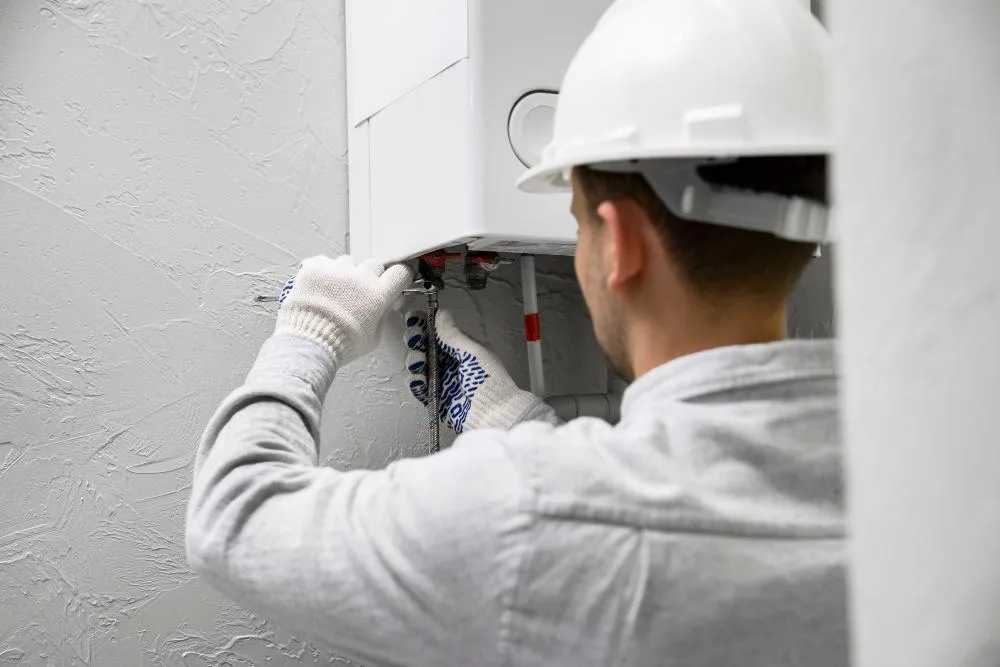
Tankless vs. traditional water heaters: What Philadelphia homeowners should know
Tankless vs traditional water heaters refers to the comparison between on-demand water heating systems, which heat water only as it is needed without storing it, and conventional storage-tank systems, which maintain a reservoir of pre-heated water that must be replenished after each period of heavy use.
Hot water is one of those household conveniences that rarely gets much attention until it suddenly disappears. For many Philadelphia homeowners, the moment of realization happens on a cold winter morning when the shower turns lukewarm halfway through, or when multiple family members compete for hot water at the same time. At that point, a question that may have seemed unimportant suddenly becomes urgent: is it time to replace the water heater, and if so, should you choose a traditional tank or a tankless system?
The debate surrounding tankless vs traditional water heaters has become increasingly common as homeowners seek more efficient, reliable, and cost-effective ways to meet their hot water needs. Both systems have distinct advantages and limitations. While traditional storage-tank water heaters remain the most common option in Philadelphia homes, tankless technology has gained popularity because of its energy efficiency, compact design, and ability to provide hot water on demand.
However, choosing between the two is rarely as simple as selecting the newer technology. Installation requirements, household water usage patterns, available space, maintenance needs, and long-term operating costs all play important roles in determining the right solution.
In this article, you will learn the key performance differences between tankless and traditional water heaters, what installation actually costs in a Philadelphia home, how space and layout affect your options, and what each system requires in terms of maintenance and long-term ownership.
Here's what you need to know.
- The first cold morning when the shower runs out of hot water and the decision feels urgent
- The hidden cost difference between installing a tank and switching to tankless
- Space, layout, and why your basement often decides the type of water heater you can realistically use
- Maintenance, lifespan, and what breaks first in Philadelphia water conditions
Keep reading to understand which system aligns with your household's actual usage patterns and what each choice means for your utility bills over the long run.
The first cold morning when the shower runs out of hot water and the decision feels urgent
Most homeowners begin researching water heaters after experiencing a problem. A shortage of hot water often serves as the first sign that an existing system may no longer meet household demands, and it is usually the event that prompts a more serious comparison of available options.
Why traditional tanks run out of hot water faster than most homeowners realize
Traditional water heaters store a finite amount of heated water inside an insulated tank. Common residential models hold between 40 and 80 gallons, depending on household size and expected usage. Once that stored hot water is depleted, the heater must warm a fresh supply of incoming cold water before additional hot water becomes available. Recovery time can range from 20 minutes to over an hour, depending on the tank size, fuel type, and efficiency rating.
Many homeowners underestimate how quickly a tank can be emptied. A typical busy morning may involve multiple showers, dishwasher use, laundry cycles, bathroom sink usage, and kitchen cleaning. When these activities overlap, demand can exceed the tank's capacity well before the household is finished using it. A family of four taking back-to-back showers may consume most of the stored supply before the last person even reaches the bathroom.
This limitation is one reason homeowners begin evaluating tankless water heater benefits, especially once hot water shortages become frequent enough to disrupt daily routines. Consulting a water heater repair and replacement professional before purchasing new equipment helps clarify whether the issue is a failing unit or simply a capacity mismatch.
How demand patterns in busy households expose system limitations that specs don't reveal
Water heater performance is heavily influenced by how a household actually uses hot water throughout the day, not just by equipment specifications. A traditional tank system may function perfectly for a two-person household but struggle noticeably in a larger family environment.
Common high-demand scenarios include running multiple showers at once, overlapping laundry and bathing cycles, dishwasher and bathroom use within the same morning window, large soaking tubs that require significant volume, and overnight guests who increase overall consumption beyond the system's normal recovery capacity.
Tankless systems operate differently because they heat water as it flows through the unit rather than storing it in advance. This approach eliminates the concern of depleting stored hot water, although tankless systems have their own capacity constraints related to flow rate. When total simultaneous demand exceeds the unit's rated gallons-per-minute output, temperature delivery may become inconsistent. Understanding daily usage patterns before comparing equipment types often produces better purchasing decisions than focusing on specifications alone.
Why assuming a bigger tank automatically solves a hot water shortage is usually wrong
When homeowners experience hot water shortages, the first instinct is often to install a larger tank. While increasing tank capacity can help in some situations, it is not always the most efficient or cost-effective solution.
A larger tank requires more floor and service clearance space, consumes more energy to maintain stored water temperature around the clock, costs more to purchase and install, and may still run out during peak demand periods if usage patterns have expanded significantly. Additionally, larger tanks continuously lose heat through their walls even when hot water is not being used, a process called standby loss that adds to operating costs year-round regardless of demand.
In some households, upgrading to a larger tank simply postpones the underlying issue rather than fully addressing it. Philadelphia plumbing services professionals frequently encounter homeowners who have already replaced a tank once and are facing the same shortage again because usage patterns have outgrown what any reasonable tank size can reliably serve.
The hidden cost difference between installing a tank and switching to tankless
One of the most significant factors in the tankless vs traditional water heaters decision involves total installation cost. Equipment price is only part of the investment, and focusing on sticker price alone often leads homeowners to underestimate what a full system changeover actually requires.
Why upfront installation costs vary so widely between homes in Philadelphia
The cost of a new water heater depends heavily on existing infrastructure rather than equipment choice alone. Every Philadelphia home presents unique conditions, including the age of the property, existing plumbing configuration, fuel source, venting arrangements, electrical capacity, and available installation space.
As a result, two homeowners purchasing similar equipment may receive dramatically different installation estimates. Traditional tank replacements are often straightforward when the new unit matches the existing setup in size, fuel type, and venting configuration. Tankless systems may require more extensive modifications depending on how different the new equipment's requirements are from what the home currently supports. This is why professional evaluation before purchase is essential. The installed cost of any water heater is a more meaningful number than the equipment price alone.
What venting, gas line, and electrical upgrades actually cost and why most homeowners don't plan for them
One reason tankless installations carry higher upfront costs is the frequent need for supporting infrastructure upgrades that fall outside the equipment price.
Gas line upgrades are among the most common requirements. Many tankless gas water heaters demand significantly higher fuel input than traditional tanks, and existing gas lines may need enlargement to support that demand. Professional gas line services are required for this work and must comply with local code. Venting modifications are also frequently necessary, since tankless units typically use specialized sealed or direct-vent systems that handle higher combustion temperatures and different exhaust characteristics than standard tank venting. Even gas-powered tankless units require dedicated electrical connections for ignition and controls. Electric tankless systems may demand a substantially larger electrical service than is currently installed.
These additional costs frequently surprise homeowners who compared equipment prices without accounting for the full scope of what a switchover involves.
How long-term energy savings shift the total cost equation for homeowners who stay in their homes
Although tankless systems often cost more upfront, operational savings influence long-term value in ways that can close or eliminate the initial cost gap over time. Traditional water heaters continuously heat stored water regardless of whether hot water is being used, which creates standby energy loss throughout every hour of every day. Tankless systems operate only when demand exists, eliminating that ongoing waste.
According to the U.S. Department of Energy, tankless water heaters avoid the standby heat losses associated with storage water heaters, and for homes that use 41 gallons or less of hot water daily, demand-type systems can be 24 to 34 percent more energy efficient than conventional storage-tank models. Water heating accounts for roughly 13 to 18 percent of a home's energy bill, meaning efficiency gains at this level can produce meaningful utility savings over a system's lifespan. For homeowners accessing a full range of plumbing services during a planned renovation, bundling a tankless installation with other work often reduces total labor costs.
Space, layout, and why your basement often decides the type of water heater you can realistically use
While performance and efficiency receive significant attention in comparisons, physical space often becomes the deciding practical factor. The layout of a Philadelphia home can determine which options are feasible long before any equipment is purchased.
How traditional tanks consume more usable space than most homeowners expect until it is gone
Traditional water heaters occupy a significant footprint in any utility area. A typical residential tank requires dedicated floor space, service and access clearance on multiple sides, venting access above, and plumbing connections on the supply and distribution lines. In many Philadelphia basements, especially in rowhouses and older detached properties, storage space is already limited.
A tank may consume room that could otherwise serve for shelving, seasonal storage, laundry equipment, or workshop areas. Homeowners frequently underestimate the amount of usable space lost to large water heater installations until they attempt to use the area for something else and find there is simply no room. This becomes particularly noticeable in smaller properties where every square foot in a utility space carries real functional value.
Why tankless units offer a space advantage that matters especially in older Philadelphia rowhouses
One of the most widely recognized tankless water heater benefits is space efficiency. Tankless units mount directly to walls and occupy substantially less room than storage tanks, freeing floor space for other uses and creating more flexible installation locations within the utility area or mechanical room.
In older Philadelphia rowhouses and twin homes, this compact footprint can be especially valuable. Some installations allow homeowners to reclaim entire areas previously dedicated to large tanks. The wall-mount configuration also opens possibilities for installing equipment in tighter spaces, such as utility closets or enclosed mechanical areas, that simply could not accommodate a floor-standing tank. Professional residential plumbing repair specialists who work regularly in older Philadelphia homes understand which spaces can support a tankless unit and which require structural or layout modifications before installation is feasible.
When physical and infrastructure constraints override a homeowner's preference for one system over the other
Despite personal preferences, physical limitations sometimes dictate the final equipment choice regardless of which system a homeowner would prefer. Venting accessibility, electrical service capacity, gas supply availability, existing plumbing layout, and local code requirements all play a role.
A homeowner who strongly prefers a tankless system may face infrastructure upgrade costs that make a traditional tank the more practical near-term choice. Conversely, a small mechanical room with no available floor space may favor a tankless installation for purely spatial reasons. A professional evaluation that accounts for the home's actual conditions helps identify these constraints before decisions are finalized and before equipment is purchased. Skipping that step is one of the more common and expensive mistakes homeowners make when planning a water heater replacement.
Maintenance, lifespan, and what breaks first in Philadelphia water conditions
Water heater ownership extends well beyond installation. Maintenance requirements and expected lifespan significantly influence overall value, and both differ meaningfully between tank and tankless systems.
Why sediment buildup damages traditional tanks faster and costs more to ignore
Mineral deposits naturally accumulate inside water heaters over time. As water is heated, dissolved minerals settle at the bottom of storage tanks. This sediment layer reduces heating efficiency, increases the time required to reach target temperatures, creates rumbling or popping noises during heating cycles, accelerates corrosion of the tank interior, and shortens overall equipment life.
Traditional tanks are particularly susceptible because they continuously store water, giving minerals constant contact time with the tank surfaces. Over time, sediment accumulation becomes more significant and more difficult to address. Periodic flushing helps reduce buildup and maintain performance, but sediment that has been allowed to accumulate for several years often cannot be fully removed without professional service. Philadelphia-area water characteristics can contribute to mineral accumulation depending on the source and treatment of local water, making regular maintenance particularly important for tank-type systems in this region. Scheduling emergency plumbing repair after a tank failure caused by sediment damage is far more disruptive and expensive than the routine maintenance that prevents it.
What maintenance actually looks like for each system and how often it needs to happen
Both systems require maintenance, but the procedures and frequency differ in ways that matter for long-term ownership planning.
Traditional water heater maintenance typically involves annual tank flushing to remove sediment, anode rod inspection and replacement every two to five years depending on water quality, pressure relief valve testing to confirm the safety mechanism is functional, and regular visual monitoring for signs of corrosion, leaks, or rust-colored water.
Tankless water heater maintenance centers on different concerns. Descaling the heat exchanger is the most critical task, particularly in areas with harder water, and should occur annually in most residential applications. Filter screens at the cold water inlet require periodic cleaning to maintain flow rates. System flushing removes mineral scale that accumulates inside the heat exchanger over time. Performance inspections confirm that ignition, venting, and output temperatures are operating within specification.
Many homeowners assume tankless systems require no maintenance because there is no tank to flush. That assumption leads to premature heat exchanger failure and reduced efficiency. The type of maintenance differs between systems, but the necessity of performing it does not.
How the lifespan gap between tank and tankless systems affects the total cost of ownership over time
Lifespan represents one of the most significant distinctions in the tankless vs traditional water heaters comparison, and it directly affects how total ownership costs compare over the time a homeowner stays in a property.
According to the U.S. Department of Energy, storage water heaters typically last 10 to 15 years, while tankless systems have easily replaceable parts that can extend their service life significantly beyond that range, often 20 years or more when properly maintained. The extended lifespan of a tankless unit means fewer replacement cycles over the life of a home, which can partially or fully offset the higher installation cost, particularly for homeowners who plan to remain in the property for many years.
For homeowners planning a longer-term stay, understanding the full ownership cost of each option is as important as comparing installation quotes. Reviewing common questions about water heater service before meeting with a contractor helps homeowners ask the right questions and evaluate proposals with a clearer picture of what long-term ownership of each system actually involves.
Conclusion
Choosing between tankless vs traditional water heaters involves balancing installation costs, energy efficiency, available space, maintenance requirements, and household hot water demands. While both systems can provide reliable performance when properly installed and maintained, they serve different needs and suit different property types.
Traditional storage-tank water heaters remain a practical and cost-effective solution for many Philadelphia homeowners. Their lower upfront costs and relatively straightforward installation make them an attractive choice for households seeking a familiar and proven option. However, limitations related to storage capacity, standby energy loss, and a shorter traditional water heater lifespan can affect long-term value, particularly in households with growing hot water demands.
Tankless systems offer compelling advantages including continuous hot water production, compact design, improved energy efficiency, and longer service life. These tankless water heater benefits make them particularly appealing for larger households, homeowners looking to maximize space, and those focused on reducing long-term utility costs. However, higher installation expenses and potential infrastructure upgrades should be carefully evaluated during the planning process.
Every Philadelphia home presents unique circumstances. Basement layout, plumbing configuration, fuel availability, household size, and long-term ownership plans all influence which option makes the most sense. A thorough assessment by a qualified professional experienced in water heater installation Philadelphia projects helps homeowners understand both immediate and long-term implications before committing to a decision.
Whether you are evaluating hot water heater replacement cost, comparing energy efficient water heating systems, or simply trying to avoid another cold shower on a winter morning, the right system is the one that aligns with your household's actual usage patterns and your property's physical realities. Contact Guaranteed Plumbing and Heating to schedule a professional assessment and get an honest recommendation based on your home's specific conditions.