




Warning signs your AC needs repair in Bucks County before a complete breakdown
Air conditioners almost never die without warning. They send signals for days or weeks before the actual breakdown, and those signals are not subtle if you know what to listen for, look at, and feel. The problem is that most Bucks County homeowners dismiss the early signs as quirks, seasonal adjustments, or things that will probably fix themselves. They do not fix themselves. They get worse.
Catching warning signs your AC needs repair in Bucks County early is the difference between a $200 fix on a Tuesday afternoon and a $2,000 emergency call on a Saturday night in the middle of a heat wave.
According to ENERGY STAR, dirt and neglect are the top causes of heating and cooling system failure and inefficiency. That means most breakdowns are preventable, and the homeowners who avoid them are simply the ones who paid attention sooner.
Bucks County summers are hard on residential cooling systems. The humidity adds to the workload, the older housing stock in many neighborhoods means ductwork and insulation are not always up to modern standards, and the systems themselves are often running well past the age where maintenance alone keeps them reliable.
This article covers the specific warning signs that mean your AC needs professional attention, what each one actually tells you about the system, and what to do about it before the problem escalates.
In this article, you will learn about:
- The air from your vents used to be cold, and now it is not
- Your electric bill is telling you something before your AC does
- Those new sounds are not normal, no matter what you tell yourself
- Short cycling wears out the most expensive part of the system
- Your house feels humid even though the AC is running
- Water where it should not be is a clock ticking toward damage
- A $3 filter can prevent a $3,000 repair
Keep reading to learn which signs need a same-day call, which ones give you a window to schedule, and which ones you can address yourself before they become someone else's problem to fix.
The air from your vents used to be cold, and now it is not
This is often the first thing homeowners notice, and it is one of the clearest indicators that something inside the system has changed.
What cold actually means in measurable terms
A properly functioning air conditioner should produce a temperature split of 15 to 20 degrees between the air entering the return and the air leaving the supply registers. If the return air is 78 degrees, the supply air should be somewhere around 58 to 63 degrees. You can check this yourself with an inexpensive thermometer held at the return grille and then at the closest supply register.
When the supply air creeps up to 68 or 70 degrees while the return stays at 78, the system is losing cooling capacity somewhere. The air feels lukewarm instead of cold, rooms take longer to cool, and the system runs longer cycles to compensate. This is not a gradual seasonal adjustment. It is a measurable performance decline.
The most likely causes, ranked by how often they show up
Several problems can reduce the temperature split, and they range from simple to serious:
- A dirty air filter restricting airflow across the evaporator coil. This is the most common cause and the cheapest to fix. The U.S. Department of Energy notes that routinely replacing or cleaning air filters can lower an air conditioner's energy consumption by 5 to 15 percent, and restricted airflow is the mechanism behind that waste.
- A dirty evaporator coil that cannot absorb heat efficiently. Dust and particulate build up on the coil surface over time, insulating it from the air passing over it. Annual coil cleaning during a maintenance visit prevents this.
- Low refrigerant from a leak in the system. Refrigerant does not get used up. If it is low, something is leaking, and topping it off without finding and fixing the leak is a temporary measure that leads to compressor damage.
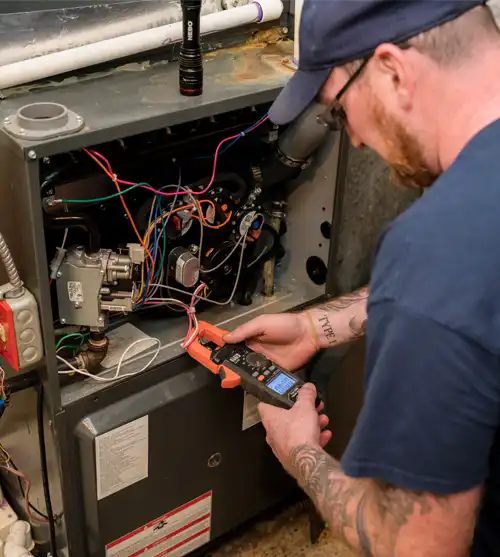
- A failing compressor that can no longer pressurize refrigerant to the required level. This is the most expensive possibility and the one that a technician needs to diagnose with pressure and amperage readings.
If you check the filter and it is clean, and the air still feels warmer than it should, the next step is a professional diagnostic. The sooner the root cause is identified, the less likely it is to cascade into a larger failure.
Your electric bill is telling you something before your AC does
A system that is losing efficiency often continues to cool the house, at least partially. The performance decline might not be dramatic enough to notice in the rooms. But the electric bill notices it immediately.
What a normal summer bill looks like and when to worry
Every Bucks County homeowner's baseline is different depending on the size of the home, the age of the system, the electricity rate, and personal thermostat preferences. The signal to watch for is not the absolute dollar amount. It is the change.
Compare your current summer bills to the same months last year. If the usage has jumped 15, 20, or 30 percent without a corresponding change in rates, outdoor temperatures, or habits, the AC is working harder than it used to for the same result. That extra work shows up as longer run times, more frequent cycling, or both, and all of it draws more electricity.
Common efficiency drains that raise your bill without an obvious performance change include:
- A dirty condenser coil that cannot reject heat effectively, forcing the compressor to run longer.
- Duct leaks that lose 20 to 30 percent of cooled air into unconditioned spaces. According to ENERGY STAR, this level of loss is typical in homes with unsealed ductwork and directly inflates both runtime and energy consumption.
- A refrigerant charge that has drifted low, reducing the system's cooling output per cycle and requiring more cycles to maintain the set temperature.
- A blower motor running at reduced speed due to a weak capacitor or worn bearings, which lowers airflow and forces the system to compensate with extended run times.
The bill-to-performance gap
The frustrating part of an efficiency problem is that the house may still cool adequately. You might not feel uncomfortable. But you are paying 20 percent more than you should for the same comfort level. That gap compounds every month of the cooling season, and over a full summer, the wasted electricity can exceed the cost of the repair that would have eliminated it.
A pre-season tune-up catches most of these issues. A technician measures refrigerant pressures, tests the capacitor, cleans the coils, checks airflow, and inspects the ductwork. The cost of that visit is almost always less than the monthly energy penalty of running a system with a correctable problem.
Those new sounds are not normal, no matter what you tell yourself
A healthy air conditioning system has a predictable sound profile. You know the low hum of the compressor starting, the rush of air through the vents, and the quiet click of the system cycling off. When new sounds appear, they are not random noise. They are diagnostic information.
What each sound usually means
Different sounds point to different components, and matching the sound to the source helps prioritize the response:
- Grinding or scraping from the air handler usually indicates a blower motor bearing failure or a blower wheel that has shifted on its shaft and is contacting the housing. This gets worse quickly. Shut the system off and schedule service before the motor burns out entirely.
- Rattling from the outdoor unit often means a loose panel, a loose fan blade, or debris that has fallen into the condenser housing. Check for visible obstructions first. If the rattle persists, a component may be loose internally.
- Squealing at startup, especially from the outdoor unit, can signal a failing compressor motor or a contactor that is not engaging cleanly. The compressor is the most expensive component in the system, and protecting it from repeated hard starts is worth a service call.
- Clicking that repeats rapidly without the system starting is a classic sign of a failed capacitor or a control board relay that cannot complete the circuit. The system is trying to start and failing, and each attempt puts stress on the compressor.
- Hissing near the refrigerant lines or the indoor unit can indicate a refrigerant leak. Refrigerant under pressure escaping through a small hole produces a steady, quiet hiss that is easy to miss against the background noise of normal operation.
- Bubbling or gurgling in the refrigerant lines during operation can also point to a refrigerant charge issue, either low charge or a restriction in the line that is causing the refrigerant to flash prematurely.
The one sound that means stop the system immediately
A loud, sudden bang from the compressor followed by the outdoor unit shutting off suggests a catastrophic internal failure. A connecting rod, a valve plate, or a piston may have broken loose. Running the compressor after this kind of event can turn a seized component into an electrical burnout that contaminates the entire refrigerant circuit with metal debris and acid. Turn the system off at the thermostat and call for emergency HVAC repair.
Short cycling wears out the most expensive part of the system
Short cycling is when the AC turns on, runs for a few minutes, shuts off, and then repeats the cycle far more frequently than normal. It looks like the system is working. It is actually destroying itself.
Why every startup is the hardest moment for the compressor
The compressor draws its highest electrical current during the first few seconds of each startup, a surge called locked-rotor amperage. Under normal operation, this surge happens a few times per hour. During short cycling, it can happen dozens of times per hour. Each surge generates peak heat and peak mechanical stress on the compressor's internal components.
A compressor is designed to handle a certain number of start-stop cycles over its lifetime. Short cycling burns through that budget at an accelerated rate. It also prevents the system from running long enough to dehumidify the air or cool the home evenly, so you get worse comfort on top of accelerated wear.
What causes short cycling and how to tell
The most common causes fall into two categories, one simple and one more involved:
Simple causes you can check yourself:
- A dirty air filter restricting airflow enough that the system overheats and trips the high-limit safety switch.
- A thermostat placed in a location that reads inaccurate temperatures, such as near a sunny window, above a supply register, or in a draft.
- A thermostat that is malfunctioning and sending incorrect signals to the equipment.
Causes that require a technician:
- An oversized system that satisfies the thermostat too quickly without completing a full cooling cycle. This is an installation issue that no repair can fix, only equipment replacement or modifications like speed adjustments and dehumidifier integration.
- Low refrigerant causing the evaporator to freeze and triggering the system's safety controls.
- A failing compressor that overheats under load and trips its internal thermal protection.
- An electrical fault, such as a weak run capacitor, that interrupts the cycle before it completes.
If the filter is clean and the thermostat appears to be reading correctly, short cycling is a strong signal to call for a diagnostic before the compressor takes enough damage to fail.
Your house feels humid even though the AC is running
Air conditioning removes moisture and heat simultaneously. When the house reaches the set temperature but still feels damp, sticky, or clammy, the system is failing on the humidity side of its job.
Why humidity is an AC performance metric, not just a comfort preference
The EPA recommends maintaining indoor relative humidity below 60 percent, ideally between 30 and 50 percent, to prevent mold growth and maintain healthy indoor air quality. An air conditioner that cools but does not dehumidify leaves the indoor environment above that threshold, which creates conditions for biological growth on surfaces, inside ductwork, and in any enclosed space with limited airflow.
High indoor humidity also makes the air feel warmer than the thermostat indicates. At 74 degrees with 65 percent humidity, the perceived temperature is several degrees higher. Homeowners respond by lowering the thermostat, which increases energy use without addressing the moisture. The result is a colder but still clammy house and a higher electric bill.
What is keeping the humidity high
Several AC problems manifest as humidity rather than temperature issues:
- An oversized system that short-cycles and never runs long enough to pull moisture out of the air. Dehumidification requires sustained airflow over the cold evaporator coil. A system that satisfies the thermostat in five minutes and shuts off leaves most of the moisture untouched.
- A dirty evaporator coil that has less surface area available for condensation. Dust and buildup on the coil reduce its ability to condense water vapor, and moisture passes through the system and back into the house.
- A fan set to "on" instead of "auto" at the thermostat. When the fan runs continuously, including between cooling cycles, it blows air across the wet coil and re-evaporates moisture that was condensed during the last cycle. Switching the fan to "auto" lets the coil drain between cycles and keeps that moisture out of the air.
- A clogged condensate drain that causes water to back up into the drain pan and overflow, adding moisture to the air around the unit rather than removing it from the house.
If your Bucks County home stays above 55 to 60 percent humidity with the AC running normally, one or more of these issues is likely present, and a heating and cooling diagnostic will identify which one.
Water where it should not be is a clock ticking toward damage
Moisture around the indoor unit, a wet spot on the ceiling below the air handler, or a puddle in the basement near the furnace are all signs that something in the condensate system has failed.
Where the water comes from and where it should go
During normal cooling operation, water condenses on the evaporator coil and drips into a drain pan beneath the coil. From there, it flows through a PVC condensate drain line, either to a floor drain, a utility sink, or the exterior of the house. A properly functioning system in a humid Bucks County summer can produce several gallons of condensate per day. All of it should exit the house through the drain line without ever being visible.
When water appears around the equipment, it means one of the following has happened:
- The condensate drain line is clogged with algae, dust, or biological buildup, and water is backing up into the pan and overflowing.
- The drain pan has cracked or corroded and is leaking before the water reaches the drain line.
- The drain pan's float switch, which is designed to shut the system off when the pan overflows, has failed or was never installed.
- The evaporator coil is iced over and the melting ice is producing more water than the drain system can handle at once.
Why you should not wait to address it
Water from a condensate overflow is typically clean, but the damage it causes is real. A persistent overflow can saturate the insulation around the air handler, warp the flooring beneath the unit, promote biological growth inside the cabinet and the surrounding area, and stain or damage ceilings if the air handler is in the attic.
FEMA estimates that one inch of water in a home can cause up to $25,000 in damage. A condensate drain clog will not produce a flood on that scale in a single day, but the cumulative effect of weeks of slow overflow, especially in an attic or a hidden utility closet, can cause significant and expensive damage.
Flushing the drain line with diluted vinegar once or twice during the cooling season is a simple preventive step. If the line has already clogged and water is visible, clear it or have it cleared before restarting the system.
A $3 filter can prevent a $3,000 repair
The air filter is the most overlooked component in any residential cooling system, and its failure to be replaced on time is the leading contributing factor to nearly every other problem on this list.
How a clogged filter cascades through the entire system
A dirty filter restricts airflow. Reduced airflow means less air crosses the evaporator coil. Less air means less heat absorption, which means the coil gets too cold and can freeze. A frozen coil blocks airflow completely, which triggers the system to shut down or causes the compressor to overheat. An overheated compressor trips on thermal protection, and repeated trips damage the motor windings.
That cascade, from a clogged filter to a damaged compressor, is not hypothetical. It is the sequence that HVAC technicians see repeatedly, especially in midsummer when the system is running its hardest and the filter is loading its fastest. The U.S. Department of Energy confirms that routinely replacing air filters can lower an air conditioner's energy consumption by 5 to 15 percent. But the energy savings are almost secondary to the protection a clean filter provides against the failure chain above.
How often is often enough
The right interval depends on your home:
- Standard one-inch filters in a home without pets or high dust exposure should be checked monthly and replaced every one to three months during the cooling season.
- Homes with pets, especially dogs and cats that shed, should replace the filter monthly during the months the system runs daily.
- Homes near construction, renovation, or high-traffic roads may need monthly replacement year-round due to elevated particulate levels.
- Thicker media filters, four or five inches, last longer but still need to be checked on the schedule recommended by the manufacturer.
Pull the filter out and hold it up to a light. If you cannot see light through the filter media, it is past due. If the filter has visible matting or discoloration, it is significantly past due. Replacing it takes 60 seconds and costs a few dollars. Skipping it risks everything downstream.
Conclusion
Your air conditioner communicates through performance changes, and every warning sign on this list is the system asking for help before the situation gets worse. Warm air from the vents, a climbing electric bill, new noises, short cycling, persistent humidity, visible water, and a neglected filter are not separate, unrelated problems. They are often links in the same chain, where one untreated issue triggers the next until the system reaches a point where repair is no longer simple or cheap.
Bucks County's summers are not gentle on cooling equipment. The heat and humidity push systems to their limits, and the homes that stay comfortable through July and August are the ones where the homeowner caught the early signals and acted on them. A pre-season tune-up, a clean filter, and a prompt response to the first unusual sound or performance change are all it takes to stay ahead of the breakdown curve.
If your system is showing any of the signs in this article, now is the time to schedule a diagnostic, not after the system stops entirely on the hottest day of the year. Guaranteed Plumbing & Heating has been serving the Philadelphia area, including Bucks County, since 1990. Call 215-342-7200 and a real person will pick up. The estimate is free, and you will know exactly what your system needs before the next heat wave puts it to the test.