


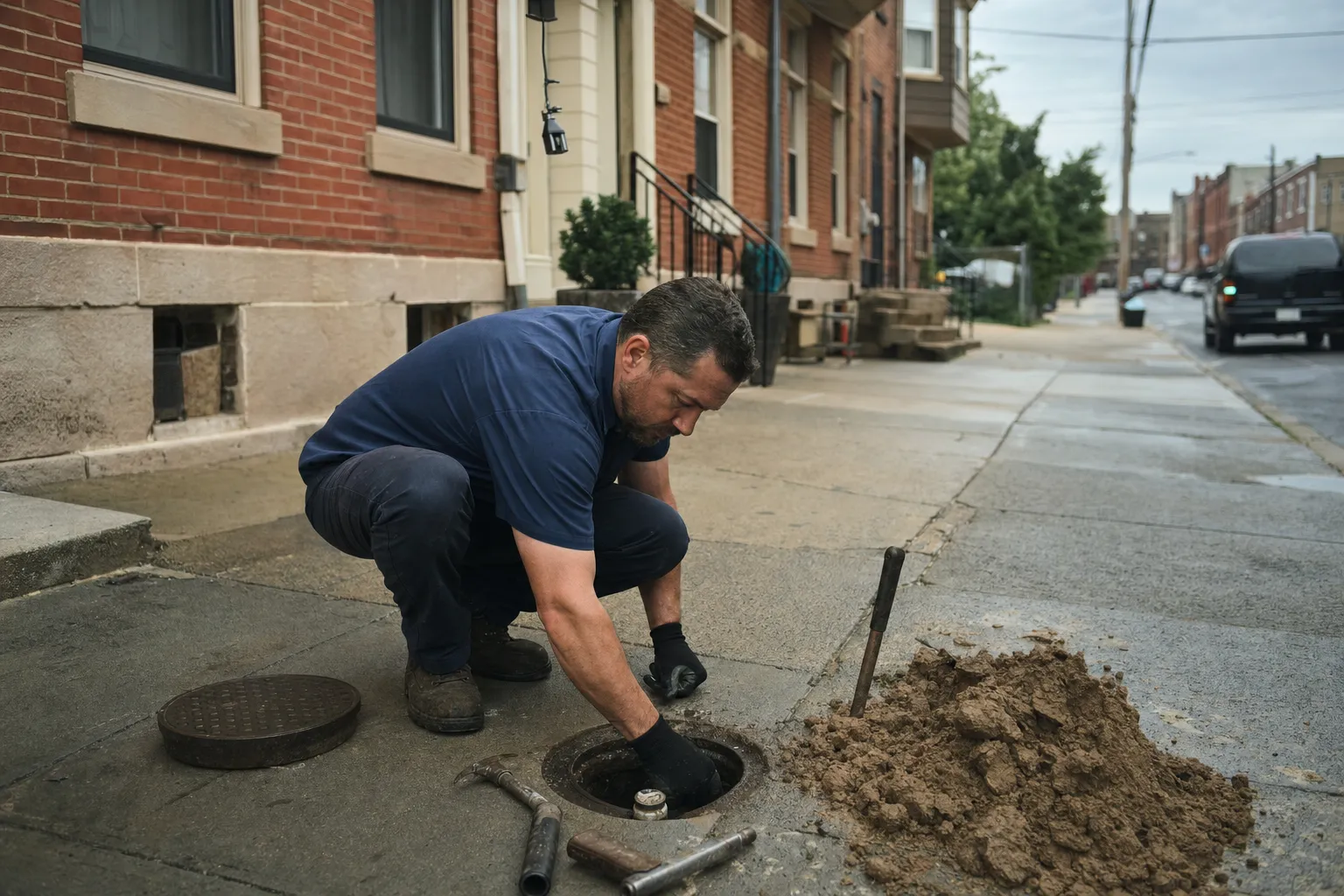
What is a curb trap, and why do Philadelphia row homes need curb trap repairs?
A curb trap is one of those plumbing parts most Philadelphia homeowners never think about until a Notice of Defect shows up at their door. It sits underground between your house and the street, and it's doing more work than its size would suggest.
That's the frustrating part. It's not something you can see, inspect, or maintain the way you would a faucet or a water heater, yet you're still responsible for it under city rules. Understanding what a curb trap actually does makes the whole situation a lot less confusing.
This guide covers what a curb trap is, why Philadelphia's row homes run into curb trap problems so often, and what to expect if you've received a notice about one. You'll also get a clear picture of what repair or replacement actually involves. Keep reading to find out what a curb trap repair actually involves before you call anyone.
What a curb trap is and what it does
A curb trap is a J-shaped section of pipe that connects your home's main drain to the sewer lateral running out to the street. The Philadelphia Water Department defines it as exactly that: the J-pipe linking the drain to the lateral, sitting near the property line under the sidewalk or front yard.
Its job is simple but important. The trap holds a small amount of water at all times, and that water seal blocks sewer gas from traveling back up through the pipe and into your home.
- Prevents sewer gas from entering the house
- Connects the house drain to the sewer lateral
- Usually paired with a vent pipe for air circulation
- Located underground near the curb or property line
The vent pipe, sometimes called a fresh air inlet, works alongside the trap to let air circulate through the drainage system. Without that vent, the trap wouldn't function correctly, since trapped water needs somewhere for displaced air to go.
Most homeowners never see their curb trap and never need to, as long as it's doing its job. Problems surface only when the trap cracks, shifts, fills with debris, or fails in a way that lets water or gas where it shouldn't be.
Where the curb trap sits in the bigger picture
The curb trap is part of a longer chain of plumbing that starts inside your home and ends at the public sewer main in the street. Wastewater leaves your fixtures, travels through the main drain, passes through the curb trap, and continues along the lateral to the city's sewer system.
Every piece of that chain from the house to the street connection is the homeowner's responsibility to maintain, not the city's. That includes the water service pipe, the curb trap, the main drain, and the full sewer lateral.
Why the trap matters more than its size suggests
A failed curb trap doesn't always announce itself loudly. Sometimes the first sign is a faint sewer smell in the basement, and other times it's a full backup that makes the problem impossible to ignore.
- Sewer gas odor near the basement or front of the house
- Slow drainage throughout the house
- Water pooling in the yard near the curb
- A formal Notice of Defect from the city
Any of these is worth a call to a plumber, since diagnosing a curb trap issue usually requires a camera inspection to see exactly what's happening underground.
How a curb trap differs from indoor plumbing traps
Every fixture inside your home, from sinks to toilets, has its own small trap that holds water and blocks sewer gas at the fixture level. The curb trap does the same job, but for the entire house at once, sitting at the point where your plumbing meets the public system.
That distinction matters because indoor traps are easy to inspect and maintain, while the curb trap is buried and effectively invisible until something goes wrong. A dried-out indoor trap, like a rarely used floor drain, can also let sewer gas through, which sometimes gets mistaken for a curb trap failure when the real fix is as simple as running water through the fixture.
Why Philadelphia row homes have curb trap problems
Philadelphia's rowhome-heavy neighborhoods run into curb trap issues at a higher rate than newer suburban construction, and the reasons trace directly back to when and how these homes were built.
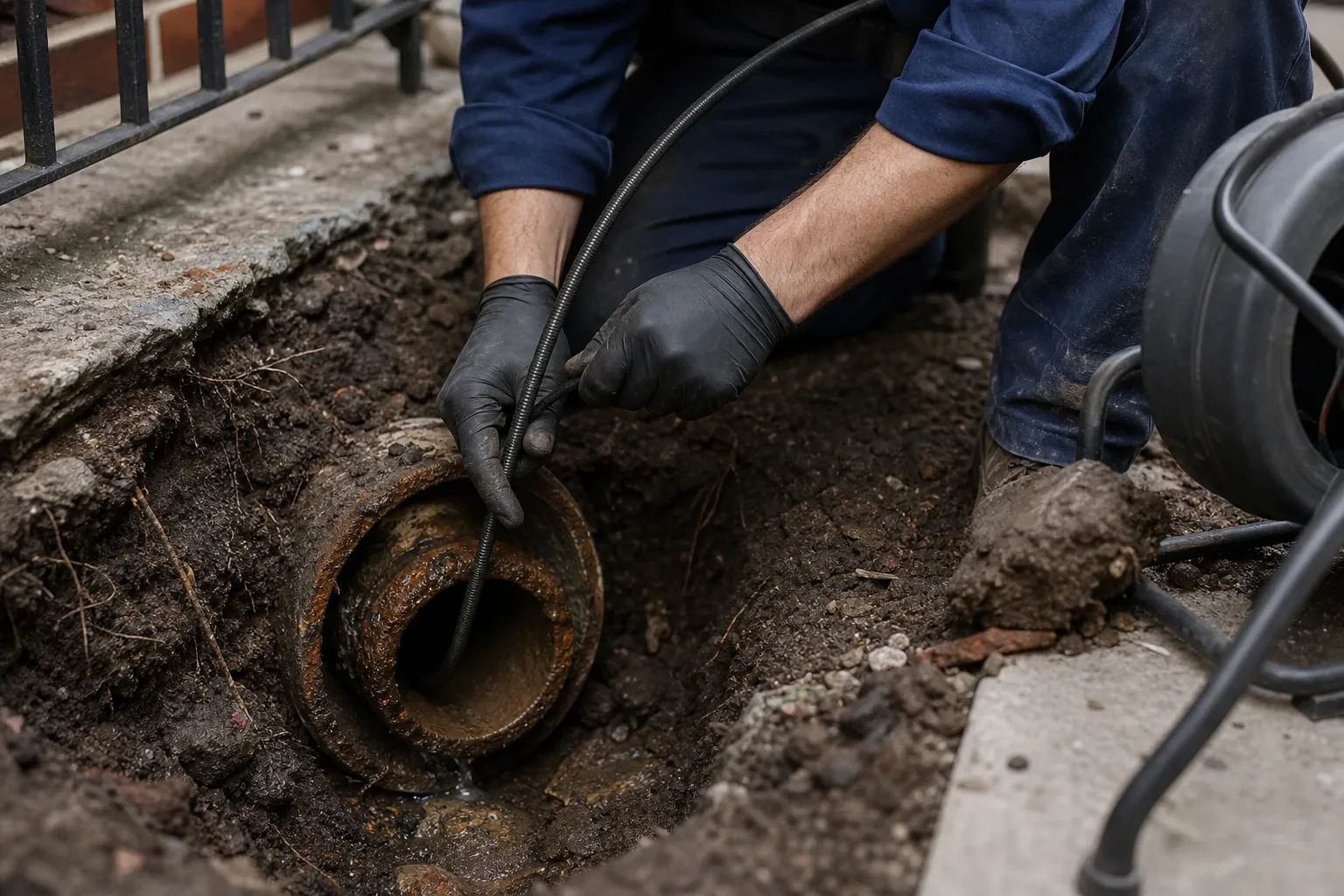
Many rowhomes were constructed in the early to mid-1900s, when clay and cast iron were the standard materials for underground plumbing. Both materials have known weaknesses that show up decades later.
- Clay pipe joints are vulnerable to root intrusion
- Cast iron corrodes from the inside over time
- Shallow burial depth in older neighborhoods
- Decades of ground settling and shifting
Tree roots are a particularly aggressive problem for curb traps in older neighborhoods. Roots seek out any moisture escaping through a pipe joint, and once they find a way in, they don't stop growing.
The age factor across entire blocks
Because rowhomes on the same block were typically built around the same time, the curb traps and laterals underneath them tend to reach the end of their service life around the same time too. That's why curb trap and sewer line problems often cluster by neighborhood rather than appearing randomly across the city.
A research note published through the U.S. Geological Survey examined aging sewer infrastructure in Pittsburgh, a city with row home stock and pipe age comparable to Philadelphia's, and found that sewers older than 75 years carry a substantially higher risk of structural failure. That pattern applies just as directly to the curb traps and laterals running under Philadelphia's older blocks.
Ground shifting and settling
Older Philadelphia neighborhoods have had a century or more for the ground itself to shift, settle, and compact around buried pipes. That movement puts stress on rigid old materials like clay and cast iron in ways that newer, more flexible PVC handles better.
A curb trap that shifts even slightly out of alignment can develop a leak or lose its water seal, which opens the door to both sewer gas intrusion and, eventually, a formal city notice.
How this shows up differently by neighborhood
Rowhome blocks built in the early 1900s tend to show curb trap and lateral problems earlier and more frequently than twins or detached homes built a few decades later, simply because the materials and installation standards of the era were different.
Newer infill construction and recently rebuilt blocks generally have PVC laterals and modern curb traps, which hold up far better against root intrusion and ground movement. A homeowner in a rebuilt or newly constructed property faces a meaningfully lower risk than a neighbor in an untouched century-old rowhome next door.
What happens when you get a Notice of Defect
A Notice of Defect from the Philadelphia Water Department means an inspector found a problem with the exterior plumbing you're responsible for, and the curb trap or lateral is one of the most common culprits behind these notices.
The notice describes the specific defect found and gives homeowners a set window to fix it. Repairs typically need to be completed, or clearly underway with permits pulled and a plumber scheduled, within 10 days of the notice.
- PWD identifies a defect during an inspection or investigation
- A written notice is left at the property and mailed as a follow-up
- The homeowner has a limited window to repair or show progress
- In severe cases, PWD may shut off water service to prevent neighborhood damage
Getting a notice can feel alarming, especially since many homeowners had no idea they were responsible for pipes running under the sidewalk and street. If the situation escalates into an active leak or backup before repairs are scheduled, an emergency plumber visit is the faster path to containing the damage than waiting for a standard appointment.
Why homeowners are responsible for pipes outside their house
It surprises a lot of people that the pipes running from their house out to the city's main in the street belong to them, not the city. Once water leaves the public main, everything downstream, including the curb trap, is the property owner's to maintain and repair.
This setup isn't unique to Philadelphia. Cities across the country generally draw the line of responsibility at the public main, with the connecting lateral and its fittings falling to the homeowner.
Financing help for curb trap repairs
Curb trap and lateral repairs can be an unplanned expense, and the city recognizes that. Homeowners who receive a Notice of Defect can apply for a five-year, 0% interest loan through PWD's own Homeowner Emergency Loan Program, which is administered through the Philadelphia Energy Authority, a municipal entity created to help residents cover exactly this kind of repair.
That financing option matters because curb trap and lateral work often requires excavation, and excavation costs add up quickly compared to indoor plumbing repairs.
What happens if the deadline passes
Missing the repair window on a Notice of Defect isn't simply a matter of a late fee. In more serious cases, particularly when a broken line or lateral is actively causing property or neighborhood damage, PWD has the authority to shut off water service to the property until the defect is corrected.
That outcome is rare and reserved for situations where the defect poses a real risk, but it underscores why the notice shouldn't sit unaddressed. Scheduling a plumber and pulling permits promptly, even before the repair itself begins, is usually enough to show the city that the homeowner is in compliance.
Repairing or replacing a curb trap
Not every curb trap problem requires a full replacement. Some issues are isolated and repairable, while others point to a trap and lateral that have simply reached the end of their useful life.
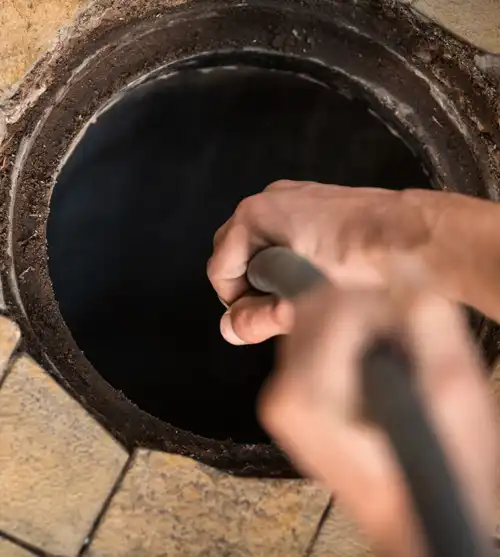
A camera inspection is the tool that separates a minor fix from a bigger job. A plumber runs a small camera through the line and can see exactly where the trap sits, what condition it's in, and whether the surrounding pipe looks sound.
- Camera inspection to locate the exact problem
- Assessment of pipe material and overall condition
- A recommendation: spot repair, trap replacement, or full lateral work
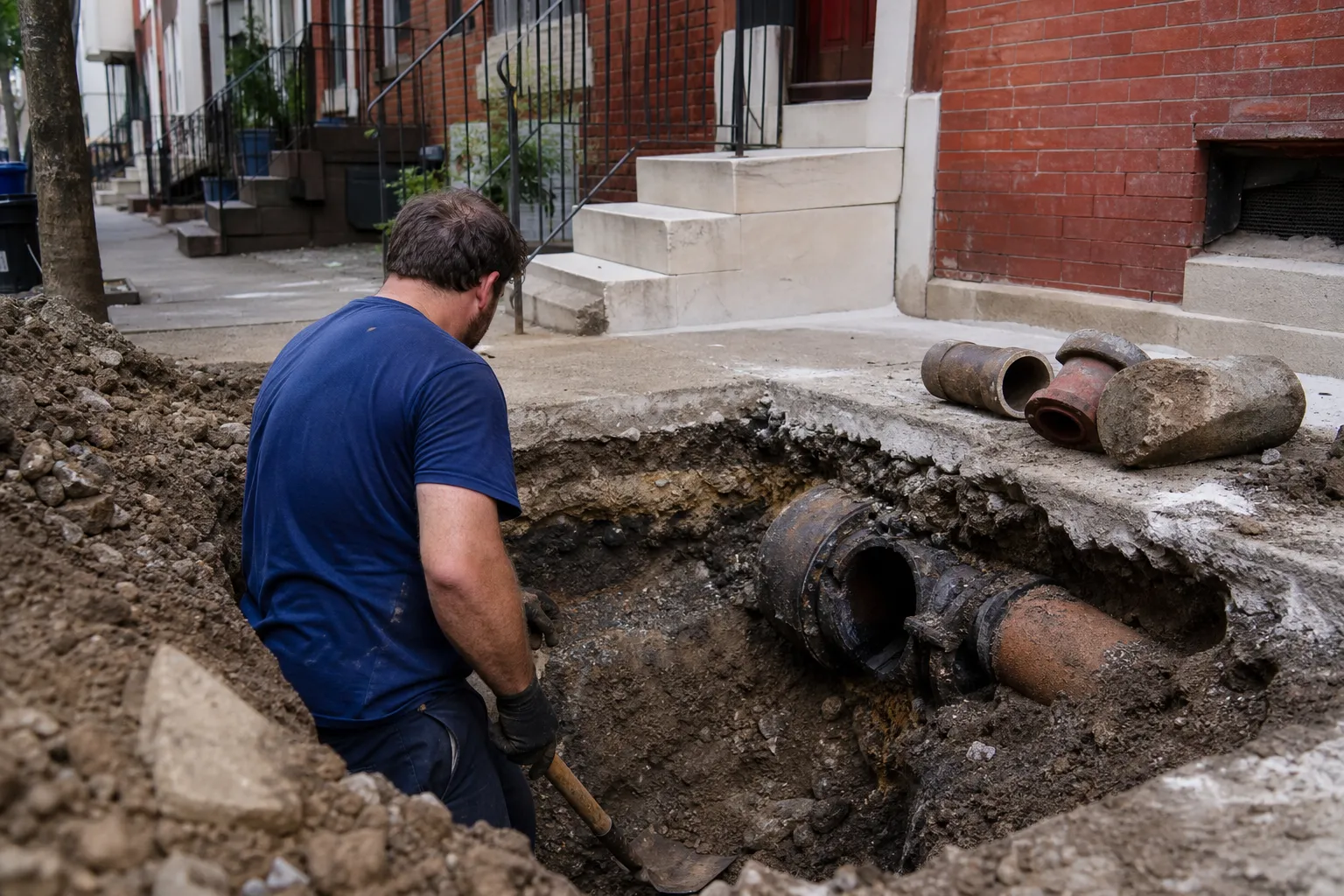
Access is the biggest factor in how disruptive a curb trap repair turns out to be. Since the trap sits underground near the property line, reaching it often means digging near the sidewalk, front yard, or street.
Trenchless options for curb trap and lateral work
Depending on the extent of the damage, trenchless repair methods can sometimes address a failing curb trap or lateral without a full-length excavation. These methods use small access points instead of digging up the entire run of pipe.
Trenchless work isn't always an option, though. A trap or lateral that has fully collapsed or shifted out of alignment usually needs traditional excavation to correct properly.
What to expect during the repair
A straightforward curb trap repair, once the ground is opened and the trap accessed, is usually a same-day fix. Full lateral replacement takes longer, especially when the work extends under a sidewalk or into the street and requires city permits and restoration afterward.
- Confirm the exact defect with a camera inspection
- Pull the required permits before any excavation begins
- Complete the repair or replacement
- Restore the sidewalk, curb, or yard to code
Homeowners dealing with a Notice of Defect on a tight timeline benefit from working with a plumber who's handled this exact process before, since navigating city permits under a 10-day window is not something to figure out on the fly.
Choosing a plumber for curb trap work
Not every plumber is equally comfortable with exterior lateral and curb trap work, since it involves excavation, city permitting, and coordination with PWD inspectors in a way that indoor plumbing repairs don't. Asking directly about that experience before hiring anyone is a reasonable step, especially under a defect deadline.
A plumber who has handled Notices of Defect before will typically know the permit process well enough to move quickly, which matters when the clock is already running on a 10-day window.
Conclusion
A curb trap is a small piece of pipe with an outsized job: keeping sewer gas out of your home while connecting your drain to the street. Philadelphia's older rowhome stock makes curb trap problems more common here than in newer construction, and that's simply a function of pipe age and material, not anything a homeowner did wrong.
If a Notice of Defect has landed at your door, the timeline moves fast, but the process itself is manageable once you understand what's actually being asked of you and what a proper repair involves. Guaranteed Plumbing can inspect your curb trap, walk you through exactly what a notice means, and get the repair done correctly and on time.