


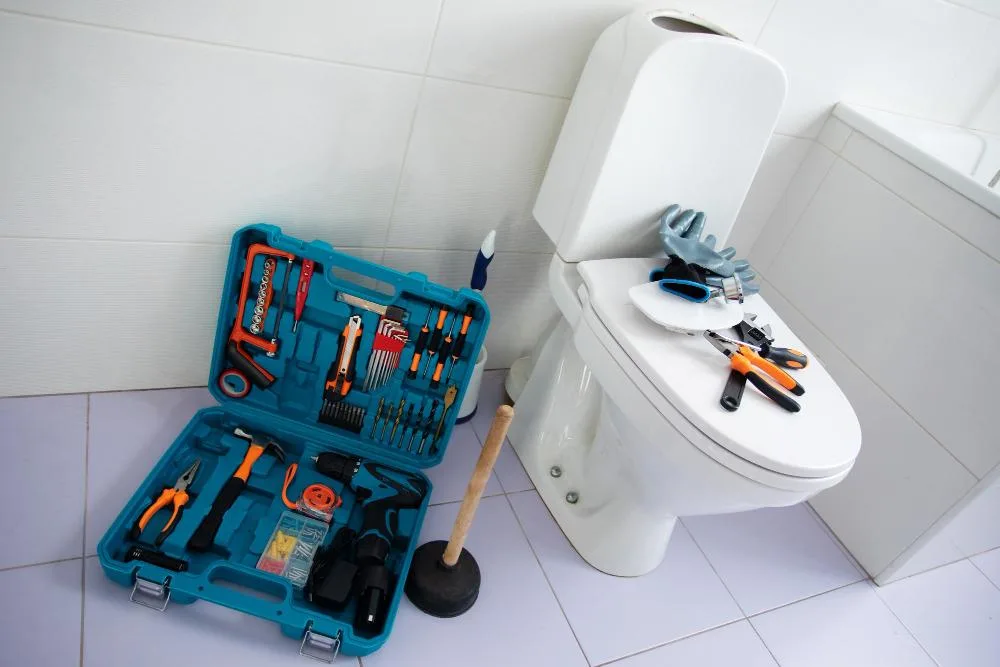
Why is my toilet running? Common causes and how to fix them
A toilet is one of the most frequently used fixtures in any home, yet it is often taken for granted until something goes wrong. One of the most common plumbing complaints homeowners experience is a toilet that continues running long after it has been flushed. Sometimes the sound is obvious, a constant trickle or hissing noise coming from the bathroom. Other times, the issue is subtle, with only occasional refilling cycles occurring throughout the day and night.
If you've ever found yourself asking, "why is my toilet running?", you're not alone. A running toilet is one of the most common household plumbing problems and one of the most overlooked. Because the toilet often continues functioning normally, many homeowners postpone repairs, assuming the issue is minor. Unfortunately, even a small leak inside the tank can waste hundreds or even thousands of gallons of water over time.
Beyond increasing utility bills, a constantly running toilet can place unnecessary wear on internal components and create ongoing frustration for homeowners. The good news is that many running toilet issues stem from a handful of common parts that can often be diagnosed relatively quickly.
Understanding the causes behind a running toilet can help homeowners determine whether the problem is a simple adjustment, a straightforward replacement, or a situation that requires professional plumbing assistance.
In this article, you will learn what causes a toilet to keep running, how to identify which component is responsible, which fixes are within reach for most homeowners, and when the problem calls for professional running toilet repair services.
Let's break down the key points you should consider:
- The sound that keeps you up at night when the bathroom is supposedly not in use
- The flapper that doesn't seal properly and keeps restarting the entire cycle
- Fill valve problems that cause constant refilling even when the tank looks full
- When a running toilet stops being a DIY fix and becomes a plumbing repair visit
Keep reading to understand exactly what is happening inside your tank and what the most effective solutions look like at each stage of the problem.
The sound that keeps you up at night when the bathroom is supposedly not in use
One of the most frustrating aspects of a running toilet is that the problem often becomes noticeable during quiet moments. The bathroom may not be in use, yet the sound of water moving through the tank continues. Understanding why this happens, and what it costs over time, helps homeowners recognize why early action matters.
Why a running toilet often starts as a barely noticeable leak that gets worse over months
Many toilet problems begin gradually. A toilet may appear to function normally after flushing, but small leaks inside the tank can slowly develop over time. Because the leak occurs internally, homeowners often do not notice the problem immediately.
The typical flushing process involves pressing the handle, lifting the flapper, releasing water into the bowl, refilling the tank, and stopping water flow once the correct level is reached. When any component fails to complete its role properly, water may continue moving through the system.
Common early warning signs include occasional tank refilling sounds between uses, brief hissing noises that stop and start, intermittent trickling into the bowl, and water movement audible hours after the last flush. At this stage, the leak may seem insignificant. However, even small leaks can worsen over time and contribute to substantial water waste.
Staying on top of bathroom plumbing issues, including bathroom plumbing like running toilets, is one of the more effective ways homeowners can avoid repairs that escalate quietly over a full season.
How small internal tank failures quietly waste hundreds of gallons every month
Toilets use gravity and carefully controlled water levels to operate efficiently. When internal components malfunction, water may continuously escape from the tank into the bowl. As the tank level drops, the fill valve activates to replenish the lost water, creating a cycle of ongoing refilling.
According to the U.S. Environmental Protection Agency's WaterSense program, the average household's leaks can account for more than 9,300 gallons of water wasted every year, with worn toilet flappers identified as one of the most common sources. The same program notes that fixing easily corrected household leaks can save homeowners approximately 10 percent on their water bills.
Depending on the severity of the leak, a single running toilet can waste hundreds of gallons per month at the low end, thousands per month in moderate cases, and enough to produce a noticeably higher utility bill when the failure is severe. Many homeowners only discover the problem after receiving an unexpectedly high water bill, at which point the waste has been ongoing for weeks or longer.
Why waiting for the problem to resolve itself almost always makes it more expensive
Unlike some minor household nuisances, toilet components rarely improve without intervention. In fact, most toilet issues become worse over time. Rubber parts deteriorate further, mineral buildup accumulates on sealing surfaces, and mechanical components experience additional wear with every refill cycle.
Homeowners sometimes delay repairs because the toilet still flushes, the noise seems inconsistent, the leak appears minor, or the fixture remains usable. Unfortunately, postponing repairs often transforms a simple adjustment into a more extensive repair involving multiple components.
When asking why is my toilet running, it is important to understand that early action generally reduces both repair costs and water waste. Scheduling plumbing repair and service at the first sign of a problem is consistently more economical than waiting until symptoms become undeniable.
The flapper that doesn't seal properly and keeps restarting the entire cycle
Among all toilet components, the flapper is one of the most common causes of a continuously running toilet. It is also one of the most frequently misdiagnosed, because a flapper can fail gradually in ways that do not immediately announce themselves.
How a worn or warped flapper fails to stop water flow after every single flush
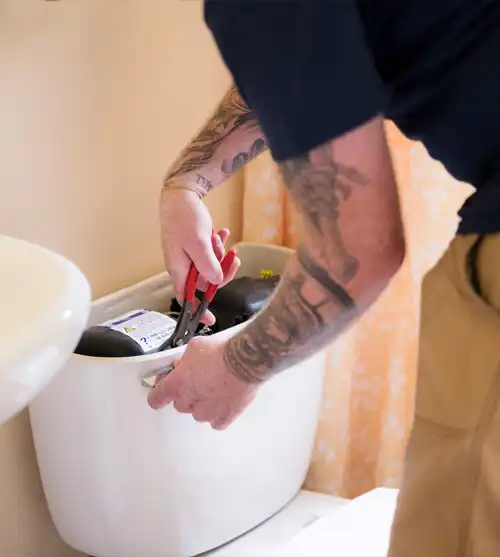
The flapper is a rubber valve located at the bottom of the tank. Its purpose is to open during flushing, allow water to enter the bowl, and then close tightly afterward. When functioning properly, the flapper creates a watertight seal that keeps water inside the tank between uses.
Over time, rubber flappers may warp, crack, harden, become brittle, or lose the flexibility required to form a complete seal. As deterioration occurs, water slowly leaks past the valve seat. This causes the tank level to drop. Once the water falls below a predetermined point, the fill valve activates to refill the tank. The result is a toilet that repeatedly runs even when nobody has used it.
A toilet flapper replacement is often one of the simplest and most effective solutions for this problem. Most flappers are inexpensive and can be matched to the toilet model using the part number on the existing component. The U.S. EPA recommends replacing toilet flappers at least every five years to maintain a proper seal and avoid silent leaks that can waste thousands of gallons annually.
How mineral deposits on the valve seat prevent a complete seal even with a new flapper
Not every flapper issue involves a damaged component. Mineral deposits can also interfere with proper sealing even when the flapper itself is relatively new.
Water naturally contains dissolved minerals, and over time these deposits may accumulate on flapper surfaces, valve seats, tank components, and flush openings. Even a small ridge of buildup can prevent the flapper from sitting completely flat against the seat. As a result, water escapes slowly, tank levels decrease, and refill cycles occur repeatedly.
Philadelphia-area water conditions may contribute to mineral accumulation over time, particularly in older fixtures that have not been serviced in several years. Accessing Philadelphia plumbing services for a professional cleaning and inspection can identify whether mineral buildup is the underlying cause before a full replacement is undertaken. In some cases, cleaning the affected surfaces resolves the issue without requiring full component replacement.
Quick checks homeowners can do before calling a plumber to identify a flapper problem
Before disassembling a toilet, homeowners can perform several simple checks to determine whether the flapper is the likely source of the running.
Listen for water movement: a faint trickling sound that begins shortly after flushing and continues for several minutes often indicates water escaping from the tank. Inspect the bowl while the toilet is idle: any visible water movement in the bowl when no one has flushed suggests water is bypassing the flapper seal.
The dye test is the most reliable method. Adding a few drops of food coloring to the tank reveals hidden leaks without any disassembly. If color appears in the bowl within ten minutes and no one has flushed, water is moving through the flapper. Finally, check the flapper chain: a chain that is too tight or tangled may hold the flapper slightly open, preventing it from seating correctly. These basic checks can confirm or rule out a flapper issue before any tools are picked up.
Fill valve problems that cause constant refilling even when the tank looks full
While flapper issues are common, many running toilets are caused by problems involving the fill valve assembly rather than the flapper. Homeowners who have already replaced a flapper and still hear running should investigate the fill valve as the next likely source.
Why a malfunctioning fill valve causes water to run constantly even with a full tank
The fill valve controls water entering the tank after a flush. Its job is to stop incoming water once the proper tank level is reached. When the valve fails to shut off correctly, water levels may rise too high. Excess water then enters the overflow tube and drains continuously into the bowl.
Symptoms often include constant running sounds that never fully stop, a persistent hissing noise from inside the tank, water visibly entering the overflow tube, and periodic refilling cycles with no preceding flush. In these situations, the tank may appear full, yet water continues moving through the system. This is one of the most common toilet fill valve problems encountered during professional inspections, and it is frequently the explanation when a homeowner reports that a running toilet returned shortly after a flapper replacement.
How float misalignment sends the wrong signal and keeps the valve from closing
Most fill valves rely on a float mechanism. The float rises with the water level and signals the valve to stop filling when the desired level is reached. If the float becomes misaligned, damaged, obstructed, or improperly adjusted, the valve may fail to close correctly, allowing water to continue entering the tank beyond the intended level.
Different toilet designs use different float styles. Ball floats, which attach to the valve on a horizontal arm, can become misaligned or waterlogged over time. Cup floats, which travel vertically along the fill valve shaft, may stick due to debris or mineral buildup. Both types can produce identical symptoms despite failing in different ways. Even small changes in float position can significantly affect refill performance, which is why adjustment is often the first step before replacing the valve entirely.
When fill valve adjustment stops working and a full replacement becomes necessary
Many fill valve issues can initially be corrected through adjustment. However, adjustment has limits. If internal valve components are worn, homeowners may experience recurring problems, inconsistent shutoff behavior, persistent running, and ongoing noise even after multiple rounds of adjustment.
Signs that replacement may be necessary include repeated adjustments failing to produce lasting results, water continuing to enter the tank after the float reaches the correct position, valve operation that feels inconsistent from flush to flush, and visible wear on internal components. Professional plumbers frequently identify worn fill valves as a primary cause of ongoing toilet performance issues, particularly in fixtures that are ten or more years old. Handling the leak repair at the valve level, rather than continuing to adjust a failing component, typically produces more reliable and longer-lasting results.
When a running toilet stops being a DIY fix and becomes a plumbing repair visit
While many toilet repairs are relatively straightforward, some situations indicate larger problems that require professional attention. Knowing where that threshold lies helps homeowners avoid spending time and money on adjustments that cannot resolve an underlying mechanical failure.
Warning signs that multiple internal parts are failing at the same time
Toilets contain several interconnected components. When one part fails, others may already be approaching the end of their service life, particularly in fixtures that are more than fifteen years old.
Warning signs that more than one component is involved include:
- Frequent running that returns within days of an adjustment
- Weak or sluggish flushing performance alongside the running
- Inconsistent refilling that produces different tank levels after each flush
- Handle problems such as sticking, looseness, or partial engagement
- Multiple simultaneous leaks at the base, tank connections, or supply line
- Excessive noise throughout the flush and refill cycle
In older toilets, replacing a single component may not fully resolve the issue if other parts are also deteriorating. Comprehensive inspection often reveals multiple contributing factors that would require sequential repairs if addressed one at a time, making a full internal rebuild or fixture replacement the more economical path. Emergency plumbing repair services can handle complete internal assessments when multiple symptoms appear at once.
What it means when repeated adjustments keep failing to stop the running
Homeowners sometimes find themselves making the same adjustments repeatedly, readjusting float levels, repositioning chains, cleaning components, or tightening hardware, only to find the toilet running again within a few days. If the toilet continues running after repeated correction attempts, underlying wear is almost certainly present.
Persistent problems of this kind often indicate worn seals that can no longer hold position after adjustment, failing valves with internal components beyond their service life, aging internal mechanisms where tolerances have degraded, or hidden damage that is not visible without disassembling the valve assembly. At this stage, contacting an emergency plumber is typically the most efficient path to a permanent resolution, rather than continuing to invest time in temporary corrections.
How long a running toilet goes unfixed directly determines how much it ends up costing
Many homeowners postpone repairs because the toilet remains functional. However, delaying repairs can become surprisingly expensive when water waste accumulates over weeks or months.
A continuously running toilet may increase monthly water bills, cause accelerating component wear that expands the scope of eventual repairs, reduce overall fixture efficiency, and allow hidden internal leaks to worsen in ways that are not visible until the damage is significant. Compared with the cost of a typical toilet repair, addressing the issue early is almost always the more economical choice.
Additionally, resolving problems quickly eliminates the recurring noise of a noisy toilet after flushing, which frequently accompanies fill valve and overflow-related issues and can become a persistent disruption to daily life. Homeowners who want a clear sense of what to expect from a professional inspection can review common plumbing questions before scheduling a service call.
Conclusion
If you've been asking yourself, "why is my toilet running?", the answer usually involves a small number of common components working improperly inside the tank. While the sound may seem like a minor annoyance, a running toilet often signals ongoing water waste that can lead to higher utility bills and unnecessary wear on plumbing fixtures.
In many cases, the problem originates with a worn flapper, making toilet flapper replacement one of the most common and cost-effective solutions. Other situations involve toilet fill valve problems, incorrect water levels, float misalignment, or overflow tube issues that allow water to continuously move through the system. Because these components work together, even a seemingly minor malfunction can trigger repeated refill cycles and persistent running sounds.
Homeowners who notice a noisy toilet after flushing, intermittent tank refilling, or unexplained increases in water usage should investigate the issue promptly. Early diagnosis often allows for simple corrections before the problem becomes more expensive or causes excessive water consumption. In many situations, a straightforward water wasting toilet fix can restore proper operation and improve overall efficiency.
While some adjustments and inspections can be performed by homeowners, recurring problems, multiple failing components, or unsuccessful repair attempts may indicate the need for professional running toilet repair services. A qualified plumber can identify the root cause, replace worn parts, and ensure the toilet operates correctly without ongoing water loss.
Ultimately, a running toilet is more than just an irritating sound in the middle of the night. It is often a warning sign that water is being wasted every minute the problem remains unresolved. If your toilet has been running and adjustments have not produced a lasting fix, contact Guaranteed Plumbing and Heating to schedule a professional assessment and get the issue resolved for good.