


Emergency HVAC repair warning signs in Montgomery County homeowners should know
Your HVAC system will almost always warn you before it fails. The problem is that most Montgomery County homeowners do not recognize what those warnings sound like, smell like, or look like on their energy bill until the system goes down on the hottest day of summer or the coldest night of winter.
Emergency HVAC repair warning signs in Montgomery County tend to show up gradually, then all at once. A furnace that has been making a faint clicking sound for weeks suddenly refuses to ignite. An air conditioner that has been running longer cycles all month finally freezes over and stops cooling entirely. The pattern is consistent: small symptoms get dismissed, and then a small repair turns into an expensive emergency.
Montgomery County homes span a wide range of ages and heating configurations, from newer construction in areas like Abington to older homes in Glenside with original boilers and aging ductwork.
That variety means the warning signs can look different from house to house, but the core signals are the same. This article breaks down what to watch for and what each symptom actually means for your system.
In this article, you will learn about:
- The sounds your HVAC system makes when something is failing
- What strange smells from your vents actually mean
- How your energy bill tells you something is wrong before the system does
- Why short cycling is one of the most damaging problems you can ignore
- The safety risks that make certain warning signs true emergencies
- What to do when you spot a warning sign
Keep reading to learn which symptoms need a same-day call and which ones give you a window to schedule service before things escalate.
The sounds your HVAC system makes when something is failing
A healthy HVAC system is not silent, but it is predictable. You know the sound of your furnace igniting, the hum of your air conditioner's compressor, and the low whoosh of air moving through the ducts. When those sounds change, something has changed inside the equipment.
Banging, clanking, and metal-on-metal
A sudden banging noise from your furnace or air handler usually points to a loose or broken component inside the blower assembly. A detached fan blade, a failing motor mount, or a cracked blower wheel can all produce sharp metallic impacts that get worse over time. Running the system with a loose internal component risks damaging other parts, which is how a repair that might have cost a couple hundred dollars turns into one that costs over a thousand.
If the banging happens at startup specifically, it can indicate delayed ignition in a gas furnace. Gas builds up in the combustion chamber before the igniter fires, and the resulting mini-explosion produces a distinct boom. This is not something to monitor and wait on. Delayed ignition stresses the heat exchanger, and a cracked heat exchanger is both the most expensive furnace repair and a carbon monoxide risk.
Screeching, squealing, and grinding
High-pitched screeching or squealing typically comes from the blower motor or its bearings. In older systems with belt-driven blowers, a worn or slipping belt produces a squealing sound that is hard to miss. In newer direct-drive systems, the motor bearings themselves can wear down and produce a grinding noise.
Grinding is the more urgent of the two. It usually means metal components are making direct contact without proper lubrication or alignment. Continuing to run the system in this condition can burn out the motor entirely. A motor replacement is a significant repair, and it leaves you without heating or cooling while you wait for parts and scheduling.
Clicking that does not stop
A few clicks at startup and shutdown are normal for most systems. Persistent, rapid clicking during operation is not. Repeated clicking from the control board area often means a relay is failing or the system is trying and failing to complete an ignition sequence. If your furnace clicks repeatedly but never fires, shut it off and call for service. The system may be cycling unburned gas into the combustion chamber, which is a safety concern.
What strange smells from your vents actually mean
Your nose can catch problems that your ears might miss. Unusual odors coming from your HVAC system are almost always a sign that something needs professional attention, and a few of them require immediate action.
A rotten egg or sulfur smell
If you smell rotten eggs near your furnace or coming through your vents, treat it as a gas leak until proven otherwise. Natural gas is odorless on its own, but utility companies add a chemical called mercaptan to give it that distinct sulfur smell so leaks can be detected. A gas leak is a true emergency.
Do not try to find the source. Do not flip light switches or use electronics. Open doors as you leave, get everyone out of the house, and call your gas utility's emergency line from outside. The U.S. Consumer Product Safety Commission reports that more than 200 people die each year from unintentional carbon monoxide poisoning associated with consumer products, and heating equipment is among the top contributors.
A burning or electrical smell
A sharp, acrid, burning smell, something like hot plastic or singed wiring, points to an overheating motor, a failing capacitor, or damaged electrical wiring inside the system. This is different from the mild dusty smell that is normal when a furnace or heater kicks on for the first time in fall after sitting idle for months.
If the burning smell persists beyond the first few minutes of seasonal startup, turn the system off and do not restart it until a technician has inspected it. Electrical faults inside HVAC equipment can start fires, and the enclosed spaces where furnaces and air handlers are typically installed, basements, utility closets, attics, make early detection critical.
Musty or damp odors
A persistent musty smell from the vents usually means moisture is accumulating somewhere in the system, either on the evaporator coil, inside the ductwork, or in the drain pan. This is common during humid Montgomery County summers when the cooling system runs frequently and condensation builds up. A clogged condensate drain line is one of the most frequent causes of musty smells and can eventually lead to water damage around the air handler if it is not cleared.
Beyond comfort, moisture in the HVAC system affects indoor air quality for everyone in the house. If the smell is strongest when the system first starts, the issue is likely concentrated near the indoor coil or the first few feet of ductwork leaving the air handler.
How your energy bill tells you something is wrong before the system does
One of the earliest and most reliable warning signs of HVAC trouble is a change in your energy bill that does not match a change in your habits.
The slow creep that most people miss
A furnace or air conditioner that is losing efficiency does not quit all at once. It runs longer cycles, works harder to reach the set temperature, and draws more energy doing it. According to the U.S. Department of Energy, heating and cooling account for a significant portion of a home's total energy use, so even a modest drop in system efficiency shows up on the bill.
The problem is that most homeowners do not compare their bills month-to-month or year-over-year. A 15 to 20 percent increase in cooling costs over last summer might not jump off the page, but it can represent hundreds of dollars over a season, and it almost always means the system is working harder than it should be. Dirty coils, low refrigerant, failing capacitors, restricted airflow from clogged filters, and duct leaks are all common culprits.
When a bill spike means something urgent
A sudden and dramatic jump in your energy bill, not a gradual creep, is more concerning. This can indicate a component failure that has forced the system into a continuous run state, where the equipment runs nonstop because it cannot reach the thermostat's set temperature. A refrigerant leak, a compressor struggling to start, or a blower motor operating at reduced speed can all cause this pattern.
If your system is running constantly and your home is not reaching the set temperature, that is not just an efficiency issue. It is putting extreme stress on the compressor, the most expensive single component in your cooling system. According to ENERGY STAR, improper installation or maintenance issues can reduce system efficiency by up to 30 percent, costing more on utility bills and potentially shortening the equipment's life.
What your bill cannot tell you
Energy bills confirm that something is wrong, but they do not diagnose the cause. A technician can pinpoint whether the issue is mechanical, electrical, or related to airflow and ductwork. If your energy costs have climbed and you cannot explain why, a diagnostic visit will cost far less than continuing to run a failing system at full power all season.
Why short cycling is one of the most damaging problems you can ignore
Short cycling, where your system turns on, runs for only a few minutes, shuts off, and then repeats the cycle, is one of those symptoms that homeowners notice but often do not act on. It does not seem dramatic. The system is still running. The house is still somewhat comfortable. But short cycling does serious damage.
What happens inside the system during a short cycle
Every time your HVAC system starts up, the compressor and blower motor draw a large surge of electrical current. Under normal operation, the system runs for 10 to 20 minutes per cycle, which spreads that startup stress across a longer run. When the system short cycles, it is absorbing that startup surge dozens of times per hour instead of a handful of times.
The compressor takes the worst of it. Repeated rapid starts and stops overheat the compressor motor, wear the internal valves, and can eventually cause a complete compressor failure. Replacing a compressor is one of the most expensive HVAC repairs a homeowner can face, often running into the thousands, and in many cases it makes more sense to replace the entire outdoor unit than to put a new compressor into an aging system.
Common causes of short cycling
Short cycling can have several root causes, and the fix depends on which one is driving it:
- An oversized system that cools or heats the space too quickly, satisfying the thermostat before completing a full cycle. This is an installation issue and one of the reasons proper sizing matters.
- A dirty or clogged air filter restricting airflow to the point where the system overheats and the safety limit switch shuts it down.
- Low refrigerant levels causing the evaporator coil to freeze and triggering the system's protection controls.
- A failing thermostat sending incorrect signals to the equipment.
- An electrical issue, like a failing capacitor or a loose connection, that interrupts the run cycle.
Some of these are simple fixes. A filter change takes five minutes. A thermostat replacement is straightforward. But low refrigerant means there is a leak somewhere in the system, and that requires professional diagnosis and repair. The key is not to assume short cycling is harmless just because the system keeps turning back on.
The safety risks that make certain warning signs true emergencies
Most HVAC warning signs give you a window to schedule service. A few do not. Understanding the difference can protect your family.
Carbon monoxide and the cracked heat exchanger
A cracked heat exchanger in a gas furnace is the HVAC equivalent of a silent emergency. The heat exchanger is the metal barrier between the combustion gases produced by your furnace's burner and the air that circulates through your home. When it cracks, combustion byproducts, including carbon monoxide, can leak into your living space.
Carbon monoxide is colorless and odorless. You will not smell it, and you will not see it. Symptoms of exposure include headaches, dizziness, nausea, and confusion, which are easy to mistake for the flu. The CPSC urges consumers to schedule a yearly professional inspection of all fuel-burning home heating systems, including furnaces, boilers, and water heaters, specifically to catch issues like this.
Every home with a gas furnace or boiler should have working carbon monoxide detectors on every level and near every sleeping area. If your CO detector goes off while the furnace is running, evacuate immediately and call 911. Do not re-enter the home until emergency responders have cleared it.
Electrical sparks, smoke, or scorch marks
Visible sparks or smoke coming from any part of your HVAC system mean you should shut the system off at the breaker and call for emergency HVAC repair immediately. Scorch marks on or around the equipment, even if the system appears to be running fine now, indicate that an electrical arc or overheat event has already occurred.
HVAC systems pull significant electrical current, and a loose connection, a failing contactor, or damaged wiring inside the unit can produce enough heat to ignite surrounding materials. This is especially concerning in older Montgomery County homes where the furnace sits in a basement near stored belongings, paper, or other combustible materials.
Water where it should not be
A pool of water around the base of your furnace or air handler might not seem urgent, but it can cause real damage quickly. In cooling mode, a clogged condensate drain line is the most common cause. In heating mode, water around a high-efficiency furnace can indicate a failed condensate pump or a cracked secondary heat exchanger.
Water around HVAC equipment damages flooring, promotes biological growth in enclosed spaces, and can create electrical hazards if it reaches wiring or control boards. Address it before it becomes a larger problem.
What to do when you spot a warning sign
Recognizing a warning sign is only useful if you act on it. The right response depends on the severity of what you are seeing, hearing, or smelling.
When to shut the system off immediately
Certain symptoms warrant an immediate shutdown. Turn your system off at the thermostat or the breaker if you experience any of the following:
- A gas or rotten egg smell anywhere near the furnace or vents.
- A carbon monoxide detector alarm while the heating system is running.
- Visible sparks, smoke, or burning smells from the equipment.
- Loud banging or screeching that started suddenly and is getting worse.
- The system is running but producing no conditioned air at all.
Shutting the system off prevents further damage to the equipment and eliminates safety risks while you wait for a technician. For a gas smell, leave the house first and call from outside.
When to schedule service soon
Other symptoms are serious but give you a short window to arrange a professional visit:
- Short cycling that has persisted for more than a day.
- A steady increase in energy bills without a change in usage.
- Musty or chemical smells from the vents.
- Uneven temperatures across rooms that were previously consistent.
- Water pooling near the indoor unit.
Do not wait weeks on these. The longer a struggling system runs, the more wear it accumulates, and the more likely a manageable repair becomes a costly replacement.
What a diagnostic visit actually involves
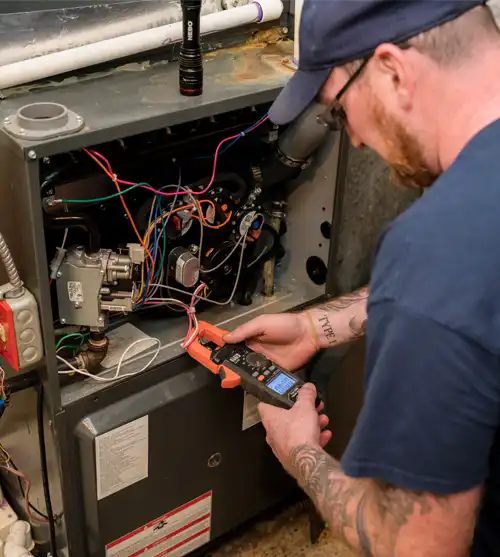
A technician responding to a warning sign will check the obvious components first, the filter, thermostat, and electrical connections, then move to the mechanical and refrigerant systems. For furnaces, this includes inspecting the heat exchanger, the ignition system, the blower motor, and the flue. For air conditioners, it includes checking refrigerant levels, the compressor, the capacitor, the condenser coil, and the condensate drain.
The goal of a diagnostic visit is to identify the root cause, not just the symptom. A furnace that keeps tripping the limit switch might have a dirty filter, a failing blower motor, or a cracked heat exchanger, and each one leads to a very different repair. A thorough diagnostic before any work starts means you know what you are paying for and why.
Conclusion
HVAC systems are built to last, but they are not built to last forever, and they do not fail without warning. The warning signs covered in this article, strange noises, unusual smells, rising energy costs, short cycling, water around the unit, are your system telling you that something needs attention. The homeowners who catch these signs early and act on them are the ones who avoid the 2 a.m. emergency call in January or the complete AC failure during a July heat wave.
Montgomery County's mix of older homes with aging boilers and newer construction with modern heat pumps means there is no single maintenance checklist that fits every house. What does apply across the board is that ignoring a symptom never makes it cheaper to fix. A small repair caught early stays small. A small repair ignored for months becomes a large one.
If you are noticing any of the warning signs in this article, or if your system has not been professionally inspected in over a year, the time to schedule that visit is now, not when the system finally stops working.
Guaranteed Plumbing & Heating has been serving the Philadelphia area, including Montgomery County, since 1990. Call 215-342-7200 and a real person will pick up. The estimate is free, the pricing gets confirmed before any work starts, and you will know exactly where your system stands before the next extreme weather hits.