





Hidden plumbing leak warning signs every homeowner should know in Philadelphia
Hidden plumbing leak warning signs in Philadelphia homes are easy to miss, and that is exactly the problem. Most leaks do not announce themselves with water pouring across the floor. They start as a slow drip inside a wall, a joint that weeps overnight, or a supply line with a pinhole behind a cabinet. By the time visible damage appears, the water has typically been active for weeks or months.
Philadelphia's housing stock makes this worse than it might be elsewhere. Row homes in Fishtown, Kensington, and South Philly, as well as older colonials and twins throughout the Northeast, were built with plumbing systems that are now decades old. Galvanized steel pipes corrode from the inside out. Cast iron drain lines crack and shift. Copper fittings in humid basement spaces develop pinhole leaks that drip only when pressure is at its peak. None of those failures are dramatic until they become structural.
According to the U.S. Environmental Protection Agency, the average household loses more than 9,300 gallons of water annually from leaks, with nine percent of homes losing 50 or more gallons per day. In a Philadelphia row home where pipes run through shared walls and tight floor cavities, that water has nowhere obvious to go and a lot of material to damage along the way.
In this article, you will learn about:
- What your water bill reveals about hidden leaks
- Physical signs on walls, floors, and ceilings
- How odors and sounds point to leaks you cannot see
- What to do once you suspect a hidden leak
Keep reading to learn how to catch a hidden leak before it turns into a repair that involves drywall, flooring, and structural framing.
What your water bill reveals about hidden leaks
A water bill is one of the most reliable early indicators of a hidden leak, and most homeowners do not read it that way. When usage climbs without a clear reason, no new irrigation, no change in household size, no seasonal explanation, the most likely cause is water leaving the system somewhere it should not be.
The useful comparison is not this month versus last month. The comparison that actually reveals a hidden leak is this January versus last January, or this August versus last August. A meaningful jump in the same-season bill, with no change in habits, is a strong indicator that water is going somewhere unaccounted for.
How much a small leak actually adds up
Homeowners consistently underestimate what a slow leak costs. A faucet dripping once per second wastes roughly 3,000 gallons over a year. A toilet with a failed flapper seal can waste 200 gallons per day without making any sound most homeowners would notice. A supply line with a pinhole inside a wall runs continuously whenever the system is pressurized, which in a Philadelphia home is essentially around the clock.
The compounding effect shows up on your statement before you ever see water on a surface. If your bill has climbed 10 to 20 percent over comparable months from prior years without explanation, call a plumber before you wait for a visible sign to confirm the problem. The water is already going somewhere; the only question is how much damage it has done by the time you find where.
Checking your water meter before calling anyone
A meter test is something any homeowner can do in about two hours, and it confirms whether active water loss is occurring without opening a single wall. The steps are simple:
- Find your water meter, usually at the street curb or in the basement utility area.
- Note the current reading precisely, including the low-flow indicator dial if your meter has one.
- Shut off every water-using fixture and appliance in the house, including the icemaker and any irrigation.
- Do not use any water for at least two hours.
- Check the meter again.
If the reading has changed during a period of zero water use, water is moving through the system somewhere it should not be. The size of the change gives a rough sense of the leak rate, which helps when describing the situation to a plumber in Northeast Philadelphia or anywhere else in the city. A changed reading during the test is confirmation enough to call for a plumbing repair and service visit.
When the meter shows nothing but something still feels wrong
If the meter test shows no movement but you still have soft walls, staining, or persistent odors, the source is likely a drain leak rather than a supply line. Drain lines are not under constant pressure, so they only leak when water is actively flowing through them. A meter test will not catch that.
In that case, a plumber can run a camera through the sewer and drain system to check for cracks or failed connections. A smoke test introduced into the drain stack can also reveal gaps that water passes through on every use. These tools locate the source without opening walls, which keeps diagnostic costs low before any repair work begins.
Physical signs on walls, floors, and ceilings
Physical evidence of a hidden leak rarely looks like what most homeowners picture. It shows up as a change in surface material: paint that bubbles, drywall that feels soft when pressed, a baseboard separating from the floor. These are the results of moisture that has been present long enough to alter the material, which means the leak was already active well before these signs appeared.
In Philadelphia row homes, construction style concentrates certain signs in predictable places. Shared walls between units carry plumbing from both sides. Basement ceilings below first-floor bathrooms are common collection points. Older homes with plaster walls can hide moisture behind intact surfaces for surprisingly long periods. Knowing what each physical change actually points to is the most practical advantage a homeowner can have.
Paint, drywall, and wall surfaces
Changes to wall surfaces are one of the earliest visible signals a hidden leak produces. The following patterns each point to a different type of problem:
- Bubbling or blistering paint on an interior wall with no exterior moisture source: a supply line or drain connection is weeping inside the wall
- Discoloration that appears, fades, then returns: an intermittent leak that runs only when a fixture above is in use
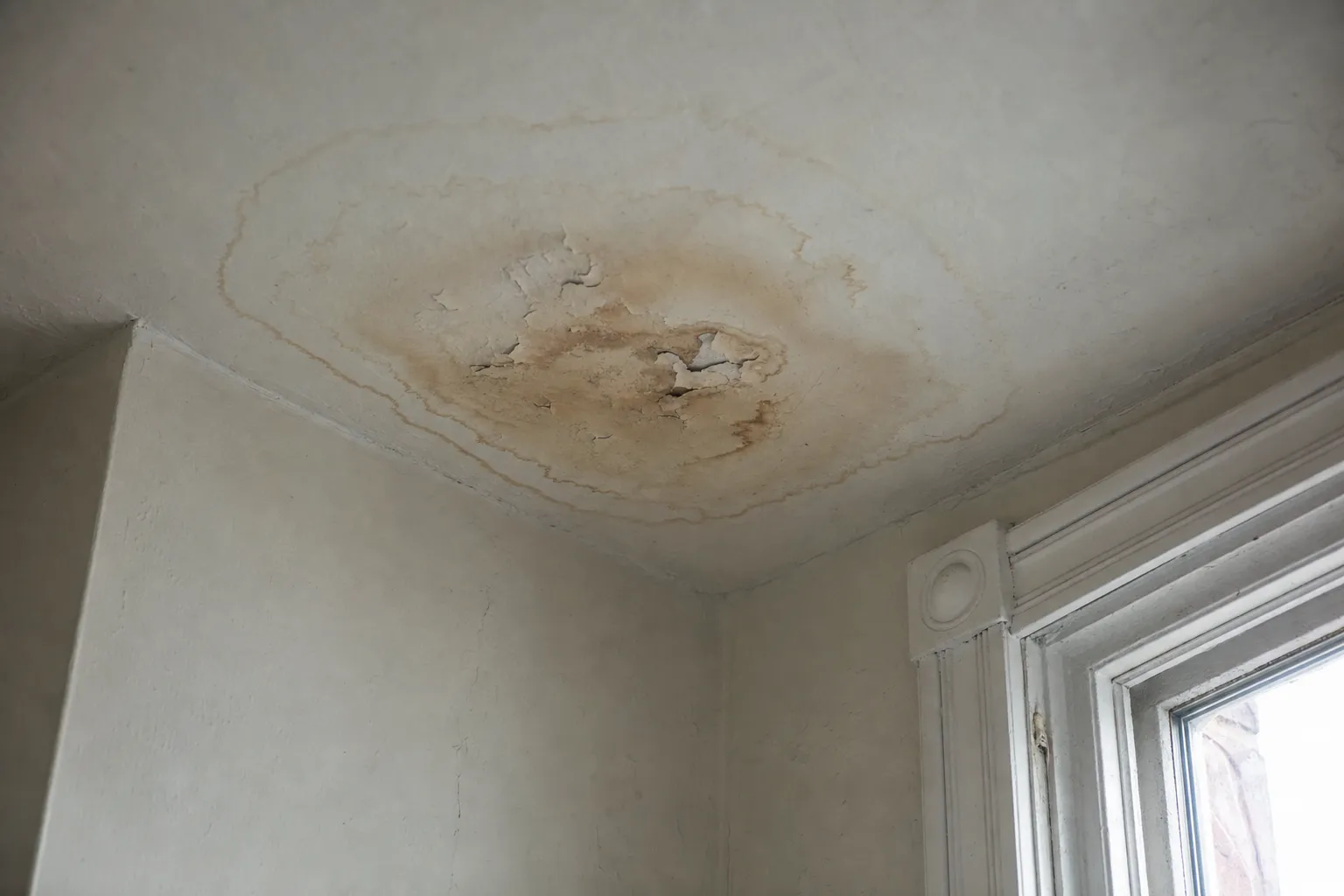
- A stain with a yellowed or rust-colored ring around its edge: the leak has been active long enough to deposit minerals, meaning months, not days
- Drywall that feels soft or spongy when pressed firmly: the paper backing has absorbed enough moisture to lose structural integrity
- Wallboard that crumbles at the baseboard: prolonged exposure, likely from a slow drain connection below floor level
Any of these signs warrants a pipe repair call before the damage reaches the framing behind the surface. Once wood framing softens, the repair scope expands significantly.
Once you find one of these signs, the next step is mapping where plumbing runs relative to that wall. In a Philadelphia row home, supply and drain lines almost always run vertically through interior walls adjacent to bathrooms or the kitchen. A stain that appears on that wall while the rest of the room is dry has a plumbing source until proven otherwise.
Floor changes in kitchens, bathrooms, and laundry areas
Floors absorb water from below and above. A supply line leak under a first-floor slab, or a drain connection that weeps every time a fixture drains, deposits water directly onto subfloor material over time. The patterns to watch for include:
- Hardwood boards that cup or bow slightly at their edges: the underside is absorbing moisture from below
- Tile that rocks or feels hollow underfoot: the mortar and backer board beneath have softened
- Grout lines that crack without any impact damage: substrate movement from moisture cycling
- A soft spot in vinyl or laminate flooring near the base of the toilet or under the sink: subfloor damage from a chronic, low-level drip
- Flooring that lifts or separates from the wall edge: swelling from sustained moisture exposure
These signs appear most often in bathrooms, kitchens, and laundry areas, which are the rooms where the most plumbing connections exist. A toilet wax ring failure is one of the more common sources, since it deposits water directly onto the subfloor with every flush. In a home where that seal has been compromised for years, the subfloor damage is often more expensive than the fixture repair itself.
Ceiling stains and what they trace to above
A water stain on a ceiling is a direct map to a leak somewhere above it, though the source is rarely directly overhead. Water follows structural elements, such as joists and subfloor edges, and travels before it finds a low point and drips through. A stain several feet from the bathroom wall may still trace to a drain connection or supply fitting inside that bathroom.
The pattern of the stain tells you how long the leak has been running. A circular, contained stain that does not grow over two weeks points to an intermittent source, possibly a toilet seal or a supply line that drips only under peak pressure. A stain with irregular edges that expands steadily is a continuous, active drip. Addressing the source before the stain has grown large enough to require ceiling replacement is always the better outcome. A plumbing inspection in Abington or anywhere else in the Philadelphia suburbs follows the same logic: find the source early, contain the scope.
How odors and sounds point to leaks you cannot see
Not all hidden leaks leave a visible trail before they cause significant damage. In some cases the first signal is an odor or a sound that does not match anything obvious. These are harder to interpret than a water stain, but they are just as reliable as indicators that something is wrong behind a surface.
In Philadelphia homes with finished basements and enclosed pipe chases, sounds and odors are often the only accessible signal until damage progresses enough that a surface fails. Recognizing them early and responding, rather than dismissing them as building noise or basement dampness, is what separates a contained repair from one that involves opening multiple walls.
Musty odors in rooms that should be dry
A persistent musty or earthy smell in a room without visible moisture is one of the clearest soft indicators of a hidden leak. The odor comes from microbial activity on wet organic material, typically drywall paper, wood framing, or insulation that has been holding moisture long enough for that process to begin.
The smell is usually strongest near the source and dissipates as you move away from it. If it is consistent in one corner of a room, the source is likely behind the wall or ceiling in that zone. If it is diffuse across a finished basement, a slow drain leak or a seeping supply line could be saturating insulation across a wider area. Either way, persistent musty odor in a dry room is a reason to investigate the plumbing, not simply to add ventilation. Ventilation addresses air quality; it does not stop the leak feeding the problem.
The main drain stack is worth checking as well. Slow drain leaks produce the same musty signature as supply line drips inside finished walls, and a cracked line under a basement slab can introduce that odor without leaving any visible surface evidence. A drain cleaning and hydro jetting visit often surfaces these issues when a camera pass confirms a crack in an older cast iron line.
Running water sounds when nothing is on
The sound of running or dripping water when all fixtures are off is one of the most direct signals a hidden supply leak can give you. Supply lines are under constant pressure, and a pinhole or cracked fitting produces a continuous flow. In a quiet house, particularly late at night, that sound can sometimes be heard through the wall near where plumbing runs.
Moving through the house room by room in silence, listening near walls where plumbing is known to run, is a useful first step. Focus on:
- Walls adjacent to bathrooms and the kitchen
- The wall behind the washing machine connection
- Basement ceiling areas below bathrooms
- The utility chase near the water heater
If you hear water moving when no fixture is in use and your meter test confirms loss, you have a pressurized supply leak somewhere in the system. That is an active situation that warrants a same-day call, not a watch-and-wait. Acoustic leak detection equipment allows a plumber to localize the source precisely without exploratory demolition.
Sounds tied to specific fixtures
Some leak sounds are intermittent and correlate with fixture use rather than running continuously. These patterns are worth noting:
- A hissing sound that appears briefly after a toilet flushes then stops: a slow fill valve leak or a failing supply line connection
- A dripping sound that begins only when someone showers and continues several minutes after the shower ends: a drain connection that allows residual drip after use
- A knocking or ticking sound inside a wall when hot water runs: normal expansion in copper pipe, but worth confirming no pinhole has developed at a joint
- A gurgling from a drain in a room that is not in use: a partial sewer line blockage displacing air through trap water
Intermittent drain leaks deposit less water per event than a pressurized supply leak, but they run across the lifetime of the fixture. A Philadelphia home with original plumbing where a drain fitting has been weeping since the 1970s has deposited moisture into the surrounding structure for decades. The repair is typically simple; the damage behind it is not always.
What to do once you suspect a hidden leak
Suspecting a hidden leak is not the same as confirming one, but the right response is the same: act on it. Water damage in a Philadelphia home compounds quickly once structural materials are involved. The cost difference between catching a leak at the suspicion stage versus the confirmation stage is often measured in thousands of dollars of additional repair scope.
The Insurance Information Institute reports that water damage and freezing accounted for 22.6 percent of all homeowners insurance claims in 2023, with average private insurance payouts running nearly $14,000 per incident. Slow, hidden leaks frequently fall outside standard coverage because insurers classify gradual damage as a maintenance issue rather than a sudden event. That means a leak that went unaddressed for months often leaves the homeowner holding the entire repair bill.
Narrowing the location before the plumber arrives
Once you have confirmed water loss through a meter test, shutting off individual supply valves lets you narrow the zone before a plumber arrives. Work through these steps:
- Shut off the supply valve to the first-floor bathroom and repeat the meter test.
- If the loss stops, the source is within that bathroom's supply circuit.
- If loss continues, move to the next bathroom or zone and repeat.
- If all bathroom valves are off and loss continues, the source may be a main line, an outdoor spigot connection, or the supply to the water heater.
This process takes under an hour and gives a plumber specific information before they walk in the door. It also rules out drain leaks as a source, since drain lines hold no pressure between uses and would not affect the meter during a static test. A water heater that has developed an internal tank seam leak or a failing supply connection is one of the more common sources found when the bathroom valves are ruled out.
What a diagnostic visit covers
A plumbing diagnostic visit for a suspected hidden leak covers more ground than a standard service call. The plumber inspects accessible pipe runs in the basement and utility areas first, then checks supply line connections under sinks and behind appliances, and tests drain connections at the points most likely to fail in older Philadelphia housing.
If accessible inspection does not reveal the source, pressure testing isolates the supply circuit. A camera pass through the drain line checks for cracks in older cast iron or clay lines that are only visible from inside the pipe. In some cases, a garbage disposal connection or a dishwasher supply line is the culprit, and it surfaces during cabinet inspection rather than wall access. The goal is always to identify the source, confirm the extent of moisture exposure, and address the repair before additional material has to be opened.
When to call an emergency plumber instead
Some situations move beyond a diagnostic visit into an emergency. These include:
- A ceiling that has begun to bow or show structural distortion from water weight
- Water actively dripping from a light fixture or junction box
- A wall cavity that is audibly running with water rather than dripping
- The main supply line showing active loss that a shutoff valve cannot stop
- Any situation where the water source is unidentifiable and the spread is visible and ongoing
For any of these, an emergency plumber in Philadelphia is the right call rather than scheduling a standard appointment. Speed matters because every additional hour of active water flow extends the repair scope.
A plumber in Glenside or any of the surrounding Philadelphia neighborhoods will tell you the same thing: the homes that come out of a hidden leak with manageable repair bills are almost always the ones where the homeowner called at the first reliable signal, not the last.
Conclusion
Hidden plumbing leaks in Philadelphia homes are far more common than most homeowners expect, and the signals they send are easy to dismiss as unrelated to plumbing. A higher water bill, soft drywall, a musty smell in a finished basement, or the faint sound of running water when the house is quiet are all worth acting on rather than monitoring.
The older the home, the higher the risk. Philadelphia's housing stock carries decades of plumbing infrastructure that was never designed to last indefinitely, and a hidden leak in a row home or a Northeast twin has nowhere to drain except into the surrounding material. Acting on the early signals is consistently less expensive than waiting for surface damage to confirm what the bill and the smell were already telling you.
If any of these warning signs are present in your home, contact Guaranteed Plumbing & Heating to schedule an inspection and locate the source before it goes further.