


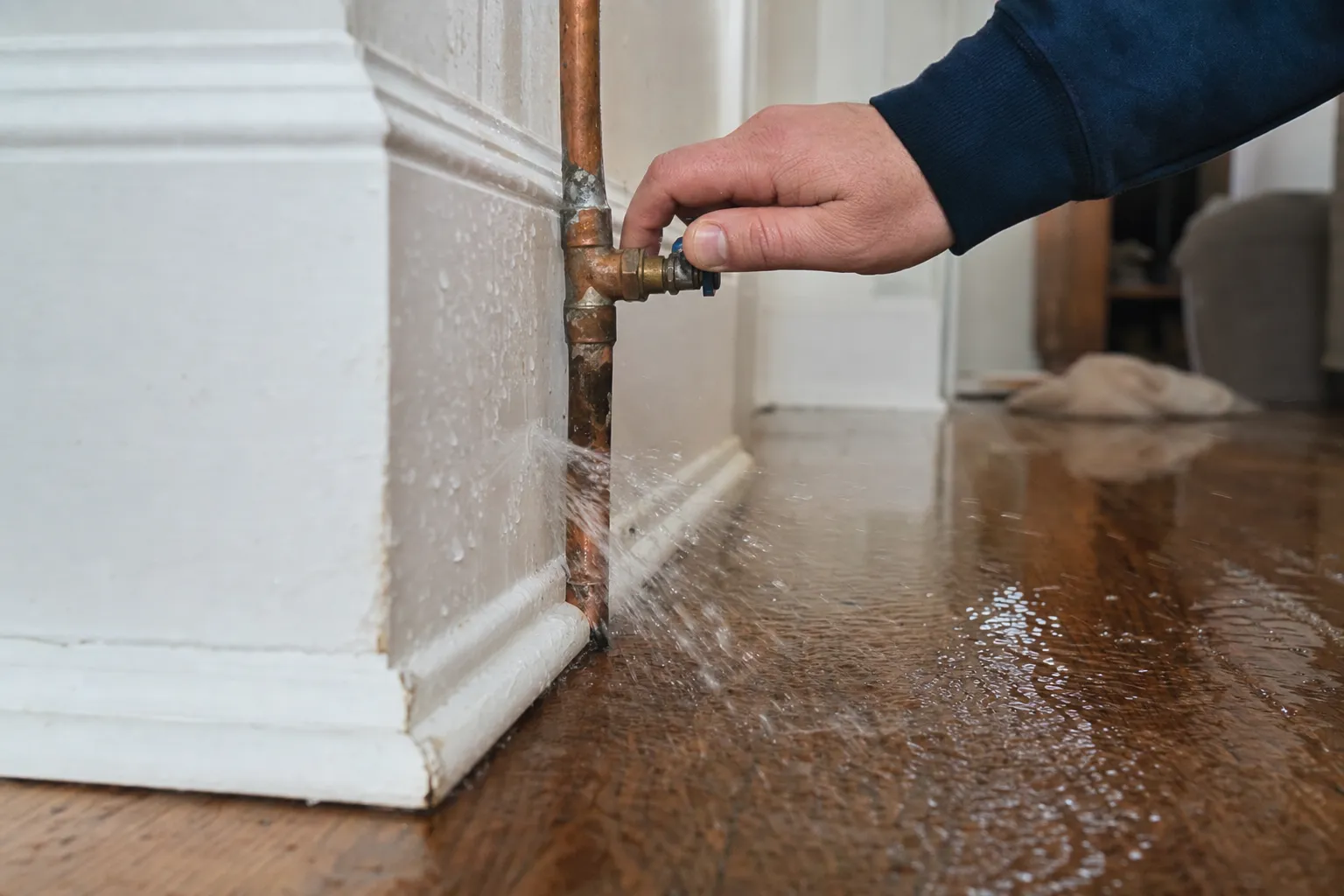
How emergency plumbing services reduce water damage in Bucks County homes
Water moves fast inside a house. A burst pipe, a failed supply line, or a sewage backup does not wait for business hours, and the damage it causes compounds with every minute the source goes unaddressed. In Bucks County homes, where older housing stock and winter temperature swings create real vulnerability, how quickly you get a plumber on site determines how much of that damage you actually have to live with. That is the core of what emergency plumbing services do: they cut the time between the start of the problem and the moment it stops getting worse.
According to the U.S. National Flood Insurance Program, just one inch of standing water inside a home can cause up to $25,000 in damage. Most of the emergencies that generate that kind of loss do not come from storms. They come from plumbing failures, things that happen inside the walls and under the floors of a home that a fast response can stop before they reach that threshold.
Understanding what emergency plumbing services actually do in the hours after a failure makes it easier to understand why response time matters as much as it does. This article walks through the mechanics of it.
In this article, you will learn about:
- Why plumbing emergencies escalate so quickly into structural damage
- The most common emergency scenarios Bucks County homeowners face
- What an emergency plumber actually does in the first hour on site
- How to limit damage before the plumber arrives
Keep reading to understand exactly how fast intervention changes the cost and scope of a water emergency.
Why water damage escalates faster than most homeowners expect
The instinct when something goes wrong is to assess the situation, make a few calls, and see how bad it gets before deciding on a course of action. With a water emergency, that instinct costs money. Water does not stay where it starts. It follows gravity and capillary action into wall cavities, subfloors, insulation, and foundation spaces. By the time you can see the damage from the outside, it has usually already spread further than the visible surface suggests.
The U.S. Environmental Protection Agency is clear that water-damaged materials need to be dried within 24 to 48 hours to prevent mold growth. Mold changes the nature of the repair entirely. What starts as a wet subfloor becomes a remediation project with a different cost profile, a different timeline, and in some cases a disclosure obligation when the home is eventually sold.
The difference between a contained failure and a spreading one
A contained failure is one where the water source has been shut off and the wet area is defined. A spreading failure is one where water is still moving. Emergency plumbing services are primarily about converting the second type into the first type as fast as possible.
That conversion happens through two actions: finding and stopping the source, and assessing the spread to make sure nothing has been missed. A homeowner who shuts the main water supply off before the plumber arrives has already done the most important step. A homeowner who cannot locate the shutoff, or who is dealing with a sewage backup where there is no shutoff to turn, needs a plumber on site to do it for them.
The gap between the two scenarios is measured in square footage of damage and hours of drying time needed afterward.
How older Bucks County homes increase the risk
Bucks County has significant housing stock from the mid-twentieth century and earlier, particularly in communities like Doylestown, Newtown, Langhorne, and the older boroughs along the Delaware River. Homes from that era often have galvanized steel supply lines, cast iron drain stacks, and original copper that has been in service for fifty or more years. These materials are not inherently unreliable, but they reach end-of-life on schedules that homeowners often do not track.
Galvanized pipe corrodes from the inside out. By the time it fails, the exterior of the pipe can look fine while the interior is nearly blocked or perforated. Cast iron drain stacks develop cracks and joint failures that are invisible until a backup occurs. The plumbing repair and service calls that come in after failures in older homes frequently reveal conditions that had been developing for years.
The other risk factor specific to Bucks County is winter. Temperatures in the Delaware Valley drop below freezing reliably from December through February, and homes with exterior wall penetrations, uninsulated crawl spaces, or garage pipes are at real risk of freeze events. A frozen pipe that bursts during a cold snap at 2 a.m. is a textbook emergency plumbing scenario.
What water damage looks like a week later
Most homeowners who delay calling a plumber after a water event do so because the visible damage looks manageable in the moment. The floor is wet, the ceiling has a stain, but the house is still standing. The problems show up later, when:
- Hardwood floors begin to cup or buckle as moisture absorbed from below works its way to the surface.
- Drywall that was not removed and dried develops soft spots, staining, and eventually mold colonies behind the surface.
- Insulation in the walls loses R-value permanently and, if it stays wet, becomes a reservoir for organic growth.
- Subfloor sheathing begins to delaminate, affecting the structural integrity of the floor system.
The sewer drain backups that reach finished basement spaces in Bucks County rowhouses and split-levels are among the most expensive scenarios, because the contaminated water category changes the remediation requirements entirely. Clean water from a supply line is a different problem than grey or black water from a drain.
The most common emergency plumbing scenarios in Bucks County
Not all plumbing emergencies look alike, and knowing which type you are dealing with tells you something about what the next few hours will require. The most common scenarios in the area have distinct signatures.
Burst pipes from freezing are the most seasonal. They happen fast, they produce large water volumes quickly, and they often occur in parts of the house that are not frequently occupied, like crawl spaces, garage utility areas, or wall cavities near exterior penetrations. The damage potential is high because of the volume of water and because the freeze-thaw cycle can repeat before the underlying insulation problem is addressed.
Supply line failures under sinks and behind appliances are quieter but often run longer before discovery. A refrigerator water line or a braided steel washing machine hose that fails overnight can run for six to eight hours before someone notices. The drain cleaning and hydro jetting work that follows a backup often reveals that a slow leak had been contributing to subfloor saturation long before the visible event.
Sewage backups are the scenario with the most immediate remediation urgency. Black water contamination triggers different protocols than a clean water supply failure, and the longer it sits, the wider the affected area.
What typically triggers an emergency call at night or on weekends
Most emergency plumbing calls happen outside business hours. That is not coincidence. People are home and running water in the evening, guests use bathrooms during holiday gatherings, and nobody is checking the crawl space during a cold Tuesday morning. The practical triggers include:
- A toilet that will not stop running and then backs up.
- A hissing or running sound from a wall that is not near any fixture.
- Water appearing at a ceiling below a bathroom.
- A basement drain backing up during or after heavy rain.
- A water heater that is leaking from the tank rather than the connections.
The water heaters that fail by leaking from the tank rather than a fitting are sometimes mistaken for supply line failures. The distinction matters because a tank failure means replacement, not repair, and the mitigation timeline is different.
How summer storms factor into Bucks County plumbing emergencies
Bucks County sits in the Delaware Valley, where summer thunderstorms regularly deliver several inches of rain in a short period. When storm volume overwhelms municipal systems, it can reverse pressure in sewer laterals and push backups up through floor drains and basement toilets. This is a plumbing failure triggered by storm conditions, not a storm flood in the FEMA sense, but it reads the same in the basement.
Homeowners who have already dealt with this type of backup are often the ones who invest in backwater valves and sump pump upgrades. The emergency plumbing situations that show up after a hard summer rain follow predictable patterns, and understanding them in advance is part of how you prevent the repeat.
What an emergency plumber actually does in the first hour
This is the part that most explanations gloss over. An emergency plumber is not there to do a full repair in the middle of the night. The job in the first hour is to stop the loss, assess what happened, and set up the conditions for the follow-up work to proceed efficiently. Those three things, done well and fast, are what separate a contained event from a significant claim.
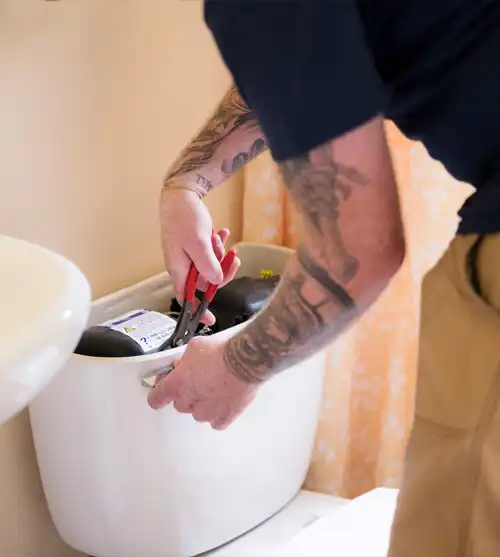
Stopping the loss means locating the source of the water and cutting it off. For a supply-side failure that means isolating the affected line or shutting the main. For a drain backup, it means identifying whether the blockage is in the home lateral or the municipal connection, which changes the response. For a water heater failure, it means closing the cold supply inlet and cutting power or gas to the tank.
Assessing the spread means pulling back material to understand where the water actually went, not just where it is visible. An experienced plumber checks ceiling voids below wet bathrooms, looks behind vanity cabinets, and checks the subfloor perimeter beyond the visible wet area. This assessment drives the conversation with the restoration crew that typically follows.
The role of main shutoff access in limiting damage
One of the most consistent variables between a minor emergency and a major one is whether the homeowner knows where the main water shutoff is and whether it operates correctly. A shutoff valve that has not been turned in twenty years may be seized. In that case, the plumber has to locate and operate the curb stop at the street, which adds time.
The five minutes spent right now confirming your shutoff location and testing that it turns fully closed could be worth thousands of dollars in a future emergency. It is a practical step that Willow Grove and Bucks County homeowners can do this week without any professional help.
Why calling before you are certain it is an emergency is the right move
There is a version of this situation where a homeowner waits to see whether the problem resolves on its own. Sometimes it does, a toilet that runs intermittently and stops, a fixture that drips and dries. But the scenarios that produce real damage rarely announce themselves with obvious severity in the first few minutes.
A ceiling that looks like a minor drip stain can have three feet of saturated insulation above it. A floor that feels slightly soft near the toilet base can have a wax ring failure that has been seeping into the subfloor for months. The emergency plumber in Philadelphia calls that turned into major restoration projects almost always have the same story: the homeowner thought it could wait until morning.
Calling early costs the price of a diagnostic visit. Waiting costs the difference between that and a claim.
How to limit damage in the minutes before a plumber arrives
There is real, useful work a homeowner can do between discovering a plumbing emergency and the moment a plumber walks through the door. None of it requires trade knowledge. It requires knowing three things in advance: where the main shutoff is, where the individual fixture shutoffs are, and where to find a mop and some towels.
The steps that make the most difference:
- Shut off the water source if you can identify it. Individual fixture shutoffs are under sinks and behind toilets. The main shutoff is typically near the water meter, in the basement, utility room, or crawl space.
- Remove standing water from hard surfaces immediately. Water that stays on a hardwood floor for an hour does more damage than water removed in the first five minutes. Wet vacuums, mops, and towels all work.
- Move furniture, area rugs, and anything absorbent off wet flooring. A soaked rug sitting on hardwood for six hours is a floor refinishing job. Moved within the first few minutes, it is a rug that needs to air out.
- Turn off electricity to areas where water is present. Water and live outlets are not a repair problem, they are a safety problem.
- Document with photos before you start cleaning up. Insurance claims go more smoothly when the initial state is on record.
None of these actions replaces the plumber. They reduce the rate of damage accumulation while you wait.
When not to enter a flooded area
If the water is coming from a sewer backup, sewage intrusion, or any source that may have contacted the municipal waste system, do not wade into it without protective gear. Black water contains pathogens that create health risks beyond the property damage. Keep children and pets out of the affected area, ventilate the space if you can do so safely, and wait for the professional assessment before trying to remediate it yourself.
The sewer line repair and replacement work that follows a sewage backup sometimes reveals a line condition that had been building for years, root intrusion, offset joints, or a pipe section that had been failing incrementally. Knowing that in advance changes the repair conversation from reactive to preventive.
Communicating with your insurance company
Call your insurer as soon as the source is controlled and you have photos. Most homeowners insurance policies cover sudden and accidental water damage from internal plumbing failures. They do not cover flooding from external sources or damage from a slow leak that was knowingly ignored.
The speed of your emergency plumbing response actually matters to the claim. According to the Insurance Information Institute, water damage and freezing accounted for 27.6% of all home insurance claims in 2022, making it the second most common claim category after wind and hail. Adjusters evaluate whether the homeowner took reasonable steps to mitigate ongoing damage. An emergency plumber on site within a few hours, with documentation, is evidence of exactly that.
Conclusion
Emergency plumbing services exist to interrupt a process that does not stop on its own. Every hour a water source runs unchecked inside a Bucks County home is an hour of saturation, structural absorption, and mold clock ticking. The services themselves are not complicated. They stop the source, assess the spread, and give the remediation work a clear starting point. What makes them valuable is the speed at which they do it.
The homeowners who come out of a water emergency with a repair bill rather than a claim are usually the ones who called fast, knew where their shutoff was, and had a plumber they could actually reach at 11 p.m. on a Tuesday. The ones with the expensive outcomes waited to see if it would get better.
If you are dealing with a plumbing emergency in Bucks County right now, or if you want to know your options before one happens, Guaranteed Plumbing & Heating has served the Philadelphia area and surrounding counties since 1990. Call 215-342-7200 any time.