

- Home
- »
- Plumbing Services
- »
- Gas Lines
Gas line repair and installation in Philadelphia, PA
If you smell gas, this is not a page to read first. Leave the area, do not flip any switches or use a phone inside the building, and call PGW’s 24-hour emergency line at 215-235-1212 from a safe location. Call us after you are safe and PGW has been notified, and we will get a licensed technician out to find and fix the actual problem.
For everything short of an active leak, gas line work in Philadelphia covers a wide range: repairing an aging line, running new piping for an appliance that was never gas before, and upsizing existing lines so they can actually support what a modern high-efficiency furnace, water heater, or heat pump needs. The city’s older housing stock means a lot of what we find is original black iron piping from decades ago, sized for the appliances of that era, not the equipment going in today.
Our crews have been running this exact work, black iron repairs, new appliance hookups, sizing calculations, and PGW coordination, out of the same Northeast Philadelphia shop since 1990, all under our Master Plumber license and the required L&I mechanical permit. Below is what we handle most often, how sizing actually works, and what to expect when we come out.
Your comfort is always Guaranteed! 24/7 Service! Call Now!
Request a QuoteWhy gas line work in Philadelphia is not a one-size job
Two things make gas piping different from most other plumbing work: the margin for error is small, and the right pipe size depends entirely on what is drawing gas at the other end.
Old piping was sized for old appliances. Black iron gas piping installed decades ago was sized for the furnace, water heater, and stove of that era, all of which typically pulled a modest, predictable BTU load. A lot of Philadelphia row homes and twins are still running on that original piping. That is not automatically a problem, but it becomes one the moment you add a new appliance or replace an old one with something that draws more gas.
Modern high-efficiency equipment often needs more. A standard 40-gallon tank water heater draws a modest BTU load. A whole-house tankless water heater or a gas furnace paired with a heat pump in a hybrid setup can draw significantly more, and an existing half-inch line that worked fine for the old equipment is often undersized for the new. This shows up as weak flame, appliances that won’t fire correctly, or pressure drop when multiple appliances run at once. We calculate the actual total connected load per the Philadelphia Fuel Gas Code before sizing any new or upgraded line, not just to code minimums but to what the specific appliances actually need.
Every job goes through L&I and, often, PGW. Gas piping and connected equipment fall under the Philadelphia Mechanical and Fuel Gas Code, and the Department of Licenses and Inspections requires a mechanical permit for this work. Underground or service-line work also involves PGW inspection before the line can be put into service. Skipping either step is how a homeowner ends up with work that fails inspection or, worse, an unsafe installation.
This is why a gas line quote should come after we have actually looked at the existing piping and the appliance load, not from a phone estimate alone.
Gas line services we handle most often
We diagnose and size correctly before any pipe goes in or comes out. The gas line work we handle most often:
Gas leak detection and repair
A suspected leak gets a same-priority response. We pressure-test the system, locate the actual failure point, whether it is a corroded joint, a damaged fitting, or a failed connection, and repair or replace the affected section rather than guessing at the source.
Gas line repair
Corroded black iron, damaged joints, and fittings that have failed over time are common in Philadelphia’s older housing stock. We repair the specific failure and pressure-test the repaired section before putting it back into service.
Gas line replacement
When a line has degraded beyond a point repair, whether from age, corrosion, or damage during other work in the house, we replace the affected run under permit and inspection.
New gas line installation
Adding gas service to an appliance that previously ran on electric, or running a line to a new addition, fireplace, or outdoor kitchen, starts with sizing the new run against the appliance’s actual BTU rating and the existing meter capacity.
Gas line sizing and upsizing for new equipment
This is a regular part of installing a heat pump in a hybrid dual-fuel setup or converting to a tankless water heater, since both often draw more BTU than the equipment they’re replacing. We calculate the total connected load for the whole house, not just the new appliance, before deciding whether the existing line needs to be upsized.
Meter and service line coordination
When a project needs a larger meter or affects the service line itself, we coordinate directly with PGW on the sizing and inspection requirements so the project doesn’t stall waiting on a step nobody scheduled.
Gas appliance hookups
Connecting a range, dryer, outdoor grill, or generator to existing gas service, done to code with the correct shutoff and connector for that specific appliance.
Pricing and permits
We do not publish flat gas line prices, because a single joint repair and a full re-pipe with a meter upgrade are not comparable jobs. Pricing depends on the scope of work, the length and accessibility of the run, and whether the project needs a larger meter or service line coordination with PGW. We give you a firm number on-site after seeing the actual piping, before any work starts.
Permit costs are separate and disclosed upfront. The L&I mechanical permit fee for gas piping work is based on the project’s contract value, with a set minimum for smaller jobs. We include the permit in our quote rather than adding it as a surprise line item later.
Financing. For larger gas line projects, including full re-pipes and service upgrades tied to a new heating or water heater installation, we offer instant approval financing through GoodLeap.
What to expect when we come out
- Immediate triage for anything urgent. If you’re calling about a smell of gas or a suspected leak, we prioritize that call and walk you through basic safety steps on the phone while a technician is dispatched. Non-urgent installs and upgrades get scheduled normally.
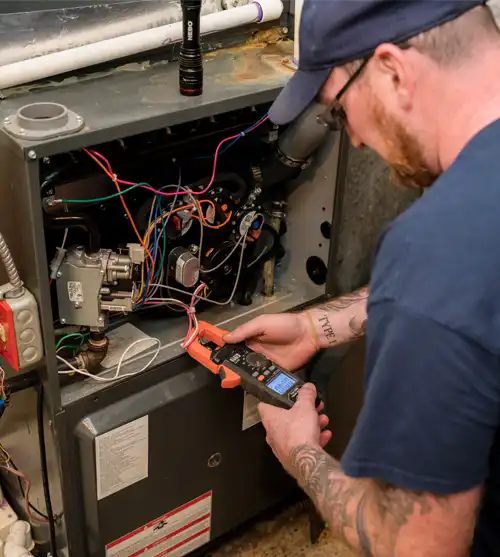
- An in-person look at the actual piping. We trace the existing line, check its condition and material, and calculate the total BTU load it needs to support, current appliances plus anything new going in. A gas line quote given without this step is a guess.
- A clear scope and price before anything starts. We tell you exactly what needs to happen, repair, replacement, or a new run, and whether the project requires a meter or service line change. The price is confirmed before work begins and does not move afterward.
- Permit filed, PGW coordinated where needed. We submit the L&I mechanical permit application and, for underground or service-line work, coordinate the required PGW inspection so the project isn’t waiting on a step that should have been scheduled from the start.
- Work, pressure test, and sign-off. Once the piping is in, we pressure-test the system before it goes back into service, confirm every connection holds, and pass the required inspection. You get documentation of what was done and what passed.
What our clients say about our gas line work
★★★★★ 863 reviews
Credentials that matter for gas line work in Philadelphia
Gas piping has less room for error than almost any other trade we work in. A bad joint or an undersized line isn’t a minor inconvenience, it’s a safety hazard. The Philadelphia Department of Licenses and Inspections requires a mechanical permit and licensed work for gas piping and connected equipment, and we file and pass that inspection on every job. We have been operating under these standards since 1990.
- Licensed Master Plumber for the plumbing work we do
- BBB accredited
- Insured for the work we do, liability and workers’ compensation on file with L&I
- Family-owned and operated in the Philadelphia area since 1990
Frequently Asked Questions
Q. What should I do if I smell gas in my home?
Leave immediately. Do not use light switches, phones, or anything electrical inside the building, and do not try to locate the leak or shut off any valves yourself. Once you’re at a safe distance, call PGW’s 24-hour emergency line at 215-235-1212, then call us. Do not go back inside until PGW or a qualified technician says it’s safe.
Q. Do I need a permit for gas line work in Philadelphia?
Yes. Gas piping and connected equipment fall under the Philadelphia Mechanical and Fuel Gas Code, and L&I requires a mechanical permit for this work. We handle the permit filing as a standard part of every job, and for underground or service-line work, we also coordinate the required PGW inspection.
Q. Why does my new water heater or furnace need a bigger gas line?
Because the pipe that supported your old appliance may not support the new one. High-efficiency equipment, especially tankless water heaters and some furnace and heat pump setups, often draws more BTU than what it’s replacing. If the existing line was sized for the old appliance’s lower load, it needs to be upsized to safely and correctly supply the new one. We calculate this before recommending any new equipment install that touches the gas line.
Q. How do I know if my gas line needs to be replaced instead of repaired?
It depends on where the problem is and how the pipe has held up overall. A single failed joint or fitting is usually a straightforward repair. Widespread corrosion on old black iron piping, or a line that’s failed in more than one spot, points toward replacement being the more reliable long-term fix. We inspect the actual piping before recommending either direction.
Q. Is it safe to keep using appliances if I think there’s a small gas leak?
No. There is no such thing as a minor gas leak that’s safe to ignore or work around. Any suspected leak, no matter how faint the smell, means leaving the area and calling PGW immediately. Trying to keep using appliances or wait it out is how a small problem becomes a dangerous one.
Q. Can you run a new gas line for an appliance that’s currently electric?
Yes. Whether it’s a range, a dryer, an outdoor grill, or a full water heater conversion, we size the new run against the appliance’s BTU rating and your home’s existing meter capacity, then install and permit it to code.
Q. Do you handle gas line work in Bucks County and Montgomery County?
Yes, both, dispatched from the same Cottman Avenue shop. The permitting agency and gas utility differ by township outside Philadelphia proper, and we handle that coordination the same way we do for PGW and L&I in the city.
Schedule gas line service in Philadelphia
If you smell gas right now, stop reading and call PGW at 215-235-1212 from a safe location outside the building. For everything else, call us.
Gas line work in this city ranges from patching a single corroded joint to sizing an entirely new run for a tankless water heater or heat pump conversion, and getting it right means calculating the actual load before any pipe is touched. Call 215-342-7200 and we’ll look at what’s actually there, size it correctly, and confirm the price before work starts. We dispatch from 900 Cottman Avenue across Philadelphia, Bucks County, and Montgomery County.
Contact us to schedule an appointment today!