


Summer plumbing maintenance tips for homeowners in Montgomery County
Summer plumbing maintenance in Montgomery County gets easy to overlook when everything seems to be working fine. The heat is not stressing your heating system, the pipes are not freezing, and the obvious seasonal threats have passed. But summer is one of the busiest seasons for residential plumbing systems, and the strain that shows up in fall is almost always the result of issues that developed quietly over the summer months.
Household water use climbs significantly from June through August. According to the U.S. Environmental Protection Agency, 30 to 70 percent of residential water use during summer months goes toward outdoor applications, irrigation, hose bibs, and outdoor fixtures, while indoor fixtures absorb the added demand from larger households, guests, and increased cooking and cleaning. That combined load puts more stress on every component in the system than winter ever does.
Montgomery County homes, from older ranches in Lansdale to newer developments in Blue Bell, carry a mix of plumbing ages and configurations. A summer maintenance check covers the most common failure points before a slow drip becomes a water damage claim, a clogged drain becomes a backup, or a worn hose bib connection turns into a landscaping emergency mid-season.
In this article, you will learn about:
- Outdoor plumbing checks every Montgomery County homeowner should complete
- Indoor fixture and drain maintenance for high-use summer months
- Water heater and pressure checks that prevent bigger problems
- Clog prevention in kitchens and bathrooms during peak season
Keep reading to build a summer maintenance routine that protects your home's plumbing from the inside out.
Outdoor plumbing checks every Montgomery County homeowner should complete
Outdoor plumbing takes the most direct summer stress and gets the least routine attention. Hose bibs, irrigation connections, and outdoor fixtures run almost daily through June, July, and August, and any weakness in those connections gets exposed fast under sustained use. Starting a summer maintenance routine with the outdoor components covers the highest-risk items first.
In Montgomery County, where freeze-thaw cycles over the winter can crack fittings and loosen connections that only show problems once warm weather brings regular outdoor water use, a quick inspection in late May or early June prevents a lot of mid-season surprises.
Inspecting hose bibs and outdoor spigots
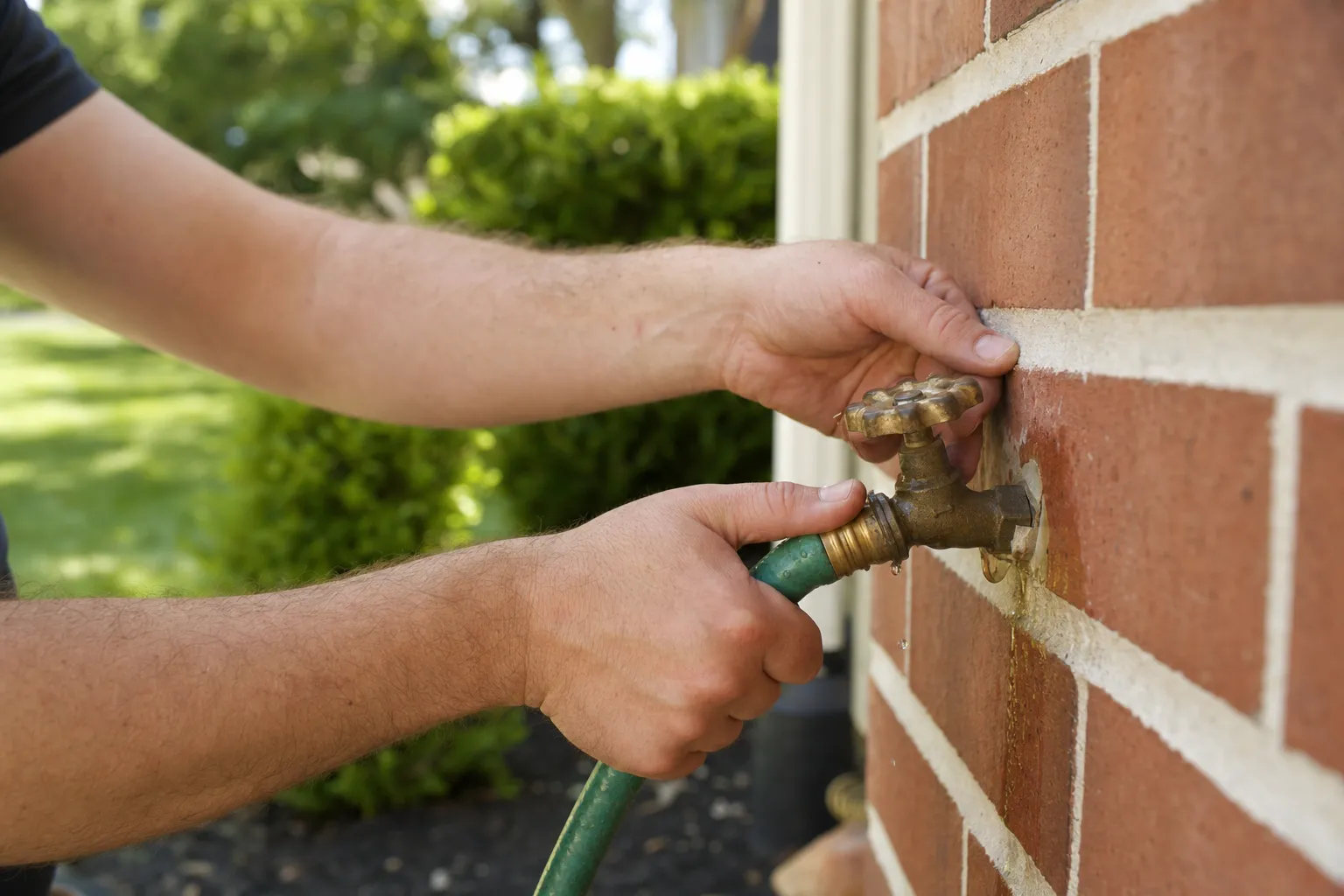
A hose bib that drips when shut off, or that leaks at the wall connection when the hose is under pressure, is one of the most common sources of slow exterior water damage homeowners miss. The drip runs down the exterior wall and into the siding or foundation framing below, where it causes damage that is not visible until it has been ongoing for a season or more.
Check each hose bib before the season's heavy use begins. Turn it on fully and check for any leak at the wall connection. Shut it off completely and watch the spigot for thirty seconds; a faucet that continues to drip after fully shutting off has a worn washer that is a simple plumbing repair before it escalates into exterior wall damage.
Also confirm the shutoff valve for each hose bib is accessible and functioning. Knowing where it is matters if a hose fitting fails or a line is accidentally damaged during landscaping work. A valve that has not been operated in years may be seized, and summer is a much better time to find that out than during an outdoor leak emergency.
Irrigation system connections and underground line checks
Irrigation systems in Montgomery County carry significant water volume through summer, and their buried connections and fittings are the first to show damage from winter frost movement. Walk each irrigation zone at startup and look for:
- Wet or muddy patches in dry weather between watering cycles, which suggest an underground line leak
- Sprinkler heads that spray unevenly or fail to retract, indicating a cracked or clogged head
- Pressure loss across a zone that ran fine last fall, which can point to a cracked lateral line or a failing valve
- Standing water around a valve box, suggesting a valve body or solenoid connection is weeping
Any of these findings is worth addressing early in the season rather than running the system on a compromised component all summer. An underground leak that runs undetected from June through September can waste thousands of gallons and erode the soil around the line until a section of the yard subsides.
Checking the main shutoff valve while the weather is cooperative
The main shutoff valve is the component that stops all water flow to the house in the event of a pipe failure, a burst fixture, or any other plumbing emergency. Many homeowners have not operated theirs in years. Summer is the right time to confirm it moves freely and closes fully.
Turn the valve off completely and then open a faucet inside the house to confirm flow stops. Then turn it back on slowly and confirm flow returns without pressure spikes. A valve that is stiff, that will not close fully, or that leaks at the packing nut when operated has failed at the one job it exists to do. Replacing a shutoff valve is a straightforward plumber's call, and doing it before an emergency rather than during one is the difference between a routine appointment and a flooded basement.
Indoor fixture and drain maintenance for high-use summer months
Indoor plumbing demand increases through the summer as household activity picks up. More people in the house, more frequent cooking, more laundry, and more bathroom use all combine to put consistent daily stress on fixtures and drains that handle moderate loads through the rest of the year. Most summer drain problems are not surprises; they are the result of buildup that accumulated over months and finally reached a threshold during the busiest period of the year.
The most effective indoor maintenance approach for a Montgomery County home is a quick circuit through the fixtures most likely to develop issues during peak use, addressing anything that is showing early warning signs before those signs become service calls.
Bathroom drains and what summer buildup looks like
Bathroom drains handle higher volumes during summer, and hair, soap, and product residue accumulate faster than they do in quieter seasons. A drain that was running slowly in May will likely back up by August under increased household load.
Run each bathroom sink and tub drain with the stopper open and watch how quickly it clears. A drain that takes more than 15 to 20 seconds to clear a full sink of water already has partial buildup in the trap or the P-trap connection. The same test applies to shower drains: if water pools noticeably around the drain during a normal shower, the line needs attention before the season peaks. A drain cleaning visit that addresses multiple slow drains in a single appointment is far less disruptive than three separate emergency calls when each one eventually backs up.
Also check the caulking around tub and shower enclosures. Summer humidity causes caulk to expand and contract more than in cooler months, and any existing gaps or cracks admit water into the wall and floor assembly behind the tile. Recaulking a shower is a DIY task, but water intrusion behind an enclosure that has been present for a season or more requires a plumber to evaluate the scope before any cosmetic repair makes sense.
Toilet inspection before high-season use
Toilets are the single largest indoor water consumer in most homes, and summer guests and increased household activity reveal problems that quiet months mask. A toilet that runs intermittently, makes a hissing sound after the tank fills, or requires multiple flushes has a component that is failing and wasting water daily.
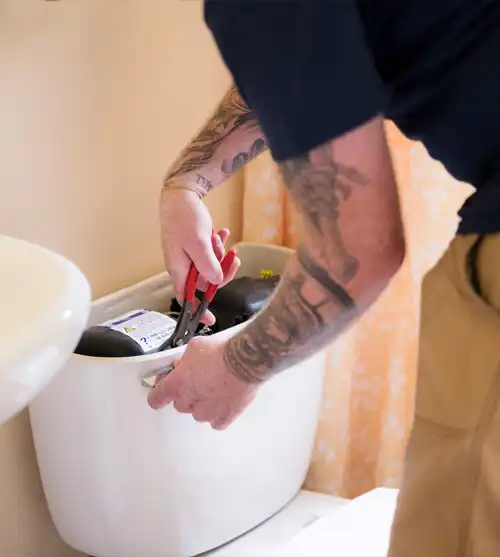
The simplest leak test requires no tools. Add several drops of food coloring to the tank, wait ten minutes without flushing, and check whether color has migrated to the bowl. Color in the bowl confirms the flapper seal is allowing water to pass through continuously, a silent leak that the U.S. EPA WaterSense program notes can waste 200 gallons per day in some cases. Replacing a flapper is a straightforward and inexpensive fix that immediately stops that loss.
Also check each toilet's floor connection for any soft movement or give when you place firm pressure on the sides of the base. Movement at the base means the wax ring seal is compromised, and water is likely depositing into the subfloor with every flush. That is not a symptom to monitor; it is a repair to schedule before the damage becomes visible.
Washing machine supply lines and the laundry area
Laundry use climbs in summer, particularly in Montgomery County households with active families spending more time outdoors and generating more wash loads. The supply lines connecting the washing machine to the hot and cold valves in the wall are one of the most commonly overlooked residential plumbing failure points.
Rubber braided supply lines that are more than five years old should be inspected for bulging, cracking, or corrosion at the fittings. A supply line failure behind a washing machine releases full line pressure into the laundry room until someone notices or the water migrates far enough to get attention. Steel braided lines are a direct upgrade that significantly reduces that failure risk and cost under twenty dollars for a pair. Pull the machine out from the wall far enough to inspect both lines fully, check the valve handles for smooth operation, and confirm the drain hose is properly seated in the standpipe rather than just resting against the opening.
Water heater and pressure checks that prevent bigger problems
Two system-level checks that most homeowners skip during summer maintenance have an outsized effect on plumbing reliability: water pressure and water heater condition. Both affect every fixture in the house, neither is visible without a test, and both develop problems gradually rather than failing suddenly.
The EPA recommends that residential water pressure stay between 45 and 60 psi for optimal fixture performance and pipe longevity. Pressure consistently above that range accelerates wear on supply line fittings, valve seats, and appliance connections throughout the house. A pressure gauge that threads onto any hose bib costs under ten dollars and gives a reading in thirty seconds.
Testing and correcting water pressure
High water pressure is one of the most consistent silent contributors to early plumbing failures across Montgomery County homes. Municipal supply pressure varies by neighborhood, and a pressure regulator that was installed a decade ago may no longer be holding the correct setpoint, or may have failed without any obvious symptom.
Test pressure at an outdoor hose bib with the gauge threaded on and all other fixtures closed. A reading above 80 psi is high enough to cause real damage over time. Fittings under constant over-pressure stress develop pinhole leaks, appliance supply lines fail earlier, and toilet fill valves hum and wear out faster than they should. If the reading is outside the 45 to 60 psi range, a plumber can adjust or replace the pressure regulator in a single visit. It is a small job that protects every connection in the system.
Also pay attention to pressure variation. If pressure surges when a washing machine fills or drops noticeably when the irrigation runs, there may be a supply line issue or a water main restriction worth investigating before those variations become chronic and start working connections loose throughout the house.
Water heater flush and anode rod check
Sediment accumulates at the bottom of a water heater tank through normal operation, and in Montgomery County, where water hardness varies by municipality, that accumulation can be significant by midsummer. A light sediment layer reduces efficiency; a heavy one causes the characteristic rumbling or popping sounds during heating and accelerates corrosion at the tank base.
Flushing the tank once a year, which involves connecting a hose to the drain valve and running water through until it clears, removes the accumulated material and extends the unit's service life. Summer is a practical time to schedule this because hot water demand is slightly lower than in winter, and the flush does not leave the household without hot water during a cold-weather period. A plumber performing the flush can also check the water heater's anode rod, the sacrificial metal component that prevents tank corrosion, which typically needs replacement every three to five years. A depleted anode rod leaves the tank interior unprotected and is the primary reason water heaters rust out before their expected service life.
Checking supply line connections under fixtures
Summer is a practical time to open every cabinet under a kitchen or bathroom sink and inspect the supply line connections and drain slip joints. Connections that are weeping, corroded at the fitting, or showing mineral deposits at the threads are actively leaking at some rate, even if no visible water has reached the cabinet floor yet.
The check takes two minutes per fixture and catches conditions that produce visible damage only after weeks or months. A list of what to look for under each fixture:
- Mineral or rust deposits on the hot or cold supply line fittings at the shutoff valve or the fixture itself
- Any moisture, staining, or soft material on the cabinet floor or the particle board shelf
- P-trap connections that show streaking below the joint, even if the cabinet interior is dry
- Shutoff valves that are corroded at the stem or that appear to have not been operated in years
Addressing a weeping supply connection now, while the cabinet is dry and the issue is contained, is a fraction of the cost of addressing it after a summer of slow leakage has compromised the cabinet and the subfloor beneath it.
Clog prevention in kitchens and bathrooms during peak season
Kitchen drain and garbage disposal problems spike in summer. More meals, more guests, and more cooking produce higher volumes of food waste, grease, and organic material entering the drain system. In a Montgomery County home where the drain lines are already doing more work during peak season, what goes down the drain matters more than it does in quieter months.
The most effective clog prevention is habit-based rather than product-based. Chemical drain cleaners treat symptoms; they do not address buildup that has accumulated in deeper sections of the line, and they can damage older drain materials with repeated use. The practices below are more durable and less expensive over a full season.
What the kitchen drain actually handles in summer
Summer kitchen activity significantly increases the volume and variety of material that enters the kitchen drain. Grease from grilling and outdoor cooking gets washed into the sink. Produce scraps from increased salad and fresh food preparation go down the disposal. Party and gathering cleanup results in larger quantities of food solids entering the drain in shorter time windows than the system typically handles.
Grease is the most damaging of these. It enters the drain in liquid form, cools as it moves through the line, and adheres to the pipe interior in accumulating layers that narrow the drain opening over months. A drain that handled grease freely in spring may be running slowly by late summer simply because the accumulation from the season has reached a critical point. Running hot water for a full minute after any grease-heavy cleanup, and disposing of cooking fat in the trash rather than the sink when practical, extends the interval between drain cleaning visits significantly.
Garbage disposal maintenance and what not to put in it
The garbage disposal handles more material in summer than at any other point in the year, and most of the failures and odor complaints that show up in late summer trace back to materials that should not have gone in at all.
Keep these materials out of the disposal regardless of season, and especially during high-use summer months:
- Fibrous vegetables: corn husks, celery, artichoke leaves, and asparagus wrap around the grinding component and strain the motor
- Starchy foods: potato peels, pasta, and rice expand with water and form dense clogs in the trap and drain line
- Grease and cooking fat: even small amounts accumulate on the disposal walls and the drain line below it
- Fruit pits and hard seeds: cherry pits, avocado pits, and mango seeds are harder than the disposal blades and can crack them
- Eggshells and coffee grounds: both settle in bends and contribute to slow-drain buildup faster than most homeowners expect
Running the disposal with a steady stream of cold water, both during and for thirty seconds after grinding, flushes material fully through the drain line rather than allowing it to settle in the trap. A disposal that produces persistent odor after cleaning with ice and citrus likely has buildup in the drain line below the unit rather than on the grinding surface itself, which is a drain line job rather than a disposal issue.
Recognizing when a slow drain needs professional attention
Many homeowners treat slow drains as something to manage rather than something to fix. They use enzyme cleaners, plunge periodically, and keep a note to call someone eventually. The problem is that slow drains in a home's main drain lines do not clear on their own; they get progressively slower until they back up, and they do so most dramatically when seasonal use is at its peak.
Signs that a slow drain has moved past the point of DIY management include:
- Multiple drains on the same floor draining slowly simultaneously, which points to a shared line or main line issue
- A drain that clears briefly after treatment but returns to slow within a few days, indicating buildup in a section of line that surface treatment cannot reach
- Gurgling sounds in a drain or toilet that is not in use when another fixture in the house runs
- A drain in a first-floor bathroom that is slower than any drain on the upper floors, suggesting a main line restriction near the base of the stack
Any of these patterns in a Montgomery County home during summer means a professional drain evaluation, which may involve camera inspection and hydro jetting to clear buildup that has accumulated in the line over the season. The homeowners who prevent emergency plumbing problems during summer storms consistently are the ones who addressed slow drains and partial blockages before the added water volume of a heavy rain event pushed a marginal system over the edge.
Conclusion
Summer plumbing maintenance in Montgomery County is mostly about catching small problems during a window when you can address them on your schedule, rather than waiting until they become emergencies that get addressed on someone else's. Hose bibs, irrigation lines, bathroom drains, kitchen disposals, water heaters, and supply connections all carry more load from June through September than at any other point in the year.
The work involved is not extensive. A systematic check of outdoor fixtures, a visual inspection under sinks, a toilet leak test, and attention to what enters the kitchen drain adds up to a few hours spread across the early summer. What it prevents, a mid-summer backup, a supply line failure behind the washing machine, or a water heater that fails during peak demand, is worth considerably more than that time investment.
If any of these checks turn up something that needs professional attention, contact Guaranteed Plumbing & Heating to schedule service before the issue develops further through the season.