




Why air conditioners freeze up in Montgomery County during summer heat
Finding ice on your air conditioner on the hottest day of the summer feels backwards, but it is one of the more common HVAC problems Montgomery County homeowners run into when the heat really settles in. A frozen AC is not just a nuisance. It is a symptom that the system is operating outside normal parameters, and if you keep running it in that condition, you are shortening its life and risking a compressor failure that costs several times more to fix than the original problem would have.
The causes are almost always the same few things, and most of them are preventable with routine maintenance. Understanding why it happens makes it much easier to catch the early signs before the coil freezes solid and the system stops cooling altogether.
According to the U.S. Energy Information Administration, about 87% of U.S. homes have air conditioning equipment. In a densely populated county like Montgomery, that means tens of thousands of systems running hard through July and August, many of them aging equipment that has missed a maintenance cycle or two. Those are the systems that freeze.
In this article, you will learn about:
- The mechanics of why an AC coil freezes even in summer heat
- The most common causes in Montgomery County homes
- What to do immediately when you discover ice on your system
- How to prevent it from happening again
Keep reading to understand what is actually happening inside your system when it freezes, and how to stop it before it becomes an expensive repair.
The mechanics behind a frozen coil in hot weather
It seems contradictory that an air conditioner can develop ice in ninety-degree heat, but the coil temperature and the outdoor temperature are separate things. The evaporator coil inside your air handler absorbs heat from the air that passes over it. When conditions are right, refrigerant inside the coil stays cold enough to absorb that heat efficiently. When something disrupts the heat exchange, the coil temperature drops below 32 degrees Fahrenheit and moisture in the passing air freezes on contact.
The coil is designed to run cold, but not frozen. The system assumes a continuous flow of warm indoor air moving across the coil surface to keep the balance. Anything that reduces that airflow or throws off the refrigerant pressure disrupts the balance and pushes the coil below freezing.
What the evaporator coil is actually doing
The evaporator coil sits inside the air handler, typically in the basement or utility closet of a Montgomery County home. Refrigerant flows through it at low pressure, which causes it to absorb heat from the air. That absorbed heat evaporates the refrigerant, which then travels to the outdoor condenser unit to release the heat outside. The process depends on a steady supply of warm room-temperature air moving across the coil.
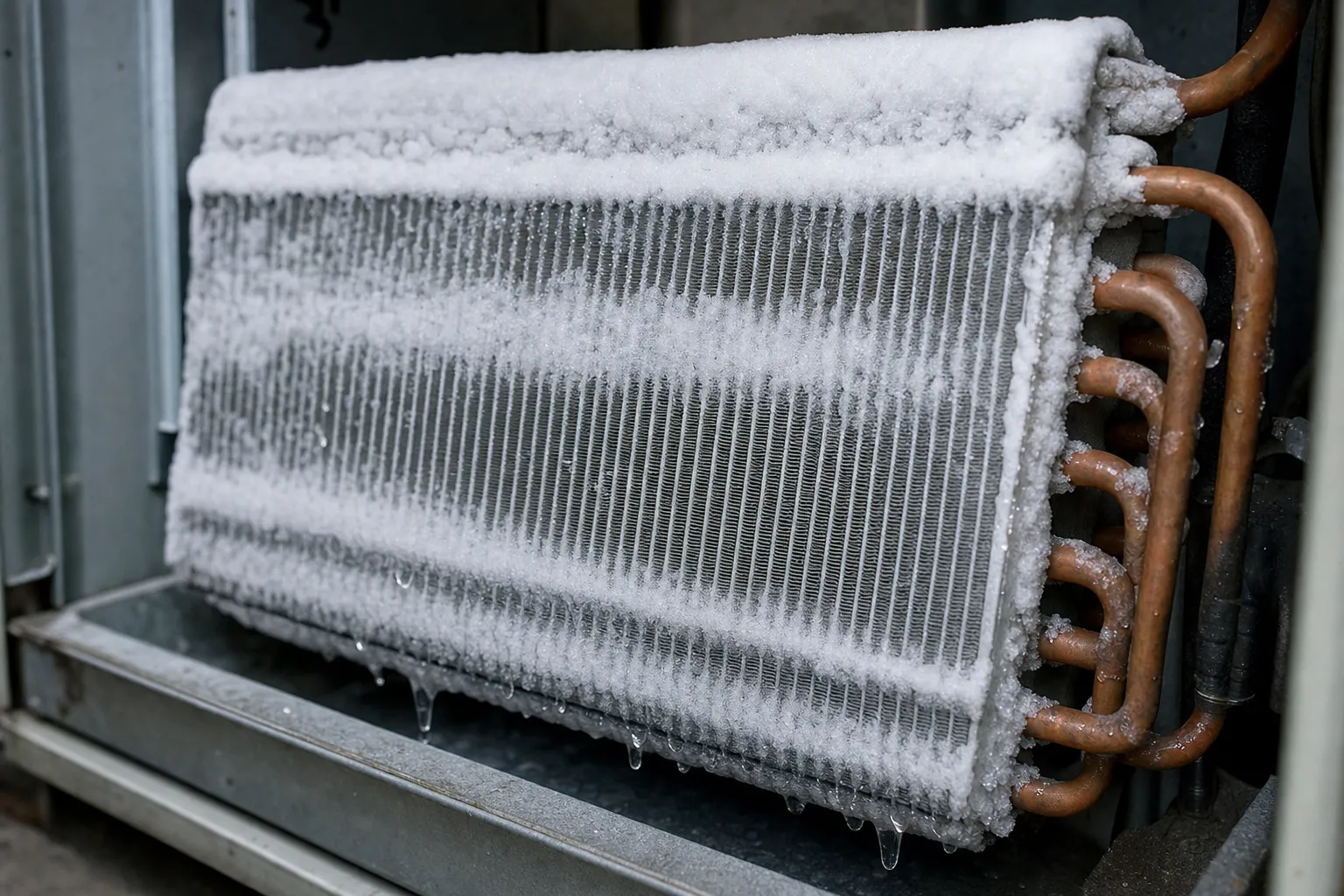
When that air supply drops off, the coil absorbs less heat. The refrigerant inside gets colder than it should because it is not absorbing enough heat to stay in the proper temperature range. At that point, the moisture in the passing air, even the trickle that is still getting through, freezes on the coil surface. Ice accumulates, restricts airflow further, and the cycle accelerates until the coil is a solid block of ice.
Why the problem is worse during Montgomery County heat waves
There is a counterintuitive dimension to this that catches people off guard. A frozen coil can happen in mild weather with a dirty filter, but the risk increases during a heat wave because the system is running almost continuously. Extended run cycles with a marginal airflow problem compound the ice buildup faster than intermittent cycling would.
During a stretch of ninety-plus degree days in Montgomery County, a system running eighteen to twenty hours a day with a partially restricted filter will freeze far sooner than it would during a moderate week. The same filter that caused no visible problem in June can produce a fully frozen coil by mid-July when the system barely shuts off. The warning signs are easy to miss because the house is staying cooler than outside, and the problem is invisible inside the air handler.
The most common reasons an AC freezes in summer
Every frozen coil has a cause, and the cause determines the fix. Some are a twenty-dollar filter. Some are a refrigerant leak that requires a technician. Understanding which category you are dealing with is the first step toward getting the system back to normal without spending money on the wrong thing.
The causes break down into two categories: airflow problems and refrigerant problems. Both produce the same symptom, a frozen coil, but they have different solutions and different urgency levels.
Dirty or clogged air filters
This is the most common cause of a frozen AC in Montgomery County, and it is the cheapest to fix. A clogged filter restricts the volume of air that reaches the evaporator coil. Less air means less heat transfer. The coil cools below freezing and ice begins to form.
The U.S. Department of Energy notes that replacing a dirty, clogged filter can improve an air conditioner's efficiency by 5 to 15 percent. That efficiency improvement is the other side of the same coin: a clogged filter is not just a freeze risk, it is also costing you money on every electric bill while it sits there. In Montgomery County homes with pets, during high-pollen spring weeks, or in houses with multiple occupants, filters can clog faster than the standard replacement interval suggests.
Signs that the filter is the likely cause:
- The system has been running for weeks or months without a filter check.
- Airflow from supply vents feels noticeably weaker than usual.
- The area around the return air grille is dusty or visibly coated.
- The system is running but the house is not cooling down the way it should.
Blocked or closed supply vents
Closing vents in unused rooms is a common energy-saving instinct, but it works against the way a central AC system is designed. The system is sized for a certain volume of airflow across the entire duct network. Close enough vents and the airflow through the system drops below the level the coil needs to stay above freezing.
Furniture pushed against return air grilles creates the same problem. So does a basement return vent that has been covered by a storage shelf or a box that migrated in front of it. These are all easy to check before calling for service, and any of them can be the sole cause of a frozen coil in an otherwise healthy system. Walk through the house and confirm every supply register is open and clear, and that the return grilles have at least a foot of clearance.
Low refrigerant from a leak
When refrigerant is low, the pressure inside the evaporator coil drops below the normal operating range. Lower pressure means lower coil temperature. The coil gets cold enough to freeze the moisture out of the air around it, even with normal airflow.
Unlike a dirty filter, low refrigerant is not something you can fix yourself. Adding refrigerant without finding and repairing the leak is a temporary measure that leaves the underlying problem in place. The leak will continue, the refrigerant will drop again, and the coil will freeze again. A technician has to locate the leak, repair it, and then recharge the system to the correct level. For older systems that use R-22 refrigerant, the cost and availability of that refrigerant also factor into whether repair or replacement makes more financial sense.
A malfunctioning blower fan
The blower fan is what pulls air across the evaporator coil and pushes conditioned air through the duct system. If the fan motor is failing, running below speed, or has a failing capacitor, the airflow volume drops even though the filter is clean and the vents are open. The coil sees reduced airflow and freezes for the same reason it does with a dirty filter, except the fix requires a technician.
A failing blower often gives warning signs before it causes a freeze:
- The fan runs louder than usual or makes a humming noise without producing strong airflow.
- The system short-cycles, turning on and off more frequently than normal.
- Some rooms cool but others do not, suggesting airflow is uneven.
- The air handler runs but the supply vents produce barely any airflow at all.
If the filter is clean, the vents are open, and the coil is still freezing, a blower motor problem is the next thing a technician will check.
What to do when you find ice on your AC
The first thing to understand is that you should not keep running the system in cooling mode with ice on the coil. Doing so forces the compressor to work against a restriction it was not designed to handle, and compressor failure is the most expensive outcome of a freeze event. A new compressor, or a full system replacement if the compressor is not worth replacing on an older unit, costs far more than addressing the original cause.
The immediate steps when you find ice:
- Turn the thermostat off or switch to fan-only mode. This stops the cooling cycle while letting the fan run to thaw the coil faster.
- Check and replace the air filter if it is dirty. Do this while the system thaws.
- Check every supply register and return grille in the house to confirm none are blocked or closed.
- Let the system thaw completely before restarting in cooling mode. Depending on how much ice has accumulated, this can take two to four hours. Do not chip the ice off the coil.
- Once the coil is thawed, restart the system and monitor it. If it freezes again within a few hours, the cause is not the filter or a blocked vent.
A second freeze after following these steps means the problem is likely refrigerant or a mechanical component that requires a service call. At that point, the warning signs your AC needs repair have already been present for longer than you may have realized.
Why you should not run the system while it is frozen
This point is worth reiterating because the instinct is to keep the AC running when it is hot inside. Running a frozen system forces the compressor to circulate refrigerant through a coil that is partially or fully blocked by ice. The compressor is not designed for that load. Liquid refrigerant that should have evaporated in the coil can be pushed back into the compressor in a liquid state, which is called slugging, and it can destroy the compressor in a short time.
The heating repair calls that come in after a summer where the homeowner ran a frozen system for days often involve full system replacement rather than a single component repair. The original problem might have been a forty-dollar filter.
Documenting the problem for a service call
When you call for service, the technician will want to know a few things: when you first noticed the problem, whether the system was cooling before it froze, whether the filter has been changed recently, and whether this has happened before. Having that information ready speeds up the diagnostic process.
If the system thaws and the coil freezes again within a short time, take a photo of the ice before you turn the system off. The location of the ice, whether it is concentrated at the coil inlet, spread across the full coil surface, or also forming on the refrigerant lines, gives a technician useful information before they even open the unit. Homeowners in Huntingdon Valley, Willow Grove, and surrounding Montgomery County communities can reach Guaranteed Plumbing & Heating for same-day AC service during the cooling season.
Preventing a freeze before the next heat wave hits
Most freeze events are preventable with a maintenance routine that takes less than thirty minutes a year. The same practices that prevent freezing also keep the system running more efficiently, which shows up in the electric bill.
According to ENERGY STAR, the average home loses about 30% of its heating and cooling energy through leaky or poorly maintained ducts. Duct condition is one piece of a broader maintenance picture that also includes coil condition, refrigerant charge, and the filter schedule. A system that is losing conditioned air through duct leaks is also working harder per degree of cooling, which means more continuous run time, which means a higher freeze risk on the hottest days.
A practical filter schedule for Montgomery County homes
Filter replacement intervals vary by household, but the default of every 90 days is a starting point, not a ceiling. Households with dogs or cats, homes with multiple occupants, houses near active construction, and systems that run almost continuously in summer all need more frequent checks.
A practical approach:
- Check the filter monthly during peak cooling season, May through September.
- Replace it when it shows visible gray or brown loading, regardless of how long it has been in.
- Use a filter with a MERV rating appropriate for your system. Higher MERV ratings capture more particles but also restrict airflow more. A MERV 13 filter in a system designed for MERV 8 can itself reduce airflow enough to cause a freeze on a hot day.
- Write the replacement date on the filter edge with a marker so you always know when it went in.
Annual professional maintenance before the cooling season
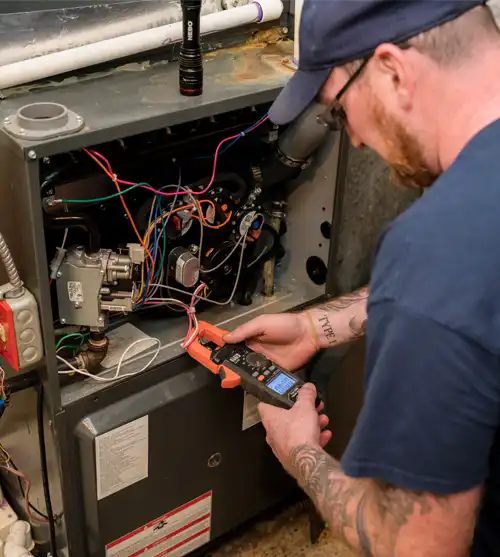
A technician checking the system in April or early May catches the conditions that cause freeze events before they happen. That visit typically includes checking refrigerant pressure, cleaning the evaporator and condenser coils, testing the blower motor and capacitors, and confirming the condensate drain is clear.
A clogged condensate drain is worth noting separately. When the drain line is blocked, the drip pan fills and water can overflow into the air handler, sometimes causing secondary damage to the area below the unit. The drain line check is a quick part of a standard tune-up, but it is one that gets skipped when homeowners try to stretch maintenance intervals. The air conditioning service calls that come in mid-summer often reveal deferred maintenance that would have been a fraction of the cost if it had been addressed in spring.
Keeping the outdoor condenser unit clear
The condenser unit outside the house is the other half of the heat exchange process. When it is blocked by overgrown shrubs, compacted debris, or a fence installed too close, it cannot release heat efficiently. The system runs hotter and longer, which compounds any marginal airflow problem inside.
Clear at least two feet of space around all sides of the condenser unit. Check the fin surfaces on the outside of the unit for compacted debris, cottonwood seed, or grass clippings, especially after mowing. A garden hose on a low setting can flush the fins from inside out if they are visibly coated. The outdoor unit and the indoor air handler are one system, and restricting either side affects the whole.
Knowing when the system is approaching the end of its useful life
Montgomery County homes with systems from the early 2000s or earlier are approaching the age where a freeze event, a refrigerant leak, or a compressor failure tips the financial calculation toward replacement rather than repair. Systems over fifteen years old that require refrigerant recharges, have had repeated component failures, or are running on R-22 refrigerant face both higher repair costs and lower cooling efficiency compared to current equipment.
If your system has frozen more than once in the same season, or if the repair estimate for the underlying cause approaches a significant fraction of a replacement cost, it is worth having the when to replace your air conditioner conversation before committing to the repair. A technician can give you a realistic picture of what the system's remaining service life looks like based on its current condition.
Conclusion
A frozen air conditioner in Montgomery County is almost always a signal that the system is not getting what it needs, usually airflow, proper refrigerant charge, or a functional blower. The causes are predictable, and most of them are preventable with a filter on a consistent schedule and a pre-season maintenance visit. The ones that are not preventable, a refrigerant leak or a failing motor, are far cheaper to address before they produce a full freeze and a compressor under stress.
If you find ice on your system this summer, turn it off, let it thaw, and work through the filter and vent checklist before calling for service. If it freezes again after that, the problem is inside the system and needs a professional diagnosis.
Guaranteed Plumbing & Heating has served Montgomery County and the Philadelphia area since 1990. Call 215-342-7200 to schedule AC service or a diagnostic visit before the next heat wave hits.