
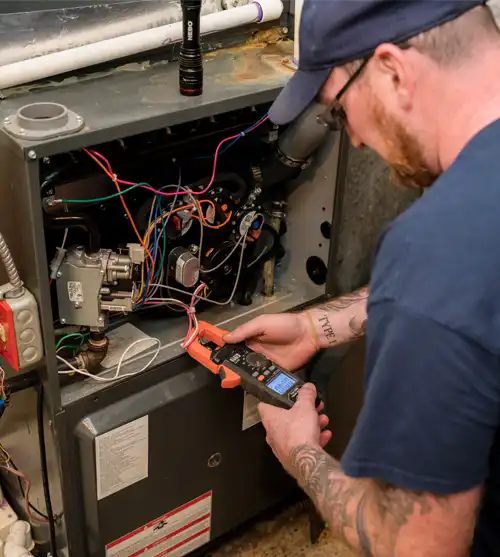





How to prepare your plumbing and AC for late summer in Bucks County homes
Late summer in Bucks County sits in a narrow window between the peak demand of July and the transition to fall. Your AC has been running hard since May. Your plumbing has handled summer barbecues, house guests, and the kind of daily water use that comes with people spending more time at home.
By August, both systems have accumulated wear that shows up as inefficiency, minor leaks, and small mechanical problems that are easy to address now and expensive to ignore until they become emergencies.
The logic for late summer maintenance is straightforward. The AC still needs to carry you through September. The plumbing needs to be in good shape before the slower fall season arrives and before any cold-weather prep begins.
Spending an afternoon on these checks right now is the difference between heading into fall with systems in good condition and discovering a problem in October when your attention has moved elsewhere. It also reduces the risk of emergency plumbing problems during summer storms that August in Bucks County can still bring.
According to the U.S. Environmental Protection Agency, the average family wastes 9,400 gallons of water per year from household leaks, the equivalent of more than 300 loads of laundry. Many of those leaks are slow and silent, running undetected through the kind of summer when outdoor water use and in-home demand both peak. Late summer is the right moment to find them.
In this article, you will learn about:
- What late summer does to your plumbing and why it matters before fall
- The AC maintenance steps that protect your system through the end of the cooling season
- How to catch small plumbing problems before they become fall emergencies
- What to schedule now versus what can wait until the season turns
Keep reading to get a practical, room-by-room picture of what a late summer home systems check actually looks like in a Bucks County home.
What late summer does to your plumbing and AC
Bucks County summers are humid and hot, with stretches of ninety-degree heat that keep both systems running continuously for weeks at a time. That kind of sustained demand is different from occasional peak use. It accelerates wear on components that are marginal, stresses connections that were borderline to begin with, and fills AC drain lines with the organic buildup that develops when condensate runs steadily through the same tube for three months straight.
The plumbing side of late summer is partly a volume story. Household water use peaks in summer. Outdoor faucets and hose bibs have been in use since spring. Supply connections under kitchen sinks have been handling dishwasher loads and cooking cleanup through the season. Toilets in guest bathrooms have seen more use than during quieter months. Every one of those points of use has been cycling on and off at a higher rate than it does in November.
Where strain accumulates over the course of a summer
Supply connections under sinks and behind appliances are one of the most common late-summer problem areas. Braided steel hose connections on washing machines, refrigerator water lines, and dishwasher supply lines all vibrate slightly with each use cycle. Over a summer of heavier-than-usual cycling, connections that were slightly loose tend to get slightly looser. A leak that would show up as a water stain under a cabinet in fall was preventable with a visual check in August.
The outdoor plumbing is equally worth a look. Hose bibs that have been in continuous use since April are now at the point where their packing washers are most worn. A slow drip at a hose bib connection wastes more water over the course of a week than most homeowners realize, and it often goes unnoticed because it happens outside and the wet ground around the foundation is attributed to irrigation or rain.
Why the AC is most vulnerable at the end of the cooling season
An air conditioner does not fail evenly across the season. Components that are going to fail in a given year tend to fail either early in the season when the system starts up after sitting idle, or late in the season after months of continuous operation. August and September represent the second failure window.
Capacitors, which store and release electrical charge to start the compressor and fan motors, wear with each start cycle. A system that has been cycling on and off hundreds of times since June has put significant wear on capacitors that were already partway through their service life. A capacitor that fails in September leaves you without cooling during a heat wave at the end of the summer, which is a worse outcome than catching it during a maintenance visit beforehand.
How summer heat affects plumbing supply lines and fixtures
High temperatures and heavy use do not just stress the AC. Plastic supply line fittings, rubber washers in hose bibs, and the wax rings that seal toilets to the floor flange all experience more thermal cycling in summer than in the cooler months. A wax ring that compresses and re-expands through weeks of high temperatures can develop a small gap that only becomes visible when a slight sewer odor appears or a stain shows up on the ceiling below the bathroom.
Supply connections made with older braided hoses are similarly more vulnerable after a hot summer.
The outer braiding on these hoses is protective against impact, but it does not prevent the inner rubber liner from hardening and cracking with age and heat. A supply hose failure under a sink or behind a washing machine produces the kind of water volume that does significant damage in a short time and often leads to pipe repair work behind walls that could have been avoided entirely.
AC maintenance steps that carry you through fall
The goal of late summer AC maintenance is not a comprehensive overhaul. It is a targeted check of the components most likely to cause a late-season failure, combined with the cleaning that prevents efficiency loss during the final push of the cooling season.
The filter is the first stop and the cheapest one. A filter that went in at the beginning of summer has now processed three or four months of recirculated indoor air in a Bucks County home, complete with the pollen, dust, and particulates that come through during the mowing and landscaping season.
According to the U.S. Department of Energy, replacing a dirty, clogged air filter can improve AC efficiency by 5 to 15 percent. At the end of a heavy summer, replacing the filter also ensures the system is pushing air efficiently through September rather than working harder than it has to against a restriction.
- Check and replace the air filter. If it went in before Memorial Day, replace it now.
- Clear the area around the outdoor condenser unit. Grass clippings, cottonwood seed, and end-of-summer vegetation pressed against the fins restrict airflow from the condenser side.
- Check the condensate drain line. Three months of humidity extraction means the drain line has been running continuously since spring. Organic buildup in condensate lines is one of the most common causes of late-season water damage from AC systems.
- Listen to the system run. A clicking, rattling, or grinding sound that was not there in June is a signal worth having a technician check before the end of the season.
- Look at the refrigerant lines outside. Ice on the refrigerant lines or a line that feels warm rather than cool during operation points to a refrigerant issue that should be diagnosed before the system shuts down for fall.
A technician visit in late summer or early fall also addresses the capacitor question directly. Capacitor testing is a standard part of a maintenance visit and costs a fraction of what a failed capacitor costs when it takes out the compressor start cycle during a heat wave.
The condensate drain line and why it matters in August
The condensate drain line deserves its own attention. Your AC removes several gallons of moisture from the air per day during a Bucks County summer. All of that water flows through the same drain line from the air handler to a drain or to the outside. Over a season, the warm, wet environment inside that line is ideal for organic buildup.
When the drain line clogs, the backup tray fills. Some systems have a float switch that shuts the system down before the tray overflows. Many do not. A clogged condensate drain that overflows drips water onto the ceiling below the air handler, into the wall behind it, or onto the floor of the utility area. That damage shows up as a stain or soft spot that gets misattributed to a roof leak or plumbing problem until the actual source is found.
Flushing the condensate drain line at the end of summer takes a few minutes and eliminates that risk entirely. A cup of diluted distilled white vinegar poured into the drain access port every few months is enough to keep organic buildup from accumulating. This is one of the simplest AC maintenance steps there is, and one of the most commonly skipped.
What to tell a technician at a late summer AC visit
If you schedule a late summer or early fall maintenance visit, the conversation should cover a few specific points beyond the standard tune-up checklist:
- Ask for a capacitor test on both the compressor and fan motor capacitors. If either is reading low, replacement now costs far less than an emergency call in September.
- Ask about coil condition. An evaporator coil that has accumulated dirt over the season transfers heat less efficiently, which means the system runs longer per cooling cycle. A coil cleaning restores efficiency.
- Ask whether the refrigerant charge looks correct. Low refrigerant is not always visible from outside the system, and a measurement at the service port is the only way to know.
- Ask whether the condensate drain was cleared as part of the service.
The air conditioning service visit that covers all of these items at once is more efficient than separate calls for each. Late summer is the practical window because the system is still running and a technician can observe actual operating conditions rather than testing a cold system.
Signs the AC may not make it to fall without a repair call
Some conditions are worth watching for in the final weeks of the cooling season that indicate a service call should not wait until fall. These are not definitive diagnoses, but they are patterns that consistently precede AC repair needs in Bucks County homes during August and September.
A system that runs continuously without reaching the set temperature on a day that is not unusually hot points to a refrigerant issue, a dirty coil, or a failing compressor. A system that trips the circuit breaker when it tries to start is often a failing capacitor or a compressor drawing more current than it should. A system that produces warm air from the supply registers despite running normally in every other respect points to refrigerant or a reversing valve issue. These patterns also appear in the emergency HVAC repair warning signs that recur across the Philadelphia region every August.
Any of these observed during a run cycle in late summer is the right moment to call, not after the system fails completely on the last hot weekend of September.
Plumbing checks that prevent fall emergencies
The plumbing side of a late summer check is less about peak performance and more about preventing the small problems of summer from becoming the expensive surprises of fall. Most of it is visual and takes less than an hour to get through the whole house.
Start under every sink. Pull open the cabinet under the kitchen sink, the bathroom vanities, and the laundry area. Look for staining on the cabinet floor, corrosion on the supply connections, or a faint mineral ring where water has pooled and evaporated. Any of those signs indicates a slow drip that has been happening long enough to leave a trace. The connection that leaves a ring in August will leave a puddle in November.
Work through the checklist methodically:
- Check all visible supply connections under sinks, behind the toilet tank, and at the washing machine.
- Flush every drain and listen for slow drainage, which indicates a partial blockage building up.
- Check the outdoor hose bibs for drips at the packing nut and at the hose connection point.
- Run the garbage disposal and check under the sink immediately after for drips at the drain flange.
- Check the water heater for signs of corrosion or moisture at the base, which can indicate a tank that is beginning to fail.
None of these checks requires tools. They require about twenty minutes and a willingness to look at things that are usually ignored.
Slow drains and what they signal heading into fall
Slow drains at the end of summer are not a coincidence. Summer means more hair in shower drains, more food debris in kitchen drains, and in some Bucks County homes, more grease from outdoor cooking that finds its way into the kitchen drain. The partial blockages that develop through the summer are exactly the kind of condition that produces a full clog in October when Thanksgiving is six weeks away.
A slow drain in August is an easy drain cleaning. A clogged drain in November is an emergency call. The difference is whether you address it while it is still a nuisance rather than after it has stopped draining entirely.
The drain cleaning and hydro jetting service that handles a partial blockage is straightforward and quick. The same service called for a complete blockage on a holiday weekend is a different situation entirely. Late summer is the right time to have a sluggish drain cleared before it becomes that situation.
Water heaters at end of summer
Summer is actually one of the harder seasons for water heaters. The volume of hot water used for showers, dishes, and laundry peaks with more people at home and more activity in the house. At the same time, the incoming cold water supply is warmer in summer, which changes how hard the tank has to work compared to winter but also means the system has been running at higher cycling rates.
A water heater that is approaching the end of its service life often signals the approach through behavior rather than outright failure. Recovery time, how long it takes for the hot water to return after a large draw, gets longer. The pilot light or burner cycles more frequently. Hot water runs out during a normal morning routine when it used to last through everyone's shower.
These are worth noting now because the alternative is a water heater failure in November or December when cold showers are unpleasant and replacement scheduling gets more complicated. The water heaters service call that catches a failing element or anode rod in August is a straightforward repair. The emergency replacement of a failed tank in January is a different story.
Checking the sewer lateral before fall rains arrive
Bucks County's fall season brings rain patterns that are different from summer storms. The intense but brief summer thunderstorms that overwhelm storm drains are replaced by steady multi-day soaking rains that saturate soil and put different pressure on sewer laterals.
Root intrusion into older clay or cast iron sewer laterals tends to cause the worst backups during periods of high soil moisture, which is exactly what fall brings.
A late summer camera inspection of the sewer lateral is a practical step for any Bucks County home with a sewer system that has not been inspected in several years, particularly homes built before the 1980s with original clay tile laterals. The inspection catches root intrusion, offset joints, or partial blockages before they produce a sewage backup in the basement during the first heavy fall rain. The sewer drain service that finds and clears an obstruction in September is far preferable to discovering the same obstruction at 9 p.m. during a November downpour.
What to schedule now versus what can wait
Not everything needs to happen before September. The late summer window is for finishing the cooling season strong and catching plumbing problems while they are still small. The fall window is for transitioning systems toward cold weather readiness. Knowing which jobs belong in which window avoids doing work twice and makes both seasons more manageable.
Late summer is the right time for:
- AC filter replacement and a technician visit if the system is three or more years old without a recent service.
- Condensate drain flushing.
- Visual plumbing check under all sinks and at the water heater.
- Slow drain clearing before the fall season.
- Sewer lateral camera inspection if the home has older cast iron or clay pipe.
Fall prep, which belongs in October rather than August, covers a different set of tasks. Disconnecting and draining outdoor hoses before the first freeze, having the boiler or furnace serviced before heating season starts, and checking pipe insulation in unheated spaces are all fall jobs. Starting them in August wastes the late summer window on work that has no urgency yet.
How ENERGY STAR duct efficiency factors into your fall planning
ENERGY STAR estimates that the average home loses about 30 percent of its heating and cooling energy through leaky ducts. In a Bucks County home running the AC through September and switching to heat in October, duct condition affects both systems.
Late summer is a practical time to think about duct work because you can observe how the AC is distributing air while the system is still running, something you cannot do once it shuts down for the season.
Rooms that run noticeably warmer than others despite consistent thermostat settings, supply registers that produce weak airflow, or a system that runs longer than it used to in order to reach the set temperature are all signs that duct condition is worth having assessed.
A duct evaluation done in September can inform a repair or sealing project completed before the heating season begins, which means you get the efficiency benefit on both the tail end of cooling and the start of heating.
When to call a plumber versus handling it yourself
The late summer checks described in this article are visual and diagnostic, things any homeowner can do in an afternoon. The decision point for calling a plumber is when a check reveals something that requires tools, access behind a wall, or a diagnosis beyond what a visual confirms.
Call a plumber when:
- A supply connection is wet or shows active corrosion rather than just a mineral ring.
- A drain is draining slowly despite basic cleaning efforts.
- The water heater shows moisture at the base or the recovery time has significantly increased.
- The sewer lateral has not been inspected in several years and the home has older pipe.
- Any fixture is running, dripping, or cycling in a way that differs from how it operated at the start of the season.
The plumbing repair and service visit that handles several small findings at once is more efficient than separate calls for each item. Grouping the work into one late summer visit covers everything before the fall season arrives.
Why homeowners in Bucks County benefit from combining both service calls
Scheduling an AC maintenance visit and a plumbing walkthrough in the same late summer window makes practical sense. Both services take roughly half a day combined, both address end-of-season wear, and both set the house up for fall without emergency interruptions. The alternative is reactive scheduling, where each problem gets its own call at a time when demand drives out the calendar.
Bucks County homes in Doylestown, Newtown, Langhorne, and the Delaware River boroughs share similar housing stock characteristics: older supply lines, cast iron or clay sewer laterals in many cases, and AC systems installed through different eras with different service histories.
The late summer window falls before fall renovation projects begin and before heating season prep takes over the schedule. Using it for both systems creates a single known-good baseline heading into the cooler months, rather than two unresolved question marks.
Conclusion
Late summer maintenance on your plumbing and AC is one of the more practical investments a Bucks County homeowner can make before the season turns. The AC has been working hard since May, and a filter change plus a technician check of the capacitors and condensate drain protects it through September and sets it up for a proper fall shutdown. The plumbing check catches the slow leaks and partial clogs that summer activity creates before they become fall emergencies.
The window between August and early October is the right time for this work. The systems are still under load, which means you can observe how they are actually performing. The weather is not yet cold enough to add urgency to cold-weather prep. And the small problems of summer are still small enough to fix easily.
If you want a plumber to walk through the plumbing side of this checklist or schedule an AC service visit before the end of the cooling season, Guaranteed Plumbing & Heating has served Bucks County and the Philadelphia area since 1990. Call 215-342-7200 to get on the schedule before fall arrives.